




How to do good at Christmas
Volunteer or donate to help those less fortunate

Christmas is a time for exchanging gifts, sharing food and spending time with family. But there are many who are less fortunate and less able to celebrate, from those sleeping rough to elderly people living alone. If you want to do some good this year, by donating your time or money, we've a long list of ways you can help out those in need.
Give charity gifts
Too many people do tit-for-tat giving at Christmas. The usual result? Unwanted tat. Instead, give a gift to charity in someone's name – then you know your money is actually paying for something useful.
From helping save lives with vital vaccines to providing fresh water for villagers, this is our rundown of charity gifts, including how much of the donation goes to good causes. All the organisations below offer a customisable card or gift card that'll tell the recipient what you've paid for on their behalf.
If you've spotted something else we should include, let us know in the Charity Gifts forum thread.
Will my money definitely fund the gift I choose?
Charities have taken to selling specific charity gifts as a way of making donations more tangible. Yet whether you'll actually give the item you've chosen depends on the charity – some will simply allocate the money to a related area, or spend it wherever it's most needed. We've explained below what each charity's policy is.
Alternatively, you can just make a regular donation. If you want to give a direct donation to charity on somebody else's behalf, be sure to use Gift Aid – see below for the full lowdown.
Tick the Gift Aid box if you pay tax

UK taxpayers making online donations always have the option to include Gift Aid. This allows charities to claw back your tax from HM Revenue & Customs on one-off and regular donations, meaning your donation's increased by 25% or more.
All the charity needs is your name, address and a declaration that you're a UK taxpayer. As this can be verbal, it can also be done over the phone.
Your donations will qualify for Gift Aid as long as they're not more than four times what you've paid in tax (income or capital gains) that tax year – if you go over this limit, tell the charities you're supporting.
How much extra the charity gets from Gift Aid
Charities reclaim the tax at the basic 20% rate, which due to the way the numbers work means they get 25% more than you donate (so if you give £10, the charity gets £12.50).
Higher or additional-rate taxpayers need to make a claim to gift the full tax relief
Any higher-rate (40%) or additional-rate (45%) taxpayer who ticks the Gift Aid box will only see the charity get 25% more – as per the example above.
But they can reclaim the difference between the basic and higher rates (ie, 20% or 25%) on top of this – and if they choose to, they can then donate it.
For higher-rate taxpayers, on £10 that's another £2.50 (so £5 in total), and for additional-rate taxpayers, it's a further £3.12 (so a total of £15.62 from a donation of £10 – 56.2% on top of your original donation).
Higher and additional-rate taxpayers can claim the extra tax relief when filling in their self-assessment tax form, or if they don't do self-assessment, HMRC can change their tax code – contact HMRC and ask for a P810 form.
Oxfam Unwrapped – 35% off everything

Oxfam Unwrapped gifts support village projects across the world.
Types of gifts: You can choose a project to support, such as 'Access to healthy and affordable food' for £3.25, 'Safe education for girls' for £13, or 'Building peace and rebuilding after conflict' for £13.
You can also get 10% off your order by signing up to Oxfam's emails.
What does the charity get? Oxfam says your money will either be spent on your chosen gift or on something of a similar nature, depending on what is needed. For every £1 donated, 65p goes on projects, 14p on trading, 12p on fundraising and 9p on running costs.
Oxfam says it offers discounts, such as its 35% off sale, in order to attract new/more supporters, which ultimately increases its fundraising and expands its work.
Link: Oxfam Unwrapped
Save the Children – eg, five mosquito nets, £21
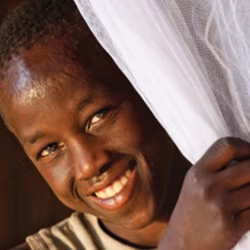
Save the Children gifts save lives in the developing world.
Types of gifts: Buy kids' toys for £8, a schoolbag kit for £12, five mosquito nets for £21 or an essential baby kit, which includes a washbowl, nappies, towels, a wrap, soap and warm baby cap for £33.
What does the charity get? When you buy a gift, your money goes towards projects within that theme, eg, education. For every £1 it gets, Save the Children spends 86p on its work to benefit children, 14p on fundraising and other costs.
Link: Save the Children
WaterAid – eg, 'Bog Builder', £54
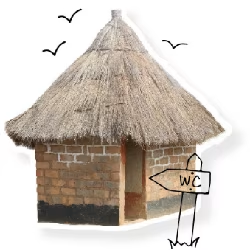
WaterAid's Shop for Life gifts tackle the world's water crisis.
Types of gifts: A 'bog in a bag' for £10, training a pump technician for £28 or a mason to construct a family loo for £54.
Whether you choose an eCard or a physical card, there's no extra cost.
What does the charity get? For every £1 donated, WaterAid spends 74p on delivering services to those in need and 26p on fundraising. Your money goes towards its full range of projects, and isn't limited to the specific gift you choose.
Link: Shop for Life
WWF – eg, adopt an elephant, £5/month

WWF's Adopt An Animal gifts help protect endangered species.
Types of gifts: Adopt one of a range of animals, including elephants from £5 a month, and receive regular updates on your chosen species, plus a cuddly toy.
What does the charity get? When you adopt an animal, 50% of the money goes directly to helping that specific species, and 50% goes towards WWF’s other vital work around the world tackling climate and nature crises.
Link: WWF Adopt An Animal
Centrepoint – eg, Christmas dinner, £15

Centrepoint Christmas Gifts help support the homeless.
Types of gifts: Buy a homeless young person a set of toiletries for £10, a Christmas dinner for £15 or a safe, comfy bed for the night for £50.
What does the charity get? 69p of every £1 raised is used to continue Centrepoint's work to support homeless young people, 23p is used for fundraising and 8p for running the charity. The gifts are real examples of the way your money could be spent, but donations are distributed across Centrepoint's work and used where needed.
Christian Aid – eg, send a child to school, £25
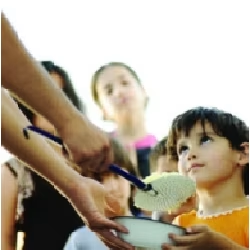
Christian Aid Charity Gifts transform the lives of those living in poverty.
Types of gifts: Buy a pair of chickens for £10, send a child to school for £25 and more.
What does the charity get? For every £1 donated, 84p is spent on direct charitable work and 16p on fundraising. Cash from gifts goes to projects within the relevant sector, eg, agriculture and livestock.
Good Gifts – eg, eye test and glasses, £12
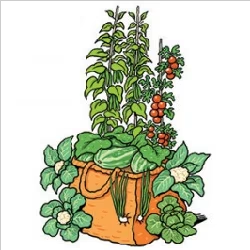
Good Gifts help people in the UK and around the world
Types of gifts: An eye test and glasses for a child in Africa for £12, an hour's respite for parents of disabled children for £18, help fund a tailoring business in Africa for £22, or deworming tablets for 1,000 children for £50.
Choose to send an eCard for no extra cost. A physical card or 'cracker pack' is £2.95, or free on orders over £25.
What does the charity get? Good Gifts guarantees that all of your money will go to exactly what you've bought. Instead of charging a handling fee as it used to, it now uses Gift Aid donations to keep the site running.
Link: Good Gifts
Impact Foundation – eg, restoring someone's sight, £48
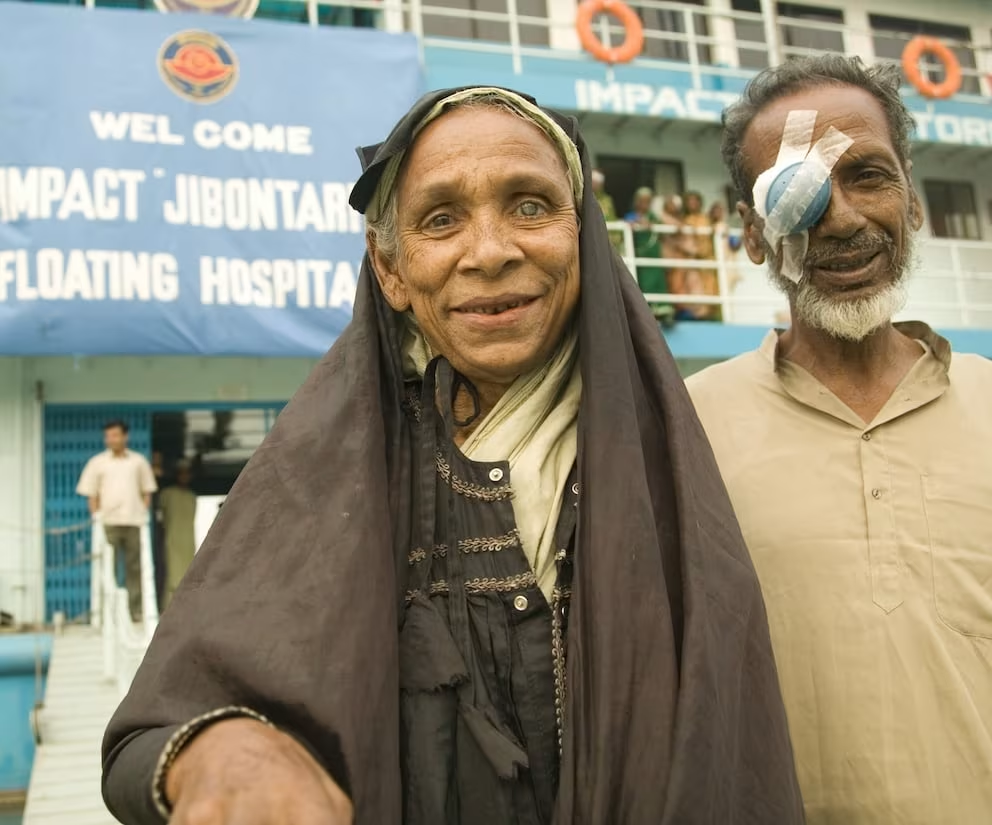
Impact gift tokens improve health and prevent disability.
Types of gifts: Tree saplings for £10, a home garden to feed a family for £25 or restoring a person's sight for £48.
What does the charity get? For every £1 donated, around 90p goes directly to the chosen project, 6p goes towards fundraising and 4p is spent on administration and governance.
Link: Impact gift tokens
CAFOD – eg, reading lessons, £12
CAFOD World Gifts teach vital life skills and support new mothers.
Types of gifts: Catholic aid agency CAFOD's gifts include providing a queen bee for a hive for £5, reading lessons for £12 and healthcare for mums and babies for £43.
What does the charity get? For every £1 donated, 86p is spent on international development, emergencies, education, campaigning and advocacy work, and 14p on running the organisation. Donations go towards funding projects in that gift's category (eg, education and skills training, or water and food) rather than to a specific gift.
Link: CAFOD World Gifts
The Bike Project – eg, bike lock for a refugee, £12
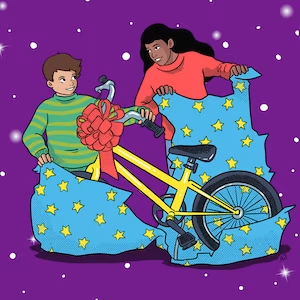
The Bike Project helps refugees and asylum seekers get around.
Types of gifts: Choose from cycling-themed gifts for refugees, such as £12 for a bike lock, £30 for a cycle safety kit and £60 for a woman's cycling lesson.
What does the charity get? All gift purchases are taken as general contributions and will be used on bikes, lessons and accessories as The Bike Project sees fit.
Link: The Bike Project
Starlight – eg, child's fidget toy, £4

Starlight gifts can make a child's hospital stay brighter this Christmas.
Types of gifts: Choose a gift for a hospitalised child such as a fidget glitter ball for £3.76 or one hour with a health play specialist for £20.
If you want to buy a gift on someone else's behalf, add your own email address when checking out, then download the certificate from your inbox and send it on.
What does the charity get? All the money from buying gifts goes into a general fund and is distributed according to the needs of the hospitals.
Link: Starlight
Refuge – eg, Christmas dinner, £30
Refuge Christmas parcels support women and children escaping domestic abuse.
Types of gifts: You can buy Christmas dinner for a woman staying in a refuge for £30, or a children's present parcel for £10.
What does the charity get? Your donation will be used to support women and children escaping domestic abuse throughout the year. For every £1 donated, 93p goes directly to the charitable activity and 7p is spent on fundraising.
Link: Refuge Christmas parcels
Crisis – eg, warm essentials, £10
Crisis Virtual Gifts can help someone build a life beyond homelessness
Types of gifts: You can gift an £8 toiletries set, a £10 warm essentials pack, a £20 clothing kit and other things to help those experiencing homelessness.
What does the charity get? For every £1 donated, 62p goes directly to the charitable cause.
Link: Crisis Virtual Gifts
Help out at a homeless centre

Homelessness charity Crisis is running its annual Crisis at Christmas centres across the UK. The centres are in Birmingham, Edinburgh, London, Merseyside, Newcastle, Oxford and South Wales.
The centres provide meals, entertainment and advice for people experiencing homelessness over Christmas. Volunteer roles might involve providing meals or fulfilling specialist services such as haircuts or physiotherapy. Some roles require you to have specific skills or qualifications, but not all do.
Don't live in one of these areas?
To find opportunities near you, search online for Christmas volunteering opportunities at homeless centres or soup kitchens in your area.
Look out for elderly neighbours
Age UK, a charity focused on helping those in later life, has a number of suggestions for 'small acts of kindness' to help out older neighbours who might be feeling isolated, or need a hand with quick tasks.
Here are a few examples – some are relevant to the Christmas period, but there's nothing stopping you keeping it up throughout the year:
-
Keep in touch (eg, a phone call or Christmas card). Try to check in regularly, to ask how they're feeling, and find out if there's anything they need. If you're unable to visit in person, there's still plenty you can do to show you care – a phone or video call, making homemade Christmas cards, letters or even small gifts.
-
Lend a hand (eg, drop off shopping). If you're able to and it's safe to do so, be a good neighbour by offering simple, immediate assistance to older people nearby, such as offering to pick up shopping or run errands. Visit Age UK for more tips on neighbourly volunteering.
-
Pass on Age UK's numbers if they need advice, or just a chat. For practical information and advice, there's Age UK Advice: 0800 678 1602. For 'a cheerful chat, day or night', there's The Silver Line: 0800 4708 090.
Give to a foodbank
December is usually the busiest month for foodbanks, so your donations make a huge difference. We've lots of information and suggestions in our Foodbank donation tips blog, but here are a few choice pointers:
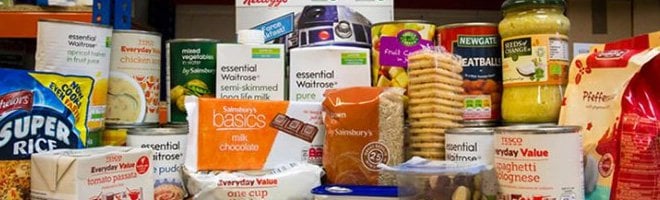
1. Check where you can donate
Trussell is one of the largest foodbank organisations in the UK – find your nearest location.
You can also check your council's website for info about other foodbanks, while charities will often put alerts on social media if they're accepting donations.
Places of worship often run foodbanks or welcome donations, no matter what faith you are. And many schools and supermarkets run 'food drives', so check these too – they'll explain the type of produce they'll accept.
2. Use supermarket coupons to make cheap donations
If you want to give, but don't have much spare cash, check out our Supermarket coupons page to see if you can get suitable items for free or at a discount. There are often coupons available for food, as well as for essentials such as toothpaste.
Now that December's upon us, you might like to try our Reverse Advent calendar challenge; donate a different item each day of Advent, and do it the MoneySaving way.
Quick question
What is best to donate?
Trussell told us that multipacks of individually-wrapped items make a good donation. It also appreciates items that don't need to be cooked, items that already include herbs and spices and accompaniments that can turn pasta/rice into a full meal. It's also a good idea to check your local to ask specifically what they need at any particular time.
See the MSE Forum Foodbank donations thread for a list of suitable products and where you can find them on offer.
Buy toys for kids who might not get a gift this Christmas

The Salvation Army runs a Christmas present appeal each year, where you can donate toys, games and books for children who might otherwise not get a gift at Christmas.
To take part, find your local branch and get in touch to check if it's participating.
The Salvation Army website has a suggested gift list to help you choose a suitable present. It asks that gifts are new and unwrapped when you drop them off – they'll then be wrapped and distributed to those in need.
Donate your bike to a refugee

The concept of The Bike Project is simple: it fixes up second-hand bikes and distributes them to refugees and asylum seekers in Birmingham and London.
If you live in or around one of those cities and would like to donate your bike, visit the website and search for your nearest drop-off point. Then fill out a form to register your bike and arrange a time to drop it off.
You shouldn't donate bikes that need extensive repairs or major part replacements. It's also worth noting that The Bike Project doesn't accept e-bikes, scooters, tricycles, mobility bikes, recumbent bikes or cargo bikes.
For smaller donations or to donate on someone's behalf, see The Bike Project charity gift ideas above.
Feed the hungry for free
Greater Good (formerly The Hunger Site) is a 'click 'n' give' website where sponsors donate when you click. As well as fighting food poverty, you can click to support causes that fight breast cancer and diabetes, support literacy, and more.
On the site's homepage, there's an emblazoned message: "Click to give – it's free!" Click this link and its sponsors will donate some money to charity.
The logic behind this site is brilliant. It's a win-win-win situation for the hungry, the internet user and the sponsors. For companies it's a cost-effective, feel-good public relations exercise, especially powerful when helping to promote ethical brands.
Where does the money go?
Greater Good is a US site – donations are split between alleviating hunger in the developing world, and helping those in need within the US. Yet clicks from anywhere in the world count.
Donate blankets to animal shelters

Sadly lots of unwanted pets will be spending Christmas in rehoming centres. You can support them by donating blankets, treats and toys.
To find a centre near you, search online for 'animal shelters' or 'animal rescue centres' in your area. They'll usually list online what donations they most need, or you can call and ask before you visit.
Plus if you're good with a knitting needle, Cats Protection has instructions for making mouse toys for cats, and there are plenty of other knitting patterns to be found online, such as this blanket pattern on The Guardian.
Give blood
Giving blood can be an invaluable gift for someone you don't know. Donations are needed year-round, but this can be a great way to do good at Christmas without having to spend any money. It's worth noting, potential donors must wait at least seven days after receiving a Covid vaccination or booster before they can donate blood. See the Give Blood website for details.
For full info on who can give blood and where you need to go, click the relevant link: England, Wales, Scotland and Northern Ireland.
Offer what you have to charity shops
From bras to Blu-rays, donating to charity shops is a fab way to declutter – and help good causes at the same time. So why not do a personal stocktake and donate anything you haven't used since last Christmas?
what charity shops will accept varies, though the examples below are typical (if you're taking bulky items, it's worth calling ahead to confirm if they accept them).
-
Oxfam. It's looking for clean books, toys, clothing, shoes, accessories and homeware. On the tech side, we're talking DVDs, games, CDs and mobile phones. It will even accept furniture (though again, give the shop a call before lugging a sofa over).
Oxfam can't accept single computers, medical equipment or anything broken/dirty. Electrical goods that run off the mains are also a no-no (though it says a few shops do accept these, so please check before donating). See a full list of what it can and can't take. You can now post items for free via DPD.
-
British Heart Foundation. If you're donating smaller items, such as books, clothes and children toys, you can either take them into a store or get a free postage label online. It offers a free collection service for larger items, including furniture, electrical and homeware donations.
If you've arranged a collection for larger items, it will collect any smaller items you have to donate at the same time. See a full list, including collection details.
-
Cancer Research. It's always in need of clothing, footwear, jewellery, homeware, antiques, furniture and working electricals. It can't accept anything dirty, damaged or broken, nor can it take animal furs, used mattresses or white goods, among other things (see the full list).
It's possible to arrange a collection if you're donating furniture or 25+ bags of items and live within 20 miles of one of their stores.
Share this guide?