





Credit builder cards
Build your credit history

Accessing credit can be tricky for those with limited credit history. If you're saving for a house deposit or considering a large purchase, using a credit builder card can make your mortgage or loan application look more appealing to lenders. This guide runs through who's eligible for a credit builder card, and how you can use them to boost your credit score.

First, a quick overview of credit builder cards...
Credit builder cards are no-frills cards aimed at those who are new to borrowing. Use one for everyday spending and, provided you repay IN FULL each month, your credit score could improve within six(ish) months. This will make it easier to get other credit products, such as loans, better credit cards, and eventually, mortgages.
Don't just apply - go via an eligibility calc. Our Credit Builder Eligibility Checker speedily shows acceptance odds for a wide variety of cards (some are 'pre-approved'), without affecting your creditworthiness
Credit builder cards usually have a low credit limit. This means means you'll be able to spend less on them, compared to a standard credit card.
Credit builder cards have much higher interest rates (APRs). This means you'll be charged more interest if you don't repay your balance IN FULL each month.
Tesco Bank | - Clubcard points on spending |
Asda Money | - 0.75% cashback at Asda |
Post Office | - 29.9% rep APR |
Virgin Money | - 29.9% rep APR |
If you do get a card, ALWAYS follow the Credit Builder Golden Rules:
a) Repay your balance IN FULL every month, preferably by Direct Debit.
b) If you can't fully repay, never miss the minimum monthly repayment.
c) To avoid hefty fees and interest, don't withdraw cash.
The full credit builder credit cards guide...
Now we've given you a brief overview and you understand the basics, let's take you through credit builder credit cards in more detail...
What are credit builder cards?

Credit builder cards are a type of credit card that can be used to improve your credit score. When you use a credit builder card you'll do exactly that: build (or rebuild) your reputation with lenders and credit reference agencies – increasing your chances of successfully applying for loans, better credit cards (and eventually, large credit products like mortgages).
If used properly, a credit builder credit card can improve your credit score within six(ish) months.
How do credit builder cards work?
When you use a credit builder card, you'll be showing your card provider and credit reference agencies how well you handle credit. Used correctly, these cards can improve your credit score by demonstrating how reliable you are.
When you use a credit builder card, it'll feel just the same as using any other credit card:
-
Each time you spend on your card, you borrow money from your credit provider, which you then should pay back each month.
-
You have a credit limit which is the maximum you can borrow.
-
Anything you don't pay back within a month you'll be charged interest on.
For more detail on how credit cards work, head to our full Credit card basics guide.
Are credit builder cards different to standard credit cards?

Yes, there are typically some key differences between credit builder cards and standard credit cards...
Credit builder cards usually have a much lower credit limit. This means means you'll be able to spend less on them, compared to a standard credit card.
Credit builder cards have much higher interest rates (APRs). This means you'll be charged more interest if you don't repay your balance IN FULL each month.
There aren't usually any nifty perks. Other credit cards often come with promotional offers, such as 0% periods for purchases or balance transfers, or cashback on spending.
It's important to understand that these cards are aimed at those who are brand new to borrowing, or those who've had debt problems in the past – so the cards as as bog-standard as they get. See below for more info on whether this type of card could be right for you.

How do I use a credit builder card to improve my credit score?
To make the most out of your credit builder card, always follow our golden rules. Use the card effectively and it could lead to an improvement in your credit score after six(ish) months.
Pay off your balance IN FULL every month. That way you won't be charged any interest. If you can't afford to repay IN FULL, make sure you pay at least the minimum repayment.
Set up a Direct Debit to repay automatically each month. Usually you can choose whether you want to repay IN FULL, just the minimum balance, or a figure of your choice.
Never miss a payment. Missing payments can lead to extra fees, a reduction in your credit limit, and can severely damage your credit score.
See our full improving your creditworthiness guide for more info.
Who are credit builder cards for?

Credit builder cards are a great option for those starting from scratch with their credit score and aren't eligible for standard credit cards. Credit builder cards are typically for:
Those who have no credit history and have never borrowed before.
Those whose income isn’t high enough to qualify for standard credit cards.
Those who've struggled with debt problems in the past. This includes if you've a track record of missed payments, have previously been declared bankrupt, have had a county court judgement (CCJ) against you.
Those who aren't on the electoral register.
How do I check my credit history?
Equifax, Experian and TransUnion hold credit records on everyone in the UK. This information is available to you and any potential lender you might apply to. Luckily, you can check what info they hold for free, and we'd recommend checking with all three once a year to make sure your credit report is in good shape. Here's a step-by-step guide to checking your credit history:
-
Select any of the three credit referencing agencies — Equifax, Experian, or TransUnion.
-
Create an account or log in if you already have one.
-
Access your report and carefully review the details.
-
Repeat the process with the other two agencies to ensure consistency.
-
Dispute any inaccuracies and check your report annually.
You can also check your credit report by signing up to our completely free Credit Club, which provides a range of tools and calculators to give you a sense of how the financial world sees you.
Credit Club members can also get an Eligibility Rating which combines your credit score, affordability score and current market conditions. You can also check your acceptance odds for different credit cards using our eligibility calculator.
Am I eligible for a credit builder card?
Unfortunately, there's no guarantee you'll be accepted for a credit builder card: you'll still have to go through an application process and credit check. Lenders have varied and often secret ways of choosing which customers they want to lend to, though you're likely to be eligible if you...
-
Have a decent income and are in full-time employment.
-
Pay for other financial products such as a phone bill or rent.
-
Are over 18.
You'll also need some form of ID, a bank account and bank statement, plus proof of income. We go into more detail about how to apply, below.
How to apply for a credit builder card
Which card to go for will be determined by which will accept you. Before you start, always check your credit reports for any errors as this could be incorrectly damaging your credit rating (and may impact which cards you can get).
There is no one single top-pick card that can help you rebuild credit as, used correctly, any credit card can boost your rating and for free, if it's repaid in full each month.
Try our free Credit Club
Sign up to MSE's Credit Club to boost your credit power – access our free tools to see how the financial world views you, including:
An Eligibility Rating that combines your credit score, affordability, and market trends.
View your full credit report – your financial CV.
Get personalised acceptance odds for credit cards and loans.
Once you've chosen a card, click 'apply' and you'll be taken to the provider's site. The credit card provider will ask for some personal information, and you may have to provide some documents such as proof of address, bank statements, proof of salary and personal ID. They will then use this information to perform a credit check, which they will then use to determine whether or not to lend to you. For full info, see beginner credit cards.
Top credit builder cards
If you've never had a credit card before, it can be tricky to decide which one to go for. The best credit building card for you will depend on your personal circumstances but, as a general rule, you should be looking for something with a lower interest rate and reasonable credit limit.
Our eligibility checker shows your acceptance chances for many cards, including most of our top picks below. We've ordered these by perks, then by representative APR. Some of these cards sometimes have an interest-free spending period, but unless you NEED to borrow (and if so, make sure you use the cards the right way – full details are in 0% spending), it's best to use these cards to spend a small amount and pay your card off in full each month to help build a good credit history.
Tesco Bank Foundation | - Clubcard points on spending | |
Asda Money Select | - 0.75% cashback at Asda | Apply |
Post Office | - 29.9% rep APR | |
Virgin Money | - 29.9% rep APR |
(i) These providers have asked us to only link to our eligibility calculator. For more on APRs, see Official APR examples.
Got a card? Make sure you use it right! Follow our golden rules...
Use your credit card for a small amount of everyday spending each month
Instead of using cash or a debit card for your normal everyday spending, start using the credit card. As a general rule try not to spend more than 30% of your limit (for example, if you're allowed to spend up to £100, try to only spend £30). This demonstrates to the credit card provider that you can use the credit responsibly – but you're not reliant on it.
While this may mean it looks like you have more money in your current account, remember you'll need this to pay your credit card bill at the end of the month. It can be helpful to move the amount to an easy access savings account (so you don't accidentally spend it) and then transfer it back before your credit card bill is due.
NEVER withdraw cash with your credit card
Don't be tempted to withdraw cash from an ATM with your credit card. It's not only expensive (often a fee for each withdrawal plus expensive ongoing interest) but repeated cash withdrawals are a red flag to lenders – they can make you look desperate for credit – so can harm your creditworthiness.
Repay IN FULL each month to avoid expensive interest
Most cards don't charge interest on spending (though cash withdrawals, usually attract interest from day one) if you pay the money back in full and on time, so this is the absolute best way to use your credit builder card.
Otherwise you'll be charged interest on your full balance (look out for the APR displayed for each card – the higher the number, the more expensive it will be).
However, there's a catch to watch out for. Some card firms could give you a higher interest rate than the one it uses to advertise the card, as only 51% of people accepted need to get this advertised APR.
So just because a card says it has a 34.9% representative APR, it doesn't mean that's the interest rate you'll get.
If you can't repay in full, always repay AT LEAST the minimum repayment on time
If you can't repay in full, you'll need to pay at least your 'minimum repayment'. This is the lowest amount you're allowed to pay each month to avoid a 'missed payment' mark being added to your credit report (and a late payment fee).
It's vital you make this minimum payment EVERY month. A missed payment mark will undo all the positive impact of your credit building efforts and make it more difficult to access financial products in the future.
We'd recommend setting up a monthly direct debit to automatically pay off the minimum amount (or a higher/the full amount if you can). If you know you won't be able to pay, contact your provider BEFORE the payment is due. It'll work with you to agree a different repayment plan.
Don't go off grid
It's important to keep your personal information up-to-date, including things like your address. This makes it easier for credit card companies to do their credit checks, and is an easy way to boost your credit score.
What can you buy with a credit builder credit card?
A credit building credit card can be used to purchase most items and services, just like any other credit card. It could be anything ranging from everyday purchases such as food and other daily expenses, to online shopping, or meals at restaurants.
However, remember that credit builder cards aren't meant for long term borrowing, or spreading the cost of larger purchases. You'll get the maximum benefit when it is used for every spending, making sure to stay within the credit limit, and then paying off the balance in full every month.
Doing this for three to six months should give your credit score the boost you're looking for.
Been rejected? Don't panic - and don't apply again (yet)
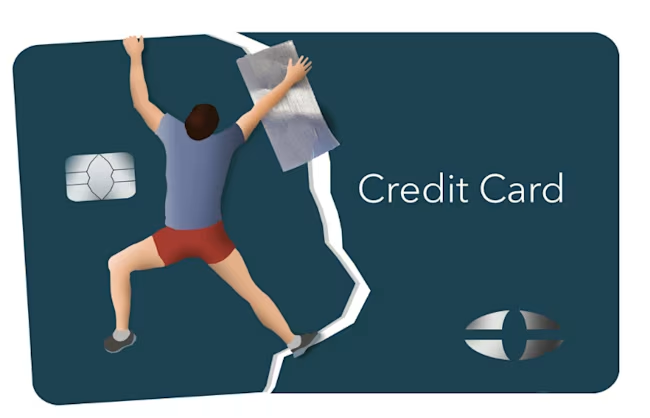
Rejection can be disheartening, particularly when you're making your first credit applications. However, what you do now is just as important for you credit score as securing your first credit builder card.
Important. If you've been declined for a card, don't keep on applying for more.
You might think that applying for as many credit cards as possible would boost your chances of being accepted, but if you're rejected more than once in a short space of time, you can do real damage your credit score. So, if you've been rejected recently, you've now got two options:
Wait, then try again. It may be that you need time to heal your credit report, especially if you've made a lot of applications recently. So give it some time, then try the eligibility checker again, to see if you're likely now to get any cards.
Try other 'credit' products. You may not think of them as credit, but utilities and telecoms providers do report payment behaviour to credit reference agencies. So, getting a pay-monthly phone contract can help you build a picture of good repayment behaviour. As can staying out of your overdraft on your bank account.
Try the 'credit builder' product below. These products give you something that acts like credit, so you can 'repay' them and get the repayments reported to credit reference agencies. Yet if you miss a payment, that'll be reported too, so only do this if you're absolutely sure you'll be able to make all the payments, otherwise you'd end up in a worse position than just having waited for time to heal your credit report.
Note: In November 2025, the Financial Conduct Authority said it found little evidence that “credit-builder” savings-style products significantly improve most people’s credit scores.
Still, if you understand the risks and want to try one, Loqbox is one of the better-known examples and there’s a free way to use it.
| Build your savings pot and get savings payments reported to your credit file – if you can commit to saving between £20-£200/mth for one year. This savings feature isn't Loqbox's main product (it offers various other credit score boosting features), but can be used without paying the £2.99/wk membership fee if you sign up to a one-week free trial then 'downgrade' your account to the free version. Once you've downgraded and activated the savings tool, here's how it works: Cost: Free (or £30) 1. You choose a fixed amount (£20-£200) you can save each month for a year, which is then charged to your debit card each month. 2. Loqbox gives you a 0% loan for the total (so £240-£2,400) – you won't be able to access this loan money, but it appears on your credit report as a loan (don't worry, there's no credit check). 3. Your monthly 'savings' are then used to 'repay' the loan over the year, with payments reported to all three credit reference agencies. 4. At the end of the 12 months, you have a fully repaid loan on your credit report (and hopefully an improved score) plus you'll get all your money back. Important - there's a few things you need to know about Loqbox: |

Credit builder card FAQs
How quickly can a credit builder card improve my score?
Most people see a noticeable boost within about six months – but only if they use the card responsibly and repay IN FULL each month. Your exact timeline depends on your starting credit history and other factors (e.g. missed payments elsewhere can still hold you back).
Will applying hurt my credit score?
Each formal credit card application leaves a hard search on your file, which can nudge your score down temporarily. That’s why we always say: don’t scattergun apply. Use our eligibility checker first – it shows your acceptance odds without leaving a mark on your credit report.
How much should I spend on the card each month?
The trick is to keep it small. A tank of petrol, a supermarket shop, or a streaming subscription is enough – money that'd you'd spend anyway if you used cash. The goal is to show you can borrow and repay responsibly.
Do I need to pay interest to build credit?
No! Paying interest does NOT improve your score. In fact, paying IN FULL each month (preferably by Direct Debit) is the cheapest and smartest way to build credit.
Other MSE credit card guides... Find the right credit card | Balance transfer credit cards | What is a balance transfer credit card? | Credit cards for bad credit | How credit cards work | 0% money transfer cards | All-rounder 0% cards | Debt help | Student credit cards | How to pay off credit card debt more quickly | Prepaid cards
Share this guide?