


Best boiler cover
Save £100s on boiler and home emergency insurance

If you're worried about your boiler or central heating system failing, boiler breakdown cover is designed to help if things go wrong. And don't feel you need to get boiler cover from your energy provider - they're not linked. In fact, in some cases you may not want it at all, as most new boilers are reliable, and self-insuring (putting cash aside each month in case of a problem) can work well. This guide explains what you need to know about boiler cover, whether you need it, and how to get it.

First, a quick overview of boiler cover...
Boiler cover helps pay for repairs if your boiler or heating system breaks down. It’s mainly for homeowners who want peace of mind against costly call-outs – especially if their boiler’s older or out of warranty. But it’s not always worth it, so check carefully what’s included, what’s excluded and whether it’s cheaper to self-insure instead.
You can pick boiler-only, boiler & heating, or full home emergency cover that also includes plumbing, drains and electrics.
• Compare before you buy – energy firms often charge more than specialist insurers or comparison sites.
• Check what’s not covered – many exclude older boilers, certain parts or full replacements.
• Watch for waiting periods – you usually can’t claim in the first 14–30 days.
• See if an annual service’s included – some plans bundle one in, others don’t.
• Beware renewal hikes – first-year offers often jump sharply at renewal.
Next step: see How to buy boiler cover below for what to look for and how to pick the right level of protection.
What is boiler cover?
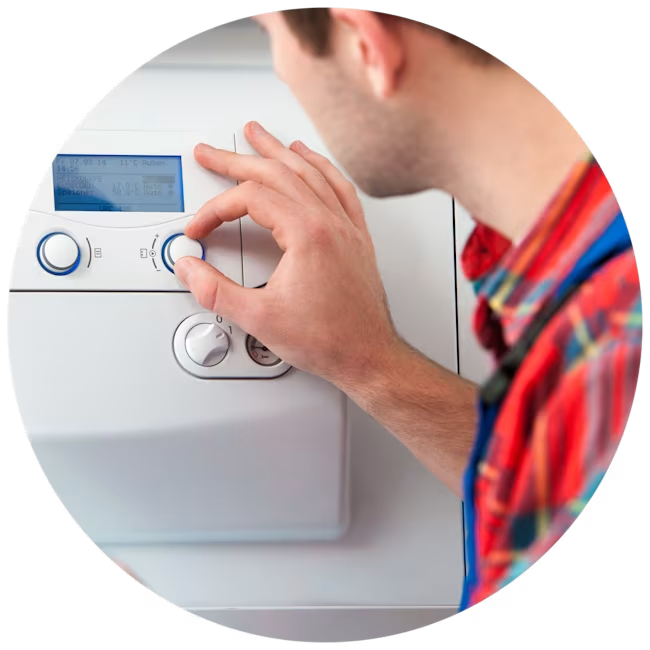
Boiler cover pretty much does what it says on the tin – it's an insurance policy to help you cover the cost of getting your boiler working again if it breaks down. But there are several different levels of cover to choose from:
Boiler-only cover. This is the starting level of cover, and usually the cheapest. It typically only covers the boiler and its controls. The majority of central heating claims are down to a broken boiler, but if the problem is outside the 'white box', this sort of cover won't help.
Boiler and central heating cover. The same as above, plus cover if, for example, pipes, radiators or central heating pumps break.
Boiler, heating, plumbing, drains and home electrics cover. This type of cover tends to be more expensive. Here you'd be covered for all central-heating repairs, plus burst pipes, blocked drains and electrical repairs.
Another version of this is home emergency cover. Broadly, this tends to cover your boiler and central heating, plus also provides help for floods, pest infestation and more. As the name suggests, it tends to cover emergencies – usually if your health's at risk, your home's uninhabitable or at risk from further damage if the problem's not fixed soon. For example, this could be if you've a burst pipe and can't turn off the water supply, or your boiler's broken and it's zero degrees outside.
Whichever level of cover you opt for, always double-check what you're getting and closely inspect the terms to make sure the policy suits you, and you're not under or over-covered. It's also important to note that almost all plans include an initial no-claims period (designed to stop people signing up to plans on the day their boiler breaks), which varies from 14 to 30 days.
To learn about cover for general appliances (such as ovens, fridges and dishwashers), check out our White goods insurance guide.

Should I get boiler cover?
Boiler cover isn't right for everyone – it'll depend on your circumstances and whether you have the cover you need elsewhere. You'll need to weigh up whether the monthly cost is worth it for you, as there's no point shelling out for cover if you don't have to. Here are some key points that should help:

Check if your home insurance already provides cover. Some home contents policies include a home emergency or boiler cover option, either as standard or a paid-for extra. This often covers the cost of call-outs and a temporary repair, though sometimes you'll still need to pay an excess.
Check with your provider beforehand to avoid being double-covered, or use our Cheap Home Insurance guide to find an insurer that offers this cover as part of the package.
-
You don't usually need it if you rent. Homeowners need to consider boiler cover but if you rent, it's usually the responsibility of your landlord but always check to make sure. It's is also always best to check what arrangements your landlord has in place to deal with emergencies before you sign your rental contract, so you know how long you could be left in the cold if anything were to break.

Consider self-insuring if your boiler is under three years old. If you've new, reliable kit, it may be cheaper to self-insure. Essentially this is just another way of saying "open a top savings account to build up an emergency fund". If you have a problem, the cash is there to pay for it. If you don't, the cash is yours.
However, be aware that this method takes time to build up and the cost of repairing or replacing a boiler can be expensive. For example, a new fan could cost around £230, a replacement pump can be up to £300 and a replacement heat exchanger may be upwards of £400.
You could consider playing the odds by self-insuring during the early years of your boiler's life – when it's least likely to go kaput – then after a few years, bite the bullet and take out insurance.
What types of boilers can I cover?
You’ll generally be able to find boiler cover for most types of boiler.
The cheapest policies tend to be those that offer cover for domestic gas boilers, which includes condensing boilers and combi boilers.
You can also get cover for oil-powered boilers and LPG boilers, though you’ll likely have less choice of providers – so if you have one of these, make sure you get a policy that provides the right type of cover.
Most policies will assume your boiler is in ‘good working order’ at the time you buy the plan, will often specify that your boiler must be below a certain age, so check the exact details of the policies you’re considering – especially if you have an older model.
Boiler cover need-to-knows
If you think boiler insurance is right for you, here are five key need-to-knows to understand before opting for a new policy. Remember with any new boiler insurance policy, you can't claim within the first 14-30 days.
You'll usually still need to pay for an annual boiler service (though some policies include it)
Most policies won't pay if your boiler's croaked because it's not been properly maintained, neither do they cover the cost of safety inspections.
An annual service is an effective way to avoid these problems and may even be free in the first year after the boiler's installed.
Many boiler cover policies now either include as part of the policy, or give as an option to add-on, an annual service. Yet if yours doesn't you'll need to factor in a typical £60-£120 for an annual service on top.
Not all policies offer unlimited call-outs and repairs, and you'll usually have to pay an excess each time
The amount you can claim in the event of a boiler breakdown varies from product to product. Don't assume you're covered for unlimited call-outs and repairs, and always read the small print. Some only pay for costs up to a certain level per claim and per year (usually £1,000 or £1,500), limit the number of call-outs within 12 months or charge an excess for each call-out.
It's also possible you'll only be covered for the first two or three hours of labour costs – so always double-check before. The last thing you want is a hefty bill if it takes all day. Also, not all companies guarantee they'll send an engineer the same day.
If you're in a home with relatively new, reliable equipment, then either self-insuring or a cheap policy covering the bare essentials and modest payout limits should do.
But if you've an old, unreliable and noisy boiler, and a heating system to match, then more comprehensive cover with higher maximum claim amounts and as many annual call-outs as possible might be more appropriate - just check the policy covers your boiler first.
If your boiler can't be fixed, you'll usually be hit with the cost to replace it
In some cases, an engineer will come round and won't be able to fix your boiler.
Replacing a boiler can costs £1,000s, but some policies will give you a contribution towards the replacement. So if you're getting a new policy, and your boiler's a little on the old side, and is under seven years old, check if it includes a contribution towards the cost of a replacement boiler. Many policies either offer between £250-£750 towards a new boiler OR will actually pay the full cost of a new boiler.
If you're on a low income, and you can't afford a new boiler, you may be able to get help with costs. Check if you're eligible in the Free Insulation & Boilers guide. Plus check out our Grant Grabbing guide to see if you're eligible for help with heating costs.
Most new policies won't cover boilers more than seven years old
Most plans require a boiler to be below a certain age, usually seven years old, when the cover is bought. Others will request a boiler inspection before granting cover. If yours is old, you may want to consider the cost of the insurance, and compare it to buying a new boiler.
Even if you do get cover, as above, your boiler may be excluded from being replaced if it goes totally kaput. You could also find your old boiler system doesn't meet the standards requested by your insurance provider, in which case you'll probably have to pay extra to get your heating system revamped before being offered cover.
Check the type of policy before you buy – insurance protects you if the firm goes bust, a service agreement doesn't
Policies come in two varieties: insurance and service agreements. While policies will offer similar cover, there is a key difference. With insurance, if the insurer goes bust you're protected by the Financial Services Compensation Scheme (FSCS). With a service agreement you've less recourse if the firm goes bust.
The policy or comparison site should say which one it is, but if you're unsure, check whether the provider offering the cover (not necessarily the same as the firm that sells it) is on the Financial Conduct Authority's register as an insurer.
These are the key differences:
Insurance policies
These are covered by the FSCS. In practice, what this means is that you have a level of protection if the insurer goes bust. So, the FSCS will:
-
Try to find another provider to take over your policy. Essentially this means it'll try and find another insurer to take over the policies of your bust insurer, or issue substitute policies.
-
Refund you 90% of what you've paid. If it can't find an insurer to take on the business, it'll refund 90% of any money you've already paid. Additionally, if you have any ongoing claims, or need to make a claim before a new insurer is found, the FSCS should ensure these are covered.
Also, with insurance policies there's the additional protection that you can complain to the Financial Ombudsman – in the event of problems - if you are no happy with the final decision of your complaint from the insurer. Sadly, the annual service itself isn't covered as part of the Financial Ombudsman complaints process.
Service agreements
For service agreements, any protection you have relies on the provider's solvency – how likely it is to go bust.
So, here it may be better paying monthly to limit any losses if the firm does go bust. Yet if you need to make a claim and the provider goes bust before it can send a repair person out, there's no recourse and you'd need to find your own tradesperson to make the repair.
If the provider is still trading and you have a complaint that it can't, or won't, deal with some firms that provide boiler service agreements (including YourRepair and HomeTree) have signed up to the Dispute Resolution Ombudsman, which can assist in resolving any complaints. However, signing up to this Ombudsman is voluntary.
What is and isn't covered by a boiler policy?
Boiler insurance policies vary an enormous amount – from basic policies will help get your boiler up and running again if it’s broken down (but not much else) through to more extensive policies that also covers things like burst pipes and blocked drains.
To find the most suitable policy at the right price, it’s worth digging into what will be covered if you need to make a claim. Some things to look out for include:
-
Annual boiler service – check if it includes a 'free' service as part of the policy as not all policies do.
-
Spare parts – some common parts are usually included though you’ll need to check your policy for any exclusions or conditions that may apply, such as extra charges.
-
Boiler replacement – if your boiler needs to be replaced completely (what insurers tend to call ‘beyond economical repair’), some policies will pay for this if your boiler relatively young (less than 7 years old). If your boiler is older, you could get a contribution towards a new one, but you’ll need to check the policy small print. And you’ll be expected to keep your boiler properly maintained and serviced – otherwise you’ll likely get nothing at all.
-
Accidental damage – not all policies will cover accidental damage, so it’s worth checking if this is important to you. However, depending on the nature of what’s happened, you might also be covered by your home insurance.
-
Pre-existing faults – most policies will have an exclusion where an existing fault is excluded, including a period at the beginning of the policy when you can’t claim. Again, these vary, but are usually periods of 30 days or less.
-
Any excess on claims – like with most forms of insurance, including service agreements, there’ll often be a set amount that you’ll have to pay in the event of a claim. You can generally get lower monthly premiums by selecting a policy with a higher excess, or pay a higher monthly amount for a policy with a low or no excess.
How to buy a boiler breakdown policy
If you've decided a boiler breakdown policy is right for you, before you start looking for cover, be aware that your boiler cover is completely separate from your energy provider. Energy providers often craftily try to link the two, but that's usually nonsense (unless cover comes 'free' with your tariff).
And while we are on the subject of energy providers, always ensure you're on the best energy deal, as the savings from switching could more than pay for your boiler cover. Our Cheap Energy Club lets you compare deals, or it can pick a tariff for you to select every year to ensure you're always on a cheap deal.
So, let's crack on to help how to pick a policy...
1. Choose the level of cover you want
-
Boiler-only: This is the most basic level and usually just covers the “white box” itself – the boiler, its controls, and the parts and labour needed to repair it.
-
Boiler & central heating: A step up. On top of boiler breakdowns, it covers your entire central heating system, such as pipes, pumps and radiators.
-
Full home emergency: The most comprehensive option. As well as boiler and heating, it typically includes plumbing, drains, electrics and sometimes even roof or pest infestations. Claim limits are usually lower than dedicated policies, so check the small print.
2. Pick the level of excess per claim
If you’re confident your boiler is reliable and think you’re unlikely to claim, a cheaper policy with a higher excess can make sense – you keep monthly costs low, but accept you’ll pay more if something does go wrong.
But if your boiler’s been unreliable in the past, or you’ve had issues with your heating or home systems, it’s usually better to pay a higher monthly premium for a policy with a lower excess. That way, if you need to claim more than once in a year, you’ll likely save money overall.
Also remember, the more systems your policy covers – from plumbing to electrics – the greater the chance you’ll claim for something. And every time you do, you’ll pay the excess.
3. Decide if you need annual boiler service included?
Most policies require you to have a well-maintained boiler that's been serviced annually or they could refuse to pay out. An annual service costs around £60 to £120, so picking a plan that includes it can be a way to save on this costs.
4. Start with a quick comparison to get the right cover at the best price
Thankfully, a few comparison sites do the hard work for you. Prices vary by where you live, your boiler’s age/type, your excess level (raising this can slash cover costs, but you pay the excess per callout, so may not be worth it if you've an older/less reliable boiler), and if you also want extras like plumbing, electrics and drains covered.
The top comparison sites for cheap boiler insurance
The comparison sites below include almost all of the major boiler insurance providers. You'll also be able to choose home emergency policies if that's what you're looking for.
Comparison site | What it offers... |
|---|---|
It has one of the largest panels of boiler cover providers, with the option to add extras such as an annual service when filling out the form. | |
It doesn’t include every insurer or provide fully personalised quotes, but it’s still worth a look as it features many of the big providers. |
You could also try GoCompare and Compare the Market, but their panels are smaller. The providers they do include are already covered on MoneySupermaket and Uswitch, and in our checks, prices were broadly similar across all four sites.
Prefer to go direct? You can sometimes get better-value deals this way. If you don’t want to use comparison sites, two providers – YourRepair* and Hometree* – stand out. Both...
-
Provide a free annual service as standard.
-
Will replace or contribute towards a new boiler if your current one is beyond economical repair. This will usually only apply to a well-maintained boiler that's under seven years old.
-
Have no more than a 30-day exclusion period for claims.
-
Have generally positive reviews. Yet do note, we're reliant on online reviews and what we hear from our Forum members, so this doesn't mean that everyone will get good service from these firms. Please let us and others know of your experiences with these providers so we can further refine our picks.
Prices start from under £4/mth, but can top £30/mth for the most comprehensive cover, but both give you the choice to select different levels of cover and excess. Both also meet our minimum cover levels.
Whichever site you use, always check the small print carefully to be sure the policy conditions suit your boiler, home and budget.
Warning. Policies are often discounted in the first year, but hike up at renewal. They might also offer new-customer perks, such as a free boiler service. At renewal, prices will usually increase and and some perks will disappear, so ALWAYS stick a date in your diary to shop around for a better deal before the policy auto-renews.
5. Bag extra savings with cashback sites or by haggling
Once you’ve found the right policy, don’t stop there – you can often shave off even more.
Check cashback sites
Once you know your cheapest provider, see if cashback sites such as TopCashback* and Quidco* offer a reward for buying through them. It’s how they share the commission they earn for referring you. Treat it as a bonus rather than guaranteed – sometimes the cashback isn’t tracked or paid – but it can mean an easy extra few quid off your premium.
Already have a policy? Haggle at renewal

You can also try to haggle your way to a bigger discount with your existing insurer.
Haggling is not a must – especially if you want to try a new provider – but if you're looking to renew with your current provider it's well worth contacting it to negotiate.
Take the cheapest price you found and give your insurer a call – or use its online chat – to see if will beat or match it. Usually it's as simple as asking, but if you're not getting any luck, see our Insurance haggling guide for top tips.
How to complain about your provider
The insurance industry doesn't always have the best reputation for customer service. While one provider may be good for some, it can be hell for others.
Common problems include claims either not being paid out on time or at all, unfair charges, or exclusions being hidden in the small print. It's always worth trying to call your provider first, but if not, then...
You can use free complaints tool Resolver. The tool helps you manage your complaint, and if the company doesn't play ball, it also helps you escalate your complaint to the free Financial Ombudsman Service.
Boiler cover FAQs
How much does a boiler service cost?
A typical gas boiler service costs £60–£120, while oil or LPG services are usually pricier. Annual servicing keeps your boiler safe, efficient and helps spot problems early.
What should I do if I have a problem with my boiler?
If you smell gas, call the National Gas emergency helpline 0800 111 999 immediately. Otherwise, contact your boiler cover provider or if you don't have a boiler cover policy and have a boiler problem, you can find someone on the Gas Safe Register.
Share this guide?