



Travel tips: How to save when booking a holiday
Tricks to bag cheap flights, hotels & more

Planning a holiday abroad? Don't just wing it. This guide has lots of hidden tricks to save you money from airport parking and data roaming to cheap hotels and holiday cash.

First, a quick overview of our MoneySaving travel tips...
This guide looks at the best ways to save when travelling. Here's a quick overview...
Book smart, save big. Package holidays often drop in price if you book late – within eight to 10 weeks of travel. For flights, getting in 11 to 12 months ahead can snag cheaper seats. Always use comparison sites.
Travel light to cut costs. Budget airlines make money from baggage fees – so come prepared, wear your luggage, and bring evidence of your luggage allowance if you bought through an online travel agent.
Get flexible with your planning. Being flexible with your dates, flights, hotels and/or transport can save £100s. Consider split tickets and codeshare tricks.
Slash spending fees. Use a specialist travel card (credit or debit) to get near‑perfect exchange rates and avoid hidden fees – plus always choose to pay in the local currency, not pounds.
Ensure you're insured. Sort insurance as soon as you book, get third-party car hire excess cover to avoid car hire company rip-offs, and get Section 75 protection by booking flights and package holidays with a credit card.
Need-to-knows BEFORE you go
Whether you're planning to stomp across a great metropolis, explore the wonders of the natural world or dive head-first into a shimmering sea (or all three), before you just jump in and book, there are some important points for you to consider...
When is the best time to book a holiday?

You can make significant savings by choosing the cheapest time to book a holiday. For example, if you're looking to go on a package holiday, booking late often wins. Waiting till the last minute – generally within eight weeks of travel – often pays off as prices usually plummet, though you've MUCH less choice. See more on pouncing on package holidays.
However, when it comes to booking flights, being early often means discounts. Many airlines release seats 11 to 12 months ahead, with cheaper seats often released early. You can't be sure these will be the very cheapest, as prices could drop later, so weigh up whether you want to take the risk.
But once all airlines that fly your route have released seats, it's worth checking prices. If you do, you're likely to find a decent deal. See airline-by-airline seat release dates and our Cheap flights guide.
Maximise your annual leave in 2026
If you're in full-time or part-time work in the UK, you can get as many as 16 consecutive days off using just eight or nine days of annual leave by arranging them around bank holidays and weekends (provided you don't work them of course). You can also get nine consecutive days off using just four days of annual leave.
Look for flexible bookings
Things can change quickly in the world of travel. So it's always worth looking for a holiday where you've no-quibble rights to change dates or cancel for a refund or voucher without charge.
If you've booked a flight that's been cancelled, you've a legal right to a full refund (read more in our Flight cancellation rights guide), but some airlines now offer more flexibility if you choose to change your flight while it's still running, so check when booking.

Ensure your passport's valid
Know your passport's expiry date before you book. Some countries demand that it's valid for at least six months from your arrival. Plus, if your passport's worse for wear, ripped or water damaged for example, some countries may refuse you entry. Check the Government's foreign travel advice before you go.
A standard adult passport is £102 if you apply online. Currently the Passport Office says you should get your passport back within three weeks. Leave it until the last minute and you risk having to pay £239.50 for its one-day premium service.
Renew your passport at the Gov.uk website. Don't just google it – we've had reports of some travellers being caught out by unofficial websites which charge extra, so always use the official Gov.uk link above to ensure you aren't caught out by a copycat site. See full help in Passport renewal tips.
Visiting the EU? You may need to renew early
Under rules introduced post-Brexit, now when you visit most EU countries, plus Iceland, Liechtenstein, Norway and Switzerland, your passport will need to be:
-
Valid for at least three months after the day you plan to leave
-
Less than 10 years old on the day you travel
So some will need to renew their passport earlier than normal. The only exception to this rule is travelling to the Republic of Ireland, where your passport just needs to be valid for the duration of your stay.
DON'T be caught out by the 10-years-old rule, particularly if you renewed your passport early
If you renewed your passport before it expired, the remaining months may have been added on, so it could now be more than 10 years old.
We've heard from lots of people who have been caught out by this and denied boarding at the airport. To avoid heartbreak, always check the issue date, even if you think you've many months left on your passport. If it's more than 10 years ago, your passport won't be valid in most EU countries (plus some others).
There have even been reports of people whose passports are under 10 years old being denied entry due to airport staff misinterpreting the 10-year rule. Should you find yourself in this sticky scenario, you can try pointing to the exact regulation that states this rule, saying something like:
"Article 6(1)(a) of Regulation (EU) 2016/399 (the Schengen Borders Code) requires that the passport be issued within the previous 10 years. My passport was issued on [date], so it meets that requirement."
More on EU travel below.
Check whether you need a visa
Many countries require you to have certain documents in place or to meet other requirements before allowing you in. Depending on where you're travelling, you may need a visa (basically a certificate giving you permission to enter a country, which also dictates how long you can stay).
Some countries offer visas on arrival, others require visas in advance – sometimes a costly and lengthy process. If you're heading to the USA, you may qualify for the Electronic System for Travel Authorisation (ESTA) visa-waiver scheme – but beware unofficial ESTA sites. And from late 2026, a similar scheme will apply for travel within the EU.
You can check entry requirements for your destination using the Foreign Office's travel advice.
EU rules are changing for Brits

The EU has now said that from the last quarter of 2026, you'll have to buy a €7 visa-waiver if you want to travel to the EU. It's called an ETIAS (European Travel Information and Authorisation System).
You won't have to pay this for every trip though. The fee covers an electronic pass that will allow British citizens to go on short holidays over a period of three years before they have to renew. The pass is similar to the ESTA currently required to visit the United States.
Check official advice on travelling to your destination
Besides keeping yourself out of harm's way, it's also important to check whether your destination is considered 'safe' to visit, to make sure that your travel insurance is valid. The Foreign Office issues country advice, and can advise against travel to certain destinations.
If there is an advisory against travel, it can invalidate your travel insurance if you do go, with many providers refusing to pay out for issues – including cancellations – at destinations deemed to be 'unsafe'.
To check entry requirements, destination safety and other information, see the Government's foreign travel advice.
Consider the protection that comes with package holidays
The internet's great for flights or DIY city breaks. But if you're going away specifically for seven, 10 or 14 days to a traditional holiday destination, then good old-fashioned package holidays can often come up trumps. They can also offer valuable protection.
A package holiday is an all-in-one, where the tour operator provides flights, connections and accommodation for one price. They're best suited for standard breaks of standard length. So if it's a traditional holiday destination such as Florida or Crete, it's worth checking to see whether you can get a package for less than doing it separately yourself.
-
When to book. Massive savings are possible in the late market, which are deals done within eight weeks of travel, yet of course there's restricted choice and you may need to be flexible. So if you need special facilities (for example, for families) you're going to have to book now and try to cut prices down.
-
How to cut prices. Tour operators make holidays while travel agents sell 'em. Therefore, many big tour operators' holidays are sold by multiple agents. So once you've found a specific deal, try calling up different agents and getting your haggle on to see whether they can beat the price. You could save about 5% more. See Cheap package holidays.
Package holidays also usually have added ATOL and ABTA consumer protection (though always check when you book).
Or get protection with a DIY booking

Package holidays have long been protected under the ATOL scheme, so if something goes wrong you get your money back or help getting home.
But since July 2018, most DIY package holidays bought in the same transaction get the same cover as 'traditional' package holidays.
This means you get:
Financial protection. You're entitled to a refund or to be brought home if necessary if the firm organising your package goes bust, AND
Legal protection. You're covered if you don't get the holiday you paid for, for example, if your airline goes bust, or bad weather stops you travelling.
For more info, including what protection other types of holidays offer, see Holiday rights.
Once you've booked your trip you'll be emailed an ATOL certificate – keep it safe as you'll need it if anything goes wrong.
Swap Clubcard vouchers for hotels, transport & more, including Eurocamp, LeShuttle and P&O Cruises
If you collect Tesco Clubcard vouchers, 500 points are usually worth £5 to spend in store. But those 500 points could be worth £10. This is about exchanging your vouchers for codes to spend with Clubcard Reward Partners* on travel, food, days out and more.
For example, £5 in Clubcard vouchers gets you £10 to spend at the following:
LeShuttle* (formerly Eurotunnel LeShuttle)
You can also exchange £1.50 in vouchers for 300 Virgin points to use at the Virgin Atlantic Flying Club*.
And... avoid the 'perfect trip' trap

For many of us, a holiday's an invaluable way to relax and unwind – or gear up and party. Yet before you splash out, remember, the holiday industry is a beacon of commerciality. Travel marketing is honed to make you spend more and more, using emotive language such as "precious moments" and "magical memories". Don't be sucked in.
Too many plan a dream holiday, then only consider later how they'll pay for it. That's a sure-fire way to end up disappointed or broke.
Instead, ask "what can I afford to spend?" then work out how to have the best trip within that budget. A holiday lasts a week or so – don't ruin the rest of the year for it.
Use our free Budget Planner tool to help you plan. If you're saving for the trip, our Boost your income guide is crammed with tips to make extra cash.
Tips for booking flights, accommodation & car hire
Booking flights, hotels, car hire and more can be a minefield – and it's easy to end up paying more than you need to. From finding cheaper flights and avoiding baggage pitfalls to cutting accommodation and car hire costs, here are our top tips to help keep your holiday budget under control.
Booking flights? What you need to know
When booking flights, don't go direct to an airline – use comparison sites to get lots of prices in a short time. See our top-pick comparison sites below. Plus, often third-party online travel agencies such as Trip.com, Kiwi, eDreams and others sell tickets for cheaper than the airline itself.
Comparison site | Why we like it |
For comparison including baggage. We argue within MSE Towers about the very top pick, but Kayak* is Martin's favourite, so it wins. It's got a decent range of user-friendly filters – for example, you can specify at the start of a search whether or not you want to check in bags so you can compare costs more accurately. | |
For flight data info. We like Momondo* for its nifty tool that tells you the cheapest and most expensive dates around your flight, as well as helpful insights such as the cheapest airport to fly from and to. It doesn't do it for all destinations, but it has some of the biggies, including New York, Dubai, Sydney and Cape Town. | |
For speed and ease of use. The search engine might not be the first place you think of when booking a holiday, but Google Flights is a decent rival to the likes of Kayak and Momondo. Once you've selected a route, it immediately shows you how prices vary depending on which dates you fly. |


It's worth checking Skyscanner*, Dohop and Expedia* too. Also see Cheap flights for more top tips.
But before you get your tickets, follow our top flight-booking MoneySaving tips...
-
How to bag the best plane seats. Check the plane's seating plan and see where's best for you using specialist sites Aerolopa or Skytrax. Though this can cost up to £30 each way for a standard seat, or as much as £60 each way for extra legroom. See Airline seating for more.
-
Book a cheap package... just for the flight. Flights to some destinations can be silly money, so check whether there's a cheaper package holiday, then grab it but DON'T stay in the hotel. MoneySavingExpert.com founder Martin Lewis once helped a friend book a £300 Sri Lanka holiday for the flight when the cheapest scheduled deal was £1,000+. See Cheap package holidays.
-
Check whether you can save by splitting your ticket. Common with trains, split-ticketing works with flights too. Use multi-destination options on Kayak*, Momondo* and Google Flights to see whether you can save by flying to one airport and returning from another. These are sometimes called 'open-jaw' tickets and may be cheaper than bog-standard returns. See Cheap flights.

Max Avios points. Use points scheme Avios to save on flights, upgrades and more (you still need to pay taxes and charges). Using Avios may not be as lucrative as before, so do check prices elsewhere, but it's still an option. See Ways to boost and max Avios.
Take buggies and car seats for free. Renting a child's car seat can add about £10 to £15 a day to the cost of car hire, and can hike taxi fares sharply too. However, some airports have stalls, such as Malaga's Tots Store, where you can rent seats more cheaply. Many airlines also let you check in a car seat and fully collapsible pushchair for free, such as Easyjet. You can also use some car seats on board planes (if you've paid for your child to have their own seat). Rules vary though, so check in advance, and look at the rules of your destination, too.
-
Niche travel agents can be cheaper. Niche travel agents often specialise in finding deals to specific countries linked to certain communities. For example, Shepherd's Bush in London and the surrounding area has some Caribbean specialist tour agents. Do check prices elsewhere before you buy, to make sure you're getting a good deal.

Wear your luggage... Wearing some or all of your luggage can help cut down the amount you need to check in. You could wear your heaviest clothes and shoes, or put heavy gear in your pockets, then stow your jacket under the plane seat. Deep-pocketed combat trousers, such as these from Amazon that are £20*, are a good option, as is a specialist big-pocket jacket, or one with a 'poacher's pocket' – a deep lower pocket at the back. MSE Hope even discovered a stuff-able travel pillow for £4 on Flying Tiger, which you can fill with clothes.
-
Avoid unnecessary fees. Budget airlines can charge up to £110 per person, per return, just to check in at the airport. So do this free online first. Likewise, don't get stung by luggage fees on the way back. Many people jet home from a holiday with more than they took. Leave space in your luggage for the return journey to beat possible extra charges.
-
Do the codeshare trick. If you want a specific airline or a particular flight, 'codesharing' could help cut costs. It's when airlines buddy up to sell seats on each other's flights, sometimes at a different price. For example, we found a Virgin Atlantic return flight from London to Las Vegas for £754, booking via Virgin Atlantic. But exactly the same flight booked via its partner Delta cost £655, saving £99. This works best on popular medium or long-haul routes. For a full how-to, see Cheap flights.
-
Have baggage allowance evidence ready. When booking through an online travel agency (OTA), be aware that its info might not line up with the airline's. An example is baggage allowances and baggage weight thresholds. To cover yourself, always take a picture of the allowance as stated on the OTA's site, and have that evidence at check-in should an airline dispute it. The airline will usually honour it because that's the basis on which you bought your ticket.
Travel tips for booking accommodation
Whether it's a hotel, tent or treehouse, bivvy, bothy or yurt, we all need a place to stay when we're going away. Here's what you need to know when booking yourself some accommodation.
Manipulate hotel prices with our rebook tricks

Rates fluctuate, but if you find a good deal on a room with free cancellation then grab it, monitor prices, and cancel and rebook if it drops. Some booking sites will also match prices if they fall later. Both strategies can pay off, but have their risks – see hotel rebook tricks.
Uncover secret bargains on five-star hotels
The secret hotel section at Lastminute.com* has bargains on four and five-star hotels worldwide (including London), because you only know the description and star rating before you pay. This can mean rock-bottom prices for classy establishments.
Yet often you can cut and paste key phrases into Google to discover which hotel it is. Once you know the hotel's identity, check visitor reviews on TripAdvisor*, Booking.com, Google reviews, or whatever other platform you use, to see whether it's really a bargain. See secret hotels for how. Some inspiration from MoneySavers:
I booked the five-star Grange St Paul's Hotel in London for £109 (rack rate £215). OH YEAH BABY.
I booked the Hilton London Paddington for £69 for a double room. I had a look on the Hilton website and the equivalent cost would be £205 – bargain!
But... don't trust the hotel star-system

The star rating system isn't standardised worldwide, and it's usually just an indicator of facilities, rather than quality.
Stars may be given by governments, review organisations or even the hotel itself. Package tour operators tend to be overly generous, often a star higher than independent reviews.
To uncover a real gem, use TripAdvisor feedback. It isn't perfect, but ignore the very best and very worst feedback and it's a handy gauge.
Posh villas and apartments can cost £1,000 less than posh hotels

If you don't fancy battling for a sun-lounger each morning, villas offer space for large groups of friends, or families with kids who need to let off steam.
As a rule of thumb, the larger the group, the bigger the per-person saving, so they're great if there's a party of you going. When we checked a while back, we found a three-bedroom villa in Malaga priced at £352 for a week's stay in mid-August, compared with a nearby hotel costing £1,420.
Our top picks for holiday lettings and homestays are Airbnb for flexible booking options, Vrbo* for global reach, Clickstay* for easy payments and TripAdvisor* for search. For safety, always use the platform's payment system rather than arranging payment privately or off-platform. Plus check it's not a fake villa – see cheap holiday rentals for safety tips.
Try hostels for cheap accommodation
Don't think hostels automatically mean dorm bunks. Many offer singles, twins and doubles, and they can offer massive savings over hotel prices.
While a few may be mucky, many are clean, have friendly staff, and some even offer free internet access and breakfast. In the UK, Youth Hostels Association* and Hostelling Scotland properties include fabulous castles and mansions.
To check out prices and availability, use Hostelworld*, which gives hostels a percentage rating based on visitors' experiences. To read more reviews from hostel guests and compare prices, try Hostelz.com.
Renting a car? Your car hire need-to-knows
Hiring a car isn't always necessary, but if you need some wheels for your trip, check out our top booking tips below.
Slash car hire costs with our tips and tricks
Holiday car hire can save a hefty whack on taxis to and from the airport. If you're going to need it (see below for alternatives), book the right way to grab it as cheaply as possible.
You can find full details of current deals and tips 'n' tricks in our Cheap car hire guide. Here are the key points:

Work out what you need. There's often a mass of costly add-ons on offer, including air-con, sat-navs and charges for extra drivers. Before you book, work out what you need and ditch the rest.
Quickly compare quotes. Use comparison sites to grab the most quotes in the least time. Our top picks are Skyscanner*, Kayak*, Enjoy Travel*, TravelSupermarket* and Carrentals*.
Check for extra discounts. See whether you can squash the price further via fly-drive package deals, cashback, specialist travel brokers and online vouchers.
It's important to note that if you are planning on booking a car, you'll need to get a code from the DVLA before you go, but bear in mind it expires after 21 days. Read more in our Car hire guide, under ways to supercharge the savings.
Beware pricey excess insurance
If you're hiring a car, hopefully the closest you'll come to crashing is post-holiday ice-cream withdrawal. But if the worst happens, bear in mind that while there's some cover for hire car damage, there's usually a big problem:
Check the 'excess' – the amount you'll pay towards any claim. If it's high (about £500), any scratches or minor damage will be expensive.
To get round this, hire firms try to flog costly excess insurance at pick-up. This is usually a costly extra at about £25 a day, especially with cheap hire companies, as often their profits come from the insurance.
Yet it's possible to grab cheap excess insurance for less than £2 a day via comparison site Moneymaxim*. See full cheapest excess insurance info.
Consider car hire alternatives

Before you book car hire for your hols, think about the alternatives.
Car swaps, public transport and even taking your own car may work out cheaper for some destinations. Go through this checklist first:
Look into public transport. In Florida or Los Angeles, many will need a car for the huge city distances. But in New York you can't park anywhere, so the subway wins. Many European cities have great public transport, so always check. The free Citymapper app covers cities worldwide, including most of the US and Europe.
Check taxi prices. If you plan to spend most of your time topping up your tan rather than travelling, a few taxi rides may be cheaper. International taxi fare calculator TaxiFareFinder gives an estimate of what journeys might cost.
Find the local Uber equivalent. Ride apps such as Uber are convenient because they have a fixed and often cheaper price arranged in advance. Uber is available in over 70 countries, and if you already have the app you don't need to do anything for it to work abroad. Many countries also have their own Uber alternatives (such as Go in Japan or Grab in Thailand).
Take your own car. If venturing on to Europe's roads, it may be possible to take your own car. All UK car insurance policies automatically provide the correct minimum cover required by law in all EU countries, but check whether the full cover extends to Europe. Also see whether you need a 'green card' from your insurer (which is required in certain non-EU countries to prove that you're insured).
Now ready to book? How to protect yourself (and your finances)
A holiday is an important chance to relax and de-stress, but that comes at a price. For many people, it's the biggest spend of the year, so it's crucial to protect your hard-earned investment – and here we show you how.
Pay the right way for extra protection
If your flights or package holidays cost over £100, pay by credit card to nab extra protection. This is because when the item's over £100, Section 75 of the Consumer Credit Act means the card company's equally liable if anything goes wrong.
This means, were the airline to go bust and you'd booked directly with it, you can at least get your money back from the card company. Always pay your card off in full at the end of the month so you're not charged interest. See our full Section 75 refunds guide.
There's also valuable hidden protection for debit card payments, which means you may be able to get your money back if something goes wrong. It's called chargeback, and applies to most debit and charge cards, as well as Visa, Mastercard and Amex credit cards – though it isn't a legal requirement. See our Chargeback guide for info.
Watch out for travel exceptions
Bizarrely, if you're booking flights, Section 75 only covers you if each individual ticket comes to over £100. So if a couple bought two flights at £75 each, even though the transaction would be over £100, they wouldn't be covered. Plus if you aren't the primary cardholder and book your flight on an additional card, you won't be covered.
Another exception's if you buy a flight via a travel agent. Even if the cost is over £100, Section 75 doesn't cover you here. Because you pay the travel agent, not the airline, the card company doesn't have a direct relationship with the supplier, so isn't considered liable.
Get travel insurance ASAB... (As Soon As you've Booked)
Securing travel insurance as soon as you've booked gives you valuable protection should something happen before you go, such as illness or a family emergency, which prevents you from being able to travel. So get it ASAB.
Going away two or more times a year? Annual travel insurance policies are usually cheaper. Otherwise, get a single-trip travel insurance policy.
See our Cheap travel insurance guide for full best buys and help.
Is your EHIC still valid? If not, apply for a free GHIC
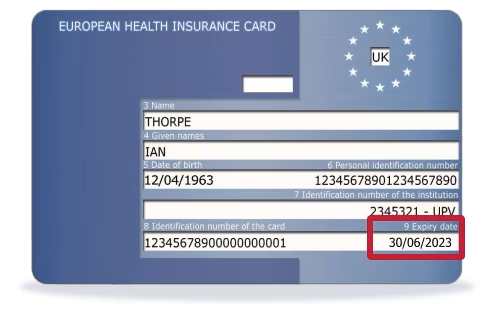
If you're off to an EU country (or some others, including Switzerland), ensure you have a Global Health Insurance Card (GHIC) or valid in-date European Health Insurance Card (EHIC).
A GHIC or EHIC gives you treatment at state-run EU hospitals and GPs at the same cost as a local. So if locals pay, you pay – if it's free for them, it's free for you. If you already have an EHIC, it will continue to cover you until it expires, so you MUST check it's still in-date as they expire after five years.
If you need to renew, or apply for the first time, you'll now receive a GHIC instead – but it does the same thing. For full help, including how to get one for FREE (never pay), see our Free GHIC or EHIC guide.
The last year for EHIC renewal was 2021, which means the last remaining standard EHICs will be expiring in 2026. By extension, the first batch of GHICs are expiring in 2026 too (1.3 million to be precise), so check those expiry dates!
An EHIC/GHIC is not a substitute for travel insurance – while very useful, they're only for medical cover.
Read our Cheap travel insurance guide for more info.
Off to the US? Beware unofficial ESTA sites
Everyone going to the States by air or sea needs to fill in an 'electronic system for travel authorisation' (ESTA) form.
Applications cost $40.27 each, yet beware googling it. Do this and you may be directed to sites that pretend to be the official webpage, and charge an additional fee to process your application. More details in Copycat websites.
Always apply via the official ESTA webpage. And see our ESTA guide for full info, including renewal help and safety tips.
Prepping to go? Your pre-trip need-to-knows
With your holiday booked, now you can start to prep your trip. And to help to keep your budget on track, here's some MoneySaving magic to make use of before you leave for your hols...
Grab a top travel card to bag near-perfect rates
Many cards add a 3% cost on top of the exchange rates that banks themselves get. You can avoid this by packing a top travel card that doesn't add this 'load', meaning you'll get near-perfect exchange rates which beat even the best bureaux de change. But with credit cards, always repay IN FULL to avoid interest.
Generally, you'll need to apply between one and three weeks before you go. Here are some of our top picks:
Credit or debit card | Main rewards & key info |
|---|---|
Lloyds Ultra (1) | - 1% cashback worldwide for a year (0.25% after) |
First Direct* | - FREE £175 if you switch bank to First Direct |
Chase* | - Easy to get, no hard credit check, don't need to switch |
These are our top few cards – see our full review for more options. Links for credit cards go via our eligibility calculator. Links to debit cards go direct to providers.
(1) Lloyds Ultra is only available direct, the link takes you to its site where you can check your eligibility before applying.
Full options in travel credit and debit cards, or see top prepaid travel cards.
Use TravelMoneyMax for the best exchange rates
When looking at picking up some currency, use our TravelMoneyMax comparison tool to find the best possible deal.
The tool lists all the big currencies, and also lets you see who's cheapest for exchanging unused currency back into pounds when you get back (if you've any left).
Don't wait till you're at the airport or ferry terminal, as you're then a captive customer, and will probably be lumbered with the worst rates. If you must get your travel cash from the airport, at least order ahead then pick it up to get a better rate.
Tips for when traversing the airport
Navigating a bustling airport while buried underneath baggage can make for unwelcome bookends to your trip away. Make it as stress-free as possible by following our key tips for in and around the airport.
-
Avoid hefty airport check-in fees. Boost your holiday budget by checking in online for free before getting to the airport.
-
Slash airport parking costs. Leave the car at the airport without booking first and you risk sky-high rates, so don't just turn up. Booking first, even on the day, could save you money. See our Cheap airport parking guide for more. Plus, beat airport drop-off charges with our 'Kiss and fly' airport drop-off guide.
-
Liquids over 100ml are banned through airport security – food isn't. It's usually much cheaper to bring your own food than to splurge on airline snacks. You could even theme it around your holiday destination. Canny MSE Forumites have compiled a huge list of cheap and delicious packed lunch ideas, from Spanish omelettes to Greek salads. Alternatively, forumites report that Boots meal deals can come in cheaper than plane equivalents. See the What to eat on a flight? forum discussion for more.
-
Check airline and airport restrictions. For example, Ryanair says passengers can take their own food and drink on board, but not hot drinks. Some airlines also have a policy on nuts, to protect those with allergies. British Airways asks that you don't bring nuts into the cabin, for example, while Ryanair asks that anyone with nut allergies tell the cabin crew so an announcement can be made.
-
How to find FREE water at airports. Hand luggage liquid restrictions mean passengers often shell out for pricey bottles of water after security. But many airports have water fountains where you can fill up an empty bottle for free. To help you find them, here's where you can . The Civil Aviation Authority has confirmed that doing this is allowed.
MSE believes that all UK airports should provide free drinking water fountains for their passengers. Unfortunately, not all do – when we last enquired, City of Derry, Glasgow Prestwick, Newcastle, Norwich and Teesside International all told us they don't have any. But some said you're welcome to ask cafés and restaurants to fill up bottles for free. -
Grab cheap or free access to airport lounges. Airport lounge access can be free with certain credit cards or bank accounts, or you can get it cheaply via promotions on Priority Pass and Dragon Pass, or frequent flyer schemes such as Virgin Atlantic's Flying Club. Our Free or cheap airport lounges guide has top tips.
-
Dress kids in bright colours. If you have kids (or you've ever seen Home Alone), you'll know how hard it can be to keep an eye on them in crowded places – especially if you're hurrying to catch a plane or transfer. So one way to keep tabs on the tiddlers is to dress them so they'll stick out like a sore thumb. Check out more, ahem, bright ideas in the Tips to keep kids safe when travelling discussion in the MSE Forum.
Always turn your sun cream bottles around

Many automatically buy sun lotion every time they jet off, but there's often no need to shell out – open bottles can still be effective for up to two years. The number you should find on the back of the bottle is a period after opening (PAO) number, which tells you how long you can keep using it for.
It'll normally look like a tub with an open lid and a number next to it (for example, 12 or 24) – that's the number of months after opening during which it should be OK to use.
The British Skin Foundation says: "Sun tan lotions may, given time, start to separate and become less effective, so it's always worth noting down on the bottle when it was first opened."

It also recommends storing your sun lotion in a cool, dark place, and avoiding leaving it in direct sunlight. (Just ask MSE Oli, left, who always practises safe sun.)
It's worth noting the PAO number isn't the same thing as the best before date, so check that too. The British Skin Foundation says you should always throw away sun cream that has passed its best before date.
Don't assume a pricier sun lotion is safer
Branded sun lotions can set you back up to a whopping £25 for a 200ml bottle on the high street. However, it's possible to downshift to an own-brand alternative without losing protection. Plus, skin care experts say they check out on skin safety.

The British Skin Foundation told us: "When choosing a sunscreen, rather than price or retailer, the two most important factors to look out for are its SPF and UVA rating.
"Firstly SPF, or sun protection factor, is the level of protection sunscreen gives against UVB radiation, the type that causes sunburn. This is usually on the front of the product. We recommend choosing one at SPF 30 or higher.
"Secondly, check the UVA rating, which tends to be on the back. Ideally, aim for four or five stars."

The UVA rating tells you how much protection the product is giving you from harmful long-wave ultra-violet rays. Some bottles have a star rating and those that don't should at least have a circle with the letters UVA inside, as this indicates the minimum level of UVA protection. These are the logos you should be looking for.
Here's where we found cheaper own-brand alternatives with five-star UVA protection:
Retailer/product | Price |
|---|---|
Aldi – Lacura sun lotion SPF 30, 200ml | £2.95 |
Tesco* – Soleil SPF 30, 200ml | £3.40 |
Asda – Protect SPF 30, 200ml | £4 |
Superdrug – Solait SPF 30, 200ml | £5 |
Boots* – Soltan SPF 30, 200ml | £5.50 |
Sainsbury's – Sun Protect SPF 30, 200ml | £6 |
Morrisons* – Morrisons sun lotion SPF 30, 200ml | £6 |
Prices checked June 2026.
If you can't ditch a brand you know and trust, try comparing prices and checking offers online on supermarket websites, plus Boots and Superdrug.
Do note: Sun cream will be more difficult to find in the winter months in the UK, so to get the prices above you might have to purchase in summer for your winter ski trip or jaunt to the southern hemisphere.
Bear in mind that some sun creams can contain chemicals that hurt coral reefs and a few island countries ban them. So if you want to protect the environment and avoid them, watch out for ingredients such as oxybenzone and octinoxate. You can see the full list of 10 chemicals on the International Coral Reef Initiative's website.
Check big excursion ticket prices before you go

Whether it's Disney, Universal Studios, a balloon trip or an aqua park, search early doors to see whether there are vouchers or cheap tickets. Specialist ticket agents can undercut buying direct, so use the theme park's own prices as a benchmark to beat.
For full details see our Cheap Disney tickets guide.
Use a free app to keep track of your travel plans
If you're planning a big trip, don't just let a mass of disorganised booking confirmation emails pile up.
Download the handy smartphone app TripIt – available free for iPhone and Android. Simply forward all your confirmation emails to it and it'll automatically sort them into a smart itinerary. You can also try Remember The Milk – free on iPhone and Android – which helps organise to-do lists.
Other ways to keep track of holiday info
-
Create a separate folder for crucial booking details. An easy trick to keep on top of travel booking info is to set up a separate folder in your email inbox with a memorable title, for example, "Thailand 2026". Move booking confirmation emails in as soon as they arrive. Give it a quick check before you leave to make sure you've got all the key info.
-
Screenshot your tickets and booking confirmations. Former MSE Jenny H likes to screenshot tickets, booking confirmations and other important documents. That way she has them to hand without worrying about Wi-Fi or losing a printout.
-
Print essential docs before you go. Some bookings will need printouts on arrival, such as airport transfer vouchers. Forget these and you risk having to pay to use printing facilities at the airport, or face problems on arrival. So print them in good time and store them safely with your passport.
Make your own travel-size toiletries

Travel-size lotions and potions can be pricey. Retailers know they're convenience goods and charge accordingly – but you don't have to pay through the nose to smell like a rose.
Our investigation in 2019 showed travel toiletries were up to seven times more expensive. Prices may have changed, but the mark-up hasn't. When we checked, a 90ml travel size Aussie shampoo was £2.50 in Boots (£2.78 per 100ml). Yet the full-size 500ml version worked out at £1.20 per 100ml, around 60% cheaper if you'd buy a full bottle anyway.
So instead of buying pricey travel size versions, grab some small clean empty bottles, and fill 'em up from your everyday toiletries (this is where complimentary mini-toiletry bottles from previous hotel stays come in handy).
Don't pay airport prices for travel accessories – try discounters
Pick up travel accessories such as eye masks and adapters at the airport and you risk paying inflated prices for last-second shoppers.
So plan ahead – you can often purchase them cheaply at discounters such as Home Bargains, B&M and pound shops, as well as at supermarkets and online, plus Boots and Superdrug. For adapters, the Travel Adaptor website has useful country-by-country info.
It's worth noting that even though public USB sockets are now readily available, it's safer and recommended to use your own USB-to-power-outlet plug, as those in public places can be tampered with by hackers to tap into devices.
Compare travel meds prices to get 'em for less

If you're jetting abroad, ensure you're vaccinated against any nasties before you go. Your GP will offer some vaccinations for free, but others can cost about £50. Some even require more than one dose, meaning costs shoot up quickly. The NHS website lists which vaccinations are free and which cost.
If you need to pay for travel meds, NHS prescription prices are fixed, but pharmacies can set their own for private prescriptions. These are given when you want a drug not covered by the NHS in your region, such as Malarone, which prevents malaria.
See our Cheap and free prescriptions guide for more ways to save.
Download Google Translate before you go

The Google Translate app (on iPhone and Android) is free, and doesn't require costly data or even Wi-Fi abroad. It lets you translate words and phrases into over 200 languages with internet access, and 90 without.
You do this by typing or speaking into the app and, for some languages, you can use your camera to automatically translate text in real time or via a photo (though it's not always accurate). It's also begun supporting AI-powered conversations to help you practise the language.
Download the language before you go
Google Translate lets you download free language packs in advance, which means the app will then work offline overseas. Each language pack is about 150MB, so ensure you download it in the UK via Wi-Fi if your data allowance is limited.
To get these, open the Google Translate app, tap the profile icon at the top right, then 'Downloaded languages', then tap the download icon next to each language.
On Android: The offline translation feature's only available if you're running a later Android system – which version you'll need depends on your phone. To check which version yours is on, go to 'Settings', then 'About device' or 'About phone'. You should be able to update the phone's software from here too.
On iPhone: It's also possible to save translations to your phone while you're online. To do this, press the star icon next to each phrase you want to store offline. It isn't perfect, but this can be a handy workaround if you're keen.
Try a FREE app to help you talk like a local
You can learn 40 languages completely free via language-learning app and website Duolingo. It has all the standards such as French, Spanish and Italian – but there's even 'High Valyrian' and 'Klingon' for Game of Thrones and Star Trek fans.
How does it work?
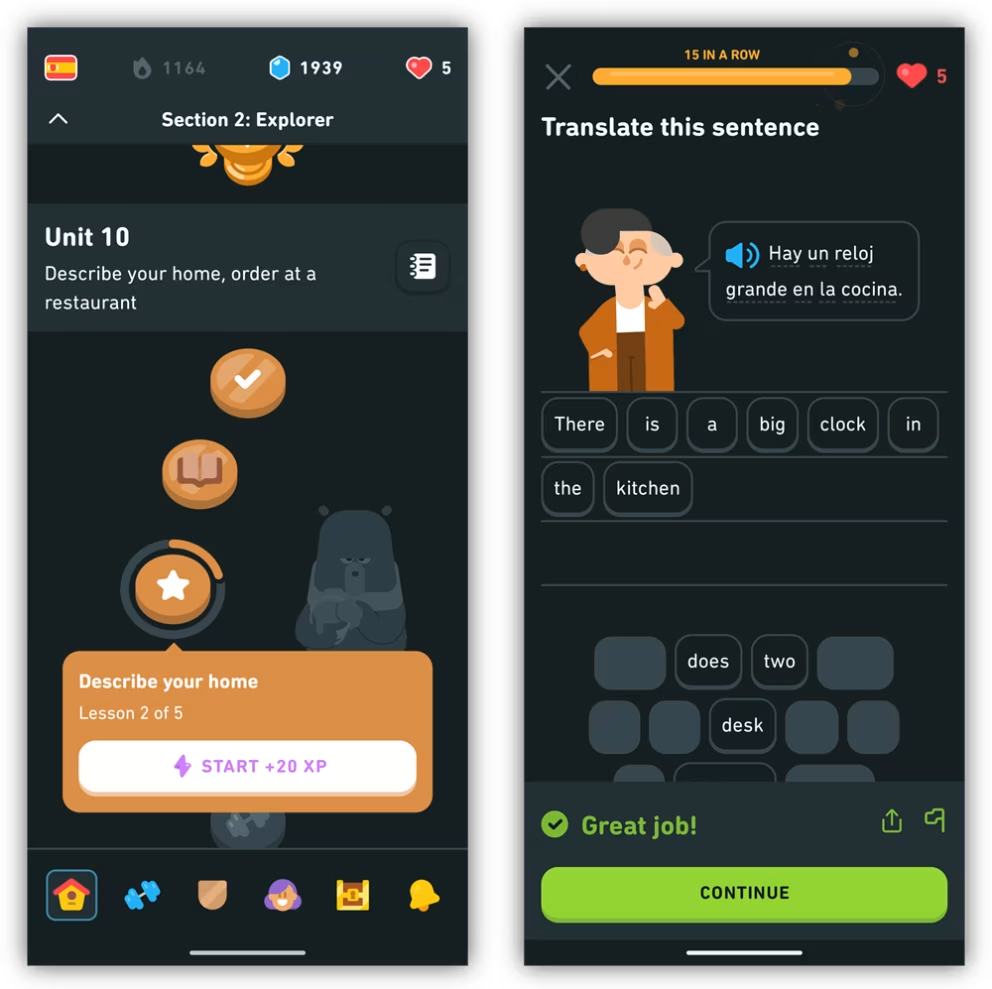
The app's available for iPhone and Android phones. It's free to download but there are optional in-app purchases. You can also learn via Duolingo's website.
You can set yourself goals of practising for five to 20 minutes each day, and it tries to make learning fun by turning each lesson into a game (for example, you lose lives when you get questions wrong).
Forumite Hermia has been learning French via the app:
I love it. I honestly have learned more from the app than I have from three years of classes at school!
Get focused travel info for free
Pick your must-sees and transport before you go (see car hire alternatives) to avoid shelling out on pricey last-minute trips, or ending up stranded at the hotel.
For ideas, TripAdvisor has a handy 'things to do' section with reviews of holiday attractions, activities, nightlife and shopping. Travel guidebooks can also offer valuable local knowledge on the go. Instead of buying, try the library.
Download the free Citymapper app to navigate like a local

Navigating public transport in an unfamiliar city can be daunting. But don't be tempted to automatically fork out for cabs – the free Citymapper app will have you hopping on and off the metro or subway like a true Parisian or New Yorker.
You can use it in over 100 cities around the world, including London, New York, Barcelona and Hong Kong. It's available for iPhone and Android, or you can use the web app.
How does it work?
The 'Get me somewhere' function lets you enter your destination and starting point to find the best route from A to B. It finds various public transport options, including bus-only, rain safe – for routes that minimise travel outdoors – and wheelchair accessible. Not only that, it will show you how long it would take to walk, cycle or take a cab.
The app covers a number of available public transport options, including bus, metro/subway, rail, tram and cycle docks. You can also use it to view transport maps, such as bus routes.
How to use the app offline
While it's a handy app to use abroad, make sure you don't rack up big data charges. Unless you're able to use your data for free, it's best to switch off mobile data and use Wi-Fi to plan your route. You can then save your journey offline using the star in the top right of the screen.
Turn your phone into a free worldwide sat-nav to avoid hefty charges

Use one of the following free apps (many of you will already have Google Maps) to help you navigate when you're abroad.
While the apps won't have the bells and whistles of a traditional sat-nav, crucially, you won't have to use any data when overseas.
Download the apps and maps before you go and then they're stored offline on your phone – the apps use your phone's built-in GPS to locate you and don't need data or Wi-Fi.
NOTE: If you're not using data, you won't get traffic alerts – you'll get the shortest route based on the assumption there's no traffic, which isn't always going to be the quickest route.
Our top-pick sat-nav apps – all free to download and use

Google Maps: Works offline too – so download before you go. The Google Maps app (for iPhone and Android) is easy to use, and offers real-time traffic and train info (if you're using data or Wi-Fi).
To download for offline use, search for the area you want and tap the three horizontal lines in the top left of the screen. Then select 'Offline areas'. It'll give you the option to select 'local' or 'home', or a 'custom area'. 'Local' or 'home' selects an area surrounding where your search is – 'custom' lets you specify an area. The maps you've downloaded are stored in the 'offline areas' section.

Maps.Me: Top for detail, including hiking trails and ATMs. Maps.Me allows users to add data to maps – such as places of interest or trails. It works in a similar way to Wikipedia with users making contributions, which is why its maps are so detailed. It also includes islands in addition to whole countries – great if you're going off the beaten track. It's available for iPhone and Android.
Driving abroad? Check whether your UK licence is valid
You DON'T need an international driving permit alongside your normal UK driving licence to drive in the European Union, Switzerland, Norway, Iceland or Liechtenstein. That's despite the UK having left the EU – see our Driving in Europe guide for full details.
Beware websites selling 'international driving licences' – these aren't legally recognised documents, so don't get caught out.

An international driving permit (IDP) is required or recommended in about 140 countries around the world, including the USA, Thailand and India. Drive without one where it's needed and you risk trouble with the authorities, and may be refused a hire car.
It's in booklet format and there are three types, called 1926, 1949 and 1968 (they're the same price). Which you'll need depends on where you're off to. See our How do I renew my driving licence? guide for full details.
Plus... driving in Europe? Check insurance, breakdown, equipment and road rules
It's easy to get caught up in the excitement of planning an overseas road trip, yet forget these tips and your dream drive may look more like a Mad Max outtake.
Here are some top tips from our Driving in Europe guide:
-
Car insurance. Most comprehensive and third party, fire and theft policies become third party outside of the UK. They'll pay if you damage another car – or someone else's property – but not your own, and there's no cover if your car's stolen abroad.
You may need to notify your insurer of your trip, so check your policy or call to confirm, and to see whether you need a 'green card'. See more in Driving in Europe. -
Breakdown cover. Go outside the UK and often your breakdown cover isn't valid. Check and if it's not, you can upgrade to a European policy or buy special one-off temporary cover. See Cheap breakdown cover.
-
Driving rules and requirements. Check country-by-country driving regulations in our Driving in Europe guide to ensure you're familiar with local rules and equipment you're required to carry before you go.
-
Do a maintenance check. Do all maintenance before you go, and ensure you've got manuals and the numbers to call if your vehicle breaks down. Make sure to carry the key to your locking wheel nuts too, if you have them, so the wheels can be removed if necessary.
-
Check whether you need a sticker to avoid a £70+ fine. Depending on where you're planning to drive, you may need to display an emissions sticker or badge on your windscreen. See Driving in Europe for more.
Taking pets abroad? You need an animal health certificate

If you're taking your pet from the UK to an EU country, you now need an animal health certificate (AHC) each time you travel. This covers dogs, cats and ferrets, and can cost over £150.
You will need to visit your vet to apply for a new AHC for each trip. Once your AHC is issued, you have 10 days to enter the EU with your pet. Once you're in the EU, the AHC is valid for six months for travel within the EU and for re-entry into the UK.
See the Gov.uk website for full details.
You'll also need to take the following steps:
Have your pet microchipped. UK law requires dogs (from eight weeks old) and cats (from 20 weeks old) to be microchipped anyway. See more on Gov.uk.
Vaccinate your pet against rabies. Your pet must be at least 12 weeks old before it can be vaccinated and you must wait 21 days after the primary vaccination before travel.
Some countries require tapeworm treatment for dogs. If travelling to Finland, Malta, Northern Ireland, Norway or the Republic of Ireland with your dog, you need to ensure that it's received treatment for tapeworm one to five days before arrival in these countries. This needs to be detailed on the pet's AHC.
As long as you keep your pet's rabies vaccinations up to date, you won't need to get repeat vaccinations for subsequent trips to the EU (other than for tapeworm treatments for dogs visiting the countries listed above).
To travel to Northern Ireland with a pet, you need to apply for a pet travel document, which is free and will last for the pet's lifetime. See Gov.uk for more details.
As of 22 April 2026, you need an animal health certificate (AHC) for your pet, rather than a pet passport.
However, in the weeks following the rule change, some MSE users reported still being able to travel with pets via ferry and LeShuttle using their EU pet passports. But official UK government advice is clear: get an AHC to travel into the EU with a pet, as without one you risk being denied entry. An EU Commission spokesperson also told us that "pets travelling from a non-EU country to the EU or Northern Ireland must be accompanied by an EU animal health certificate issued by a vet in the country of departure."
Don't waste cash on energy while you're away
Don't just turn off the biggies such as lighting and heating before a big trip – also ensure you remember to turn off any TVs and gadgets on standby too.
Many devices draw power when plugged in and not in use, so turn switches off at the wall if you can. It's also worth noting in winter you'll still need water to go through pipes at a minimal temperature, or you risk them bursting. See our Energy mythbusting guide for more tips.
Travel tips for when you're on holiday
Annnnnnd relax. You've finally made it. You've reached your destination, and you're free to power down and slide into holiday mode. But still stay sharp: just because your normal routine has stopped, doesn't mean the MoneySaving has to – so look alive and protect your pocket with these top tips and tricks.
Asked to pay in pounds or euros? Say euros
You'll often be asked this in banks or shops overseas, especially in Spanish tourist resorts. If you choose pounds then the retailer does the currency conversion – rates are often poor compared with letting your card do it (by choosing the local currency), although things are closer than they used to be.
If you've a top overseas card, always opt for the local currency as your card does the exchange and it's unbeatable.
If you don't have a top travel card, any saving on the rate won't be as big, but it's still safer to go with the local currency, as the vendor can set its own rate if it wishes, which will usually be worse than the credit card rate. See Martin's blog: Using plastic overseas? Always pay in euros.

Turn off mobile data and roaming to avoid shock charges
Under the 'Roam Like At Home' rules introduced by the European Union, you were once able to use your UK allowance of minutes, texts and data in the 'European Economic Area' (the EU, Iceland, Liechtenstein and Norway) without paying ANY extra charges, subject to 'fair usage' rules.
However, since Brexit, many firms have now brought back roaming fees in Europe, including major providers EE, Vodafone and Three. A bunch of providers still do let you roam like at home, however, and we've a full breakdown of what fees you may (or may not) face in our Cheap mobile and data roaming guide.
Some firms have told us they've no plans to bring back roaming fees – although this isn't an indefinite guarantee, so check your network provider's roaming policies below:
Provider | Extra charges | Fair use data cap (1) |
|---|---|---|
£2.72 a day for contracts £2.50 a day (£10 for 7 days) for pay-as-you-go | 50GB | |
None (2) | 25GB | |
Its Value and Complete plans include roaming. £2.75 a day for all other contracts. (5) or £2 a day if you joined before 18 Dec 2025 None for pay-as-you-go | 12GB | |
£2.74 a day (or £15 for 8 days or £20 for 15 days) for contracts From £9.60 for 3GB for 8 days for pay-as-you-go | 25GB | |
None | 5GB | |
None | 30GB (3) | |
None | 30GB | |
£2 a day | No set limit | |
None | 12GB | |
None (6) | 15GB or 5GB (4) | |
None | Depends on your plan |
Correct as of June 2026. (1) Most firms limit the amount of data you can use abroad. Check your provider's policy. (2) When you reach 25GB, you’ll need to purchase a data bolt-on. (3) If you joined or upgraded on or after 21 June 2023. Otherwise there's no set limit. (4) The lower limit applies to customers who joined on or after 14 March 2023. (5) If you need more than your UK data allowance, you can buy a Data Passport for £7 for unlimited data in 89 countries. (6) If you need more than your UK allowance you can buy a Euro Holiday Booster which gives you 15GB of data plus unlimited calls and texts to the UK and other European destinations (£2.25 a day, £10 for 8 days, £15 for 15 days).
Outside the EU, some providers charge as much as £8 a megabyte – so if you're not careful, you could rack up an eye-watering bill.
In these places, switch your data roaming off, or look into data-roaming add-ons, free Wi-Fi, or buying a local Sim card.
Buying a local Sim card at the airport will always be more expensive than getting one on the high street wherever you are, but if you want that instant convenience of having mobile internet without spending your holiday time looking for the best local Sim deal, then it's worth considering.
See our Cheap mobile and data roaming guide for more info.
Your POST-trip need-to-knows
Sadly all holidays must come to an end, but happily for most, there's always the next trip to plan. Plus, while reminiscing about your trip just past, bear in mind these key points for once you've got back home, including important information on your rights if something went wrong.
Flight delayed more than three hours? £100s in compensation is possible

If you're delayed by more than three hours or your flight's cancelled, you're often entitled to £100s in compensation where the delay was the airline's fault.
A landmark ruling by the European Court of Justice clarified that passengers were entitled to compensation for long delays (as long as they met the set criteria) following a challenge by some airlines. Following Brexit the rules haven't changed, as EU law has been written into UK law.
See our Flight delay compensation and Flight cancellation compensation guides for full details.
Bag 'free prints' promos for cheap holiday snaps

Once you're back, there's a quick trick to grab massive savings on getting holiday snaps turned into glossy photos.
Many photo-printing sites offer a set number of free prints to entice new customers. By playing the field, you can use different deals to get loads of holiday snaps printed free, though you'll need to pay for delivery. Check out our Free and cheap photo print deals.
Add your travel tips on the MSE Forum
The Overseas Holidays and Travel Planning forum board is a great place to share your travel experiences with others. Whether you want to natter about MoneySaving in Las Vegas or get tips on singles' holidays, it's well worth a visit. Plus share your tips in our Travel Tips discussion.
Share this guide?