20+ things I’ve learned about how to save money when you’re in perimenopause or menopause
Avoiding the meno marketing, getting cheaper products and free self-care (plus some tips from our forumites too)

My menopause journey began around the age of 46. It’s hard to pin-point the exact day because in my experience, it creeps up on you a little. Everyone's experience is different - which means we'll all be looking for different solutions. While one woman seems to manage to avoid the forgetfulness – AKA brain fog – another might be struggling with remembering her schedule. Someone else may experience anxiety and night sweats, another itchy skin and low libido.
The global menopause industry is booming and you've likely seen products that are branded with the word ‘menopause’, marketed via special aisles in supermarkets or TV and social media ads. If you're feeling anxious, or even desperate, because of symptoms, you may find yourself wondering if the product that's just popped up is the answer to your prayers.
I have had moments where I would part with my life savings for someone to help me during an anxiety attack, or to stop my skin itching. That's when symptoms can become expensive, as you panic purchase on the promise of a 'miracle cure'.
Can't we just ignore the marketing and walk on by? Well, the problem is that some menopausal women are prepared to spend money try and ease symptoms. Below I've shared what I've learned so far in the hope it'll help you save money in menopause, too.
There are a lot of products aimed at menopausal women on the market, claiming to help with symptoms ranging from itchy skin and lifeless hair to fatigue and intimate dryness. If you are in any way concerned about menopause symptoms, or feel unsure if you are in peri-menopause, a first step should always be to see a healthcare practitioner. It is highly likely you can get help via your GP or a health professional rather than spending money on creams or products you see advertised or on shelves in the shops.
-
Know your own symptoms – including your period
Being aware of your own symptoms is really important. It’s a way of checking in and saying ‘might I need this product?’ when faced with menopause marketing. You can use free apps to track your periods and symptoms. I use the health app that came with my iPhone, but there is also an app called Flo which has free options, or you could use an old-fashioned paper diary.
-
Save £££s a year on prescriptions with a pre-payment certificate
HRT stands for Hormone Replacement Therapy which is a treatment some women (myself included) use to help with symptoms. An HRT PPC is a pre-payment certificate for HRT. It allows unlimited prescriptions for an annual fee of £19.80. Savings can be huge because you might try different HRT as your menopause progresses, or need extra items as symptoms change. Read more on how it works in the MoneySaving in menopause guide.
-
Be prepared to 'haggle' with the GP
You don't have to take the first suggestion the GP offers. It’s not about being demanding, so much as being firm about what you feel might help you. For example, I was keen to know whether my testosterone levels were ok so I pushed for a blood test. This would have cost £230 at a private clinic.
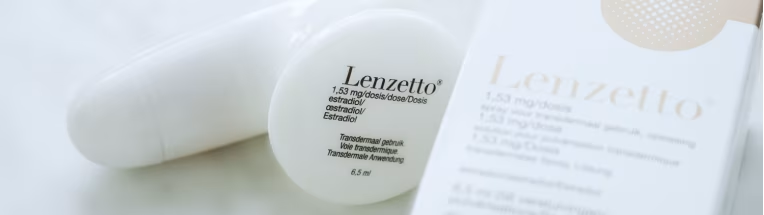
I have also gone back a few times to chat about estrogen. At first I had patches – I didn’t like how they reacted with my skin. Then I tried a gel (tricky, it has to dry, so you have to stand naked while it does).
Finally I was offered a spray (pictured above right), which works really well for me. Some friends haven’t heard of the spray so I’m sharing here to spread the word! And yes, I got all those options prescribed via my HRT pre-payment certificate, so there were no extra costs.
-
Get to know your pharmacist
My local pharmacist will suggest non-branded products that are cheaper than branded ones (we've delved into this for hay fever tablets, too). So I often speak to him when I need to talk about a symptom - a recent example is sore scalp, which he's given me some specific shampoo for.
-
Ask yourself: Should I see my GP instead of buying this product?
I have a golden rule with products that are aimed at menopausal women: If the symptom the product aims to 'help' is serious for me, I try and see my GP. If you have pain, irritation, something that is upsetting you, or causing your daily routine to be impacted, then I would argue you need a GP's help, not an off-the-shelf product.
-
How to dodge the menopause marketing
As I've tried to deal with my menopause symptoms, I’ve learned a lot about how to do that in the cheapest way possible. I’ve spent time perusing shelves of everything from menopause shampoo and supplements to even considering buying intimate creams via Instagram ads and managed to find cheap 'non-menopause' alternatives after my own research.

If, like me, you feel like there are products with the word 'menopause' on everywhere you turn, it can be hard to avoid an impulse purchase. Ask yourself if it will help your symptoms, or just feels like a product with the 'm word' on it. Are they just, well, knickers?
Use the MSE Money Mantras here with a 'meno' twist: Is this right for my symptoms? Can I afford it? Is it cheaper elsewhere?
-
Hide ads or unfollow brands on Facebook or Instagram
If adverts for 'menopause friendly' products are clogging up your social media feeds, you can hide them. Social media will always show you adverts, as standard, but choosing to say 'not interested' or this 'ad is irrelevant' tells the platform that you don't want ads about that particular topic.
-
But do chat to specialists, they can be super friendly and helpful
The menopause community online can be a real source of comfort and inspiration. I have spoken with a hair specialist and she recommended some products, one of which I was able to get as a trial size.
I also follow some nutritionists and exercise specialists. Watch out for posts with ‘ad’ on them – those are when the account holder has been paid to collaborate or advertise a certain product.
-
Be careful when buying travel insurance if you're on HRT
There's more on this in our guide to MoneySaving in menopause but some companies will expect you to declare HRT as you've been prescribed a prescription. I only discovered this when I was taking out travel insurance in March 2025 and a pop-up on the site I was using mentioned menopause.
-
Don't be lured into buying from the 'M-aisle'

Some supermarkets have trialled an ‘M-aisle’ – a part of the supermarket with so-called menopause friendly products. Some will have a logo called 'M-tick' which brands apply for. In theory this is to help guide women towards a product that might help with menopause symptoms. While it's a great sentiment, it's not always MoneySaving.
The MoneySaving point here is similar to 'don't go shopping when you're hungry'. Try and stay away from 'menopause friendly' products when you're vulnerable, or you'll spend in the hope of a 'miracle cure'.
-
Ignore adverts at motorway services and other unusual places (yes, really)
There are a few places you might expect to see adverts for creams to help with vaginal dryness, but a motorway service station isn’t one of them. Still, that’s where I saw a poster for a cream called Ovesse. It was advertised as being available without the need for prescription. While it might sound hassle-free, the cream is actually 1% estrodol, which you can get via a prescription.
Ovesse is £19.95 for a 15g tube. However, I have a 15g tube of 1% estrodol which I got via my GP (I also used my HRT pre payment certificate).
-
Seek out free samples
Samples are a free way to try a product you are interested in. I've had samples of No7 menopause day cream from (check out our latest Boots deals), a scalp scrub from the Body Shop and a body wash sample from Sanex. Keep up to date with MSE's freebies via our Supermarket Coupons guide.
-
Do look out for your trusted products on offer
I also keep my eye out for offers on products I do find helpful with my symptoms so I can stock up. For example, I use Aveeno body wash, and it is often on offer in Boots. Make the most of your advantage card points with help from MSE's Boots Advantage Card tips.
-
Give baby products a go
By chance, I’ve discovered some of the products I like best are baby products - and they're often cheaper. Baby bath and even nappy rash cream have come in handy. Read more on how supermarkets can hide cheaper products in the baby aisle in the MSE news story.
-
Got a cash plan through work? Claim back on treatments for symptoms like massage, acupuncture and reiki
Depending on your symptoms, you may be able to claim for self-care treatments through your work cash plan. For example, I have used a cash plan to claim for sports massage and acupuncture. I also use my cash plan to claim back for my HRT Pre-payment certificate.
Check your cash plan before you book any appointments – make sure it's covered. I did this via live chat with my cash plan provider.
-
Keep your favourite sanitary products to hand wherever you are
Menopause can mean irregular bleeding. And if it happens and you’re not prepared you might find yourself dashing to the shop for an emergency purchase of pads or tampons. To avoid an emergency spend, try keeping some pads or tampons in the car, your work locker or your handbag (or all three).
Some workplaces will stock sanitary products in the loos - if yours doesn't you could ask your office manager if that's possible. Read our guide to cheap sanitary products for more info on prices and options.
-
Try free lifestyle changes, including exercise. Walking is free!

Lifestyle is a huge part of menopause care and most of the lifestyle changes we can make don't cost anything - think walking, yoga, meditating. Read our guide on how to get fit for free. I find walking (with my two dogs) hugely helpful for my perimenopausal mental and physical health.
I have noticed a profound change in my mental and physical health and menopause symptoms thanks to weight training. It’s a gradual process, and you might find it challenging if you’re part of the ‘cardio generation’ of Gen X. But trying it is free – you can get workouts online and could buy weights from Facebook marketplace.
I also worked hard to get my steps up as my trainer encouraged me (as do online trainers) that this’ll help. I got a Fitbit from Amazon resale which I love.
-
Self-care is free – do what works for you
Being kind to yourself is the biggest MoneySaving thing you can do - it doesn't cost anything. Self-care is different for everyone, but it can be as simple as a bubble bath, cooking a meal you love, watching a TV show, meditation or going to bed early with a good book. Talking of which, prioritising sleep is also important and free.
-
Talk to your mates – advice is free and they might talk you out of an unnecessary spend
Friends can be a godsend for menopause chat. You won't all start at the same time (it might even remind you of who started their periods first) but when I did start to experience symptoms, I knew who I could turn to. We have WhatsApp chats, long discussions, we share links of what’s worked for us.
We also pull each other up when we're having low moments - and I'd encourage you to be open about your mental health with friends, family and even your manager, if you feel able. Then they'll be able to suggest ways to get help if you need it.
-
Need professional help? See if you can get it for free through your GP or workplace
If you feel you need to talk to a professional, ask your GP to refer you for counselling or whether you can access it through work. I have had sessions through my workplace with a free counselling service which were very helpful. If you’re too scared to ask your manager, look on the company intranet.
There are also menopause specific coaches – if you are considering working with one, then ask for a ‘discovery call’ or a 'chemistry call’. This is a free, informal chat (usually online). Don't ever pay for this call. You may also be able to ask your employer if they have funding for external coaches. More on help from work in the guide to MoneySaving in menopause.
-
Are you a partner, spouse, friend or colleague? Be open to listening and supporting
If you're the partner, friend, spouse, family member or colleague of someone in menopause, remember they need your support, too. Try and help them by sharing this, by helping them find time to see their GP, or by signposting them to workplace support. There's more on that in the guide to MoneySaving in menopause.
-
Check out tips from MSE forumites and share your own
Talking of talking and sharing... we also asked MSE Forumites what's worked for them - here are some of their replies:
I was warned against buying a memory foam mattress by the middle-aged woman assistant in the bed shop as they can make you hot, which isn't what you need when you are menopausal.
While it’s good that nowadays there is more openness about menopause, there’s also a lot of marketing hype targeted at menopausal women about products and treatments that just aren’t necessary and probably don’t work. Be prepared to rethink your skin care routine a little, experiment with trial sizes. You may need to adapt your wardrobe too if you carry weight differently. Maybe buy a couple of lighter layers you can take on and off if your temperature fluctuates.
I found flowing clothes in cotton, linen or viscose good. Anything polyester or wool was a sweat fest nightmare. A light summer duvet helped at night. As did fans, handheld or room-sized. Red wine or coffee was such a trigger for sweat outbreaks that even saying the words would cause it!
It was sleep issues that finally took me down the HRT route. All symptoms have improved since I started slimming world and eating healthier. It’s hard to do but perimenopause has brought raised blood pressure and cholesterol so I had to tackle my diet even though it’s hard to do when so many other things going on. I’d advise anyone from 40ish to tackle weight and health before perimenopause really kicks in. It will save a lot of hassle and money in the long run.
Share what's worked for youJoin in with the conversation on the MSE forum
Share this guide?


 Latest weekly email