
Law firms signing people up for mass action against Facebook and Instagram over scams


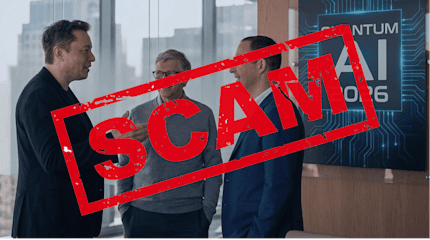
Social media is a cesspit of fake scam adverts, with deepfakes promising nonsense get-rich-quick schemes. Big tech firms are said to make billions from scams. Now a group claim against Meta – the parent company of Facebook and Instagram – is in the works, and the firms behind it say 100,000s could be eligible to join.
If you've lost money to social media scams, there's no harm at this stage in signing up, though you might not want to go through with it once you've read the full details when published at a later date. We'll provide more info on MoneySavingExpert.com (MSE) at that point – sign up to our weekly email for updates. Here's what we know for now...
The law firms believe Meta has been 'negligent' over scam ads
The law firms preparing the case – Humphries Kerstetter and Richardson Hartley Law – say Meta "has made billions of pounds" from showing fraudulent adverts to users, pointing to "internal documents leaked" to Reuters news agency.
They argue that Meta "has acted in breach of contract and been negligent" by allowing these adverts and "not taking sufficient steps" to remove them to protect users.
We've asked Meta to comment and we will update this story if and when we hear back.
You can register your interest in the case – but don't expect a quick payout
The case is still at a very early stage. So far, the law firms involved are only asking people to register their interest if they've lost £2,000 or more after seeing a scam ad on Facebook or Instagram in the last six years. This minimum has been chosen because of the "legal and administrative costs" associated with launching and running the claim, the firms have said.
Registering at this stage means you'll be kept up to date with any developments – but the firms have warned that "it can take several years before you know whether or not the claim has been successful".
While there's no fee to join the action, if the case is successful, the firms behind it will take a cut of any payout. It's still unclear how much this will be, but they've said it will be capped – in other group claims, this rate has been as high as 35%.
You shouldn't have to pay anything if the case were to fail
The claim is operating on a 'no win, no fee' basis, which in theory means you should only pay if it's successful. However, if you do eventually decide to see the case through, there are some risks to keep in mind. If the claim ISN'T successful, while you're unlikely to have to pay anything, it's not impossible.
If a court ruled in favour of Meta you could technically be liable for its legal costs. In practice, this would likely be covered by the law firms' insurance, which they've said they'll be putting in place – but this can be capped, so it's not bulletproof.
Plus, if you sign up to the claim and later withdraw, in some cases you may be liable for legal costs – depending on the firms' terms and conditions and how far your case has progressed.
You'll be asked to decide whether to proceed later
At the moment, if you register your interest in the claim, you WON'T be locked into participating if it goes forward. The firms say they'll be in touch with all who've registered when they believe the case can go ahead. At that stage, you'll be given additional information and can decide whether you'd like to see the case through.
When initially registering, you'll only be asked for general information – aside from your contact information, any details you provide about the scam itself (such as the amount you lost or the company which ran it) is optional. Though note that going forward, you may be asked for additional information, including documentation.
Martin Lewis and MSE have long campaigned against social media scams
MoneySavingExpert.com (MSE) founder Martin Lewis' face has been plastered over social media for many years by unscrupulous fraudsters looking to scam people out of money. Martin was the most commonly used identity (44%) in all scam ads reported to Action Fraud (now Report Fraud) in 2024, followed by Elon Musk (40%) and Jeremy Clarkson (8%). See our Martin Lewis scam adverts guide for more info on what to watch out for.
In fact, Martin sued Facebook himself in 2018, in a landmark campaigning defamation lawsuit after 1,000s of scam adverts appeared on the site abusing his name or image.
Martin settled the lawsuit in 2019 after agreeing with Facebook on a major two-pronged action plan to fight the problem: that it would donate £3 million to set up a new anti-scams project and create a scam ads reporting tool supported by a dedicated team, unique to Facebook in the UK. However, we've seen little progress overall in quelling scam ads since that settlement.
More recently, Martin wrote to the Prime Minister to ask, 'Why have you done nothing to tackle scam ads?'. In the letter to Keir Starmer, Martin called on the Government to instruct Ofcom – the regulator responsible for enforcing the Online Safety Act – to speed up its work and start taking action against platforms that host scams as soon as possible.




Share this guide?


 Latest weekly email













Clever ways to calculate your finances


