
'Why can't you just cut Standing Charges?' – Martin Lewis puts your questions to energy regulator boss


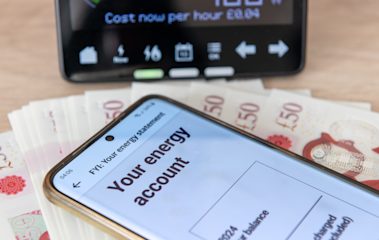
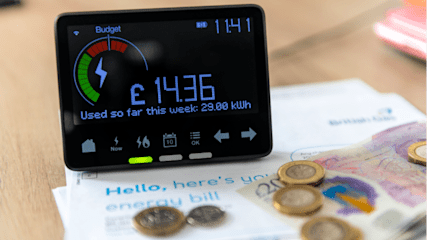
Standing Charges – which you pay just for the facility of having gas and electricity, even if you don't use any – currently make up £300 of the average bill, penalising lower-use households and disincentivising people from cutting their energy usage. In the latest must-listen instalment of The Martin Lewis Podcast, Martin discusses the issue and what can be done about it with Ofgem boss Jonathan Brearley.
Listen: Martin vs Ofgem Boss – Standing Charges | Why are bills so high? | Is the Price Cap a rip-off? | Plus lots more

In this episode of The Martin Lewis Podcast, recorded for BBC Radio 5 Live on Thursday 30 October, Martin sits down with Ofgem's chief executive, Jonathan Brearley, to discuss all things energy – including the hotly-debated topic of Standing Charges.
We've summarised that discussion below (it starts at 32:43 in the pod), but we recommend listening to entire interview as it covers a lot of ground:
🔊 BBC Sounds | Spotify | Apple Podcasts
(Or anywhere else you like to listen to Martin.)
Why can't Ofgem simply reduce Standing Charges?
Virtually all energy bills are made up of a unit rate – what you pay for each kilowatt-hour of gas and electricity you use – and a daily Standing Charge. This Standing Charge is the cost you pay to your energy supplier for having access to gas and electricity, even if you don't use any.
During the interview, BBC Radio 5 Live presenter Adrian Chiles asked Mr Brearley, on behalf of a listener, why the energy Standing Charge couldn't be reduced.
Mr Brearley explained that the Standing Charge covers certain fixed network costs that can't simply be removed from bills. As a result, if the Standing Charge were to be cut, the unit rate would have to go up instead.
This means certain households – such as those on very low incomes, with poor insulation or with disabled residents who require higher energy usage – would be made worse off, unless the Government introduced targeted support for them to offset the loss.
In response, Martin said: "I agree on that particular point, the way we wanted to bring the Standing Charge down was, it needed the Government to put that targeted support in, not you... I know that you wanted it to happen, so I'm not going to beat you over the head with a stick on that one."
Martin: 'Ofgem's current proposals mean firms could offer lower Standing Charges but outrageous unit rates'
Mr Brearley went on to explain that under Ofgem's current Standing Charges consultation, all major energy suppliers would have to offer at least one tariff with lower Standing Charges – though you would need to proactively switch to it.
But Martin raised two objections to these proposals:
-
Because these 'low Standing Charge' tariffs won't be under the Price Cap mechanism, there's no limit to what firms could charge on the unit rates. Martin said: "What I could do if I were a scurrilous energy firm is offer a low Standing Charge option, but with outrageous unit rates, which effectively means no-one is going to sign up for it."
In response, Mr Brearley said that Ofgem was "onto that problem", adding that its regulations will say that the transfer of cost "has to be reasonable", and that the regulator would be "monitoring that really closely". -
Some of those who most need lower Standing Charges – older and vulnerable people – don't tend to switch, so they won't benefit if the 'low Standing Charge' tariffs are optional. Martin explained: "By making this a choice mechanism, they [vulnerable households] will not gain the benefit of a low Standing Charge as a low user. They will face the moral hazard that if they cut their bills, they don't get the gain from it. You've got many older people who don't use their gas in [summer] but are paying a high Standing Charge for it."
Mr Brearley said Ofgem is "concerned about that group" and that the regulator was "working closely with the Government" to get to a "more systematic solution" to the problem of high energy costs.
Ofgem: 'Introducing a Price Cap with low Standing Charges would be too hard'
Martin has previously suggested a 'dual Price Cap' as a potential way to lower Standing Charges – under his proposed solution, one Price Cap would be as it is now, and the other would have no or low Standing Charges, with vulnerable users being defaulted to whichever one would be best for them.
While interviewing Mr Brearley, Martin reiterated his suggestion: "My proposal was that you have two Price Cap options, and then for vulnerable people – let's say those on the Priority Services Register as an example – you would default to automatically switching them to whichever one is cheaper, based on their prior year's usage (with an opt out mechanism). That would protect the most vulnerable people in society."
Mr Brearley confirmed that Ofgem had looked at this option, but didn't take it forward because "there's a lot of complexity in what tariffs people want", and because having a dual Price Cap would be too complicated to administer. "We felt that was too hard," Mr Brearley said.
But Martin pushed back, asking what made it so difficult and arguing that it should be possible given how much data energy firms have – "I'm sorry, I don't believe that's a valid excuse," he said.
In response, Mr Brearley said Ofgem's current plans are just the "first step", adding that the regulator is also taking a "more fundamental look at all costs in this system" through its so-called 'cost allocation review'.



Share this guide?


 Latest weekly email









Clever ways to calculate your finances


