
Autumn Budget 2025: £150 to be cut from energy bills from April 2026 – and Martin Lewis has pushed for this to include households on fixes


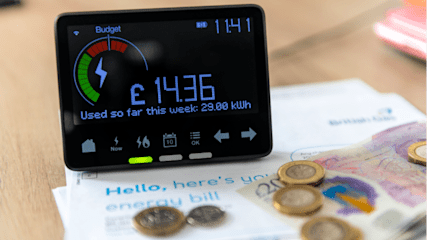
From 1 April 2026, households in England, Scotland and Wales will see their energy bills cut by £150 a year on average, the Chancellor has confirmed in the Autumn Budget. The reduction will take place due to various green levies paid by consumers being removed from bills. But MoneySavingExpert founder Martin Lewis has urged the Government to pass these savings onto those on fixed tariffs too.
MSE's Autumn Budget 2025 coverage
Check out all of our other MSE News stories following the Chancellor's announcements:
Full round-up of the key measures, including MoneySavingExpert.com founder Martin Lewis's video analysis of what they mean for you.
The cash ISA limit will be cut to £12,000 a year from April 2027 – but only for those under 65, as Martin called for. We explain what's happening.
The salary sacrifice pension perk is to be capped at £2,000 a year from April 2029. We explain what's changing.
The Chancellor has asked the telecoms regulator to review 30-day cancellation periods. Again this follows intervention from Martin.
Households will save £150 a year on average from April 2026
The Government has today (Wednesday 26 November 2025) confirmed that it will end its Energy Company Obligation (ECO) scheme in March 2026, as well as reducing the amount households pay towards the Renewables Obligation (RO) scheme through their energy bills from 1 April 2026.
Together, the Government says these measures will save a household around £150 a year on average from 1 April 2026. The reduction will largely be seen on electricity bills, with unit rates being reduced as follows:
-
Electricity: down 3.37p/kWh (3.54p including VAT).
-
Gas: down 0.31p/kWh (0.35p including VAT).
Martin Lewis: It's 'unthinkable if this were not passed on to those on fixed tariffs'
Commenting on the announcement, Martin has urged the Government to ensure the savings are passed on to consumers on fixed energy tariffs. He said:

Having spoken to a senior member of the Government on energy bills since the Budget announcement, there is a clear expectation that suppliers will pass on this saving to people on fixes. There is precedent for this under the Energy Price Guarantee – that was a subsidy on bills that energy suppliers passed on to fixed rates.
This is the removal of a cost from bills, which is the mirror image. There is no problem with the process. It would be unthinkable if this were not passed on, and destructive to Government, suppliers and consumers, because it would break the whole idea of getting people to switch if they can't trust that these things would continue on.
So I am very confident that this will happen, otherwise I will be in revolt.
The Government says energy regulator Ofgem will work with suppliers to ensure these savings are passed on to those who are already on fixed tariffs as at 1 April 2026. We'll update this story when we have more details.
The Energy Company Obligation scheme will end in March 2026
Part of the reduction to household energy bills will be funded by the ending of the Energy Company Obligation (ECO) scheme, which includes the Great British Insulation Scheme (GBIS), on 31 March 2026. However, technically ministers have agreed to a nine-month extension of ECO (not GBIS) to the end of December 2026. This is typically so any existing work agreed on can be fulfilled, though this is still subject to Parliamentary approval.
The ending of these schemes will cut a typical dual-fuel household's energy bill by £62 a year. These schemes were launched to help households lower their home heating costs by providing free or low-cost energy efficiency measures. Existing applications to the schemes will continue to be processed until the ECO and GBIS end.
However, the schemes have come under criticism. Earlier this year, the Government admitted to "systemic failure" with solid wall insulation fitted under the schemes.
Some low-income households in England may instead be eligible for a grant for energy-efficiency measures through the Warm Homes Plan, which the Government has said it will be providing an additional £1.5 billion of investment to tackle fuel poverty.
The Renewables Obligation scheme will be part-funded by the Government until March 2029
The Renewables Obligation scheme was designed to encourage renewable electricity generation in the UK, such as solar and wind farms. The costs incurred by electricity companies in investing in renewable electricity generation have, to date, been 100% funded by consumers through policy costs included in your electricity bill.
But for three years from 1 April 2026, the Government will fund 75% of these costs, reducing a typical household's electricity bill by £92 a year. This funding is set to end in March 2029, when these costs are expected to be added back to consumer electricity bills.
It works slightly differently in Northern Ireland
The ECO scheme doesn't apply to households in Northern Ireland, so this saving won't apply here.
There is a similar scheme to RO running in Northern Ireland, but it'll be down to the Executive to decide whether to follow the UK Government in partially funding this scheme and therefore passing on the costs to consumers. We've put this question to the government in Northern Ireland and we'll update this story if we hear more.




Share this guide?


 Latest weekly email












Clever ways to calculate your finances


