


Property auctions
Buying repossessions and what to look out for

It's possible to buy repossessed and distressed properties at 20% – in some cases nearer to 30% – under market value through an auction. If you're willing to do the renovation work, these can represent some of the best buys available. This guide explains how buying a repossession at auction works and how to bid sensibly.
Essential auction information before you get started

A repossessed property is a home that's been seized by a mortgage lender because repayments aren't being made. As a mortgage is a loan secured against your home, if you miss repayments your home could then be repossessed.
But be warned that buying a repossessed or distressed property can be a minefield, so do plenty of research beforehand. Below are four need-to-knows to be aware of:
Finding your mortgage repayments tough? See our Struggling with your mortgage guide.
💡 Lenders often want a quick sale – so you could bag a bargain
Homes being sold after repossession can go cheap, because the seller – often a mortgage lender like a bank – wants a quick sale, as it loses money while the property remains empty.
When a bank or building society repossesses a home, it needs to get as much as it can for the property to minimise any losses. While most sellers take the time to dress up their home and wait for the right offer, lenders often just price them cheaply to sell quickly.
💡 It's not just doer-uppers – you could find a new-build too
While many repossessions are homes previously owned by borrowers who struggled with mortgage payments, others are new-builds from developers who fell on hard times – there may even be homes from pressured sellers looking for a quick sale following death/divorce.
Either way, it's crucial to know exactly what you're purchasing. Some of these properties will need serious amounts of TLC, costing £1,000s (often more), to make them liveable.
💡 You could get up to 30% off the market value
You can typically get anything between 10% and 30% off the market value. Usually the more work a property needs, the bigger the discount, though possibly you'll need to spend more to get the property in shape. So often there is a trade-off to consider.
While increasing numbers of first-timers are buying through auction these days, those willing to put in the effort and do up unloved properties can still find themselves great deals.
Additionally, there is usually no chain involved, meaning the buying process is a lot faster.
💡 Don't buy a wreck on a whim
Your best bet is to visit an auction property several times, crucially with a solicitor or surveyor. While there can be properties out there for under £50,000, don't be hoodwinked by the price alone – get a survey done first to reveal any horrors before making an offer.
Getting a survey done is particularly important with repossessions, as there could well be hidden defects which meant the seller was not able to sell the property themselves before being repossessed. Plus, there are no existing owners to pass on helpful tips about the leaky roof and how next door is disputing the height of your hedge.
To quickly get a handful of surveyor quotes, see Compare My Move or reallymoving.
Be sure to factor in the cost of repairs as well before making an offer. It's worth taking a builder along to the property when you visit to get some estimates, which'll help with this.
Quick property auction / repossession tips
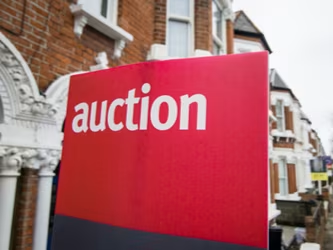
'Repossession' doesn't necessarily mean 'bargain'. View other properties too and research the area thoroughly, just as you would any potential new home. Then you'll know whether the repossession genuinely represents a 'bargain'.
Before you begin viewing repossessions in earnest, have a read of these property auction/repossession tips:
Investigate the property and area thoroughly. Carefully consider its transport links, employment levels and whether the schools are any good. Our Property search tips guide has more ways of identifying whether a specific property is a good investment.
Get a good mortgage deal. If you need a new mortgage, consider speaking to a broker, as they'll have a good idea what kind of deal you're able to get. Securing a mortgage on a repossessed home is the same as with other property, though completion is quicker. See our Cheap mortgage finding guide and First-time buyers' guide for mortgage help.
The lender DOESN'T have to take the property off the market. Often lenders are able to continue marketing a property even after they've accepted an offer, leaving a chance you'll be gazumped. This could mean you losing fees – so try completing quickly.
Check what the situation with tenants is. Confirm that any previous tenants have handed over the keys and the property is unoccupied. If the property is a former buy-to-let, there is a possibility it may have been resold with a tenant in place.
Switched-off utilities. Gas and electricity services may have been cut off by the time you move in. These can normally be switched back on for free, though some charge.
Check your credit rating. Check your credit file a few months after moving in, just to ensure your finances haven't been incorrectly mixed up with those of the old owners. While highly unlikely, you should be checking your credit file regularly anyway. We've got whole guides on Checking your credit file for free and Improve your credit rating.
Check the post. If a debt collection letter addressed to the previous owners arrives, contact the company and let them know the previous owners have moved out.
Beware missing fixtures and fittings. These properties often need a refurb. At best, they might feel a bit unlived-in. At worst, fixtures and fittings might've been stripped out.
How to bid at a property auction

Even at 30% off market price, property is very expensive. So you need to know what you're doing before bidding.
Here's a step-by-step on how to bid at an auction.
Step 1: Do your research
You need to work out what else is on the market and for how much. This will help you work out if a repossession is a bargain or not (if might not be if it has an overpriced reserve – a minimum price set between the auctioneer and seller).
Our Free house price valuations guide can help you work out the true value of a property.
Step 2: Try a dry run first
Go to a couple of auctions as an observer first to get a feel for the process. It can be a fun afternoon and help you quash any nerves ahead of the real thing.
Step 3: Check what fees you'll need to pay
Fees can add significantly to the cost of buying through auction, so make sure you know exactly how much they are and factor them into your bidding strategy.
Fees should be listed in the auction listing's legal pack. Read this pack thoroughly ahead of bidding day. And watch out for underhand tactics that can make it harder to spot fees:
-
Extra fees being added to the pack after it's been published. This has been known to happen just a couple of weeks before the auction day. So consider checking the legal pack on more than one occasion in case of nasty extras appearing.
-
Fees not being immediately obvious. For example, the phrase 'special conditions' might be used instead of fees, or the cost of a fee written as 'per cent' rather than '%'.
Be aware these fees can sometimes add £1,000s, even £10,000+, to the price of an auction property, so you really need to factor them in. It's rare to get out of paying these fees.
Step 4: View the property
Catalogues with property listings are usually released a month before an auction, allowing time to view properties and get surveys done – so sign up to catalogue distribution lists.
Once the catalogue has been released, view properties as early as possible. That way you may be able to make an offer ahead of an auction, for a little over the reserve price. If the seller is ready to make a quick sale, you could get a deal there and then.
Professional investors might not bother with a property survey, but as auction homes are more likely to have defects, it's crucial that you do. While the survey fee might end up being for nothing if you don't win the auction bid, skimping on a survey could be even costlier.
Step 5: Get finance in place
Unless you're a cash buyer, you'll need to get finance in place before bidding at auction.
Speak to a mortgage broker and get an agreement-in-principle (AIP) from a lender, which will indicate the maximum you could borrow. Be mindful this isn't a formal mortgage offer – most lenders won't do this until you've successfully bid and they've sent a valuer round.
Even with an AIP, if a lender disagrees with the property valuation it may not ultimately offer you a mortgage. So you should arrange a full survey and valuation before bidding.
After a successful bid, you'll normally be required to pay a 10% deposit on the day and any admin charges. Check the catalogue or with the auction house for payment methods (cash isn't normally accepted). You'll need to produce proofs of ID as well.
You'll then have between 14 days and six weeks, depending on the auctioneer, to pay and complete. So apply for your mortgage pronto. Miss the deadline and you lose the deposit. If you need to sell your current home, that sale should be completed before you bid at auction.

Step 6: Decide on a bidding strategy
Once you've had a thorough read of the sale conditions and familiarised yourself with any deeds and leases attached to the property, set a maximum price so you don't overshoot on the day.
Be sure to factor in the cost of any fees and refurbishment into your maximum price too, as once the hammer comes down, you're stuck with it. On auction day, try not to bid too early. Rather, come in later to avoid pushing the price higher.
If you lose, don't be disheartened – many people don't win first time around.
Property auctions near me
Auction houses that deal in repossessions have always been the favourite hunting ground of property investors. Yet specialist property auction websites exist too.
There's no perfect pick – they all have pros and cons, so please send us your feedback.

Auction houses
Some of the UK's best-known auction houses include Allsop, Barnard Marcus and Savills.
Filter your search for repossessed homes, or else just contact the auction house to see what they have on their books. Handily, Allsop also lets you search for completed auctions, a good way to glean a property's market value.
Estate agents & local papers
Often estate agents sell off repossessed homes, but don't advertise. Contact them and ask what they have on their books. Auctions are sometimes advertised in local papers too.
The fewer home hunters that know about a property, the more likely you are to get a great deal. If you find a property you like, you can ask to attend a viewing as normal.
Websites for repossessed properties
There are also websites that source repossessed properties for you.
Property consultancy Property Secrets sends out emails with properties to subscribers for free. Its premium membership is primarily for property developers and costs £100 a year. Alternatively, EIG has a huge database of property auction lots but costs £525 a year.
If you've bought an auction property before, we'd like your feedback on the process. Please leave your comments in the forum's Buying repossessions discussion.
Looking for more home-buying help?
We've got lots of other useful guides:
First-time buyers' guide. How to get on that first rung.
Remortgage guide. How the remortgage process works.
Cheap mortgage finding. Search for your top deal.
Mortgage Best Buys. Today's top mortgage deals.
Shared ownership. An alternative way of buying a home.
Share this guide?