




Private health insurance
What it is, how it works and where to buy

The National Health Service (NHS) provides comprehensive treatment in the UK, regardless of ability to pay. Yet if you want to opt for private care, that's where health insurance comes in, but it can be costly. This guide explains how it works, what to watch out for, and how to keep costs as low as possible

First, a quick overview of private health insurance
Private health insurance covers certain treatments if you become unwell, working alongside the NHS to give faster access and more choice of specialists. There are often exclusions, and it can be costly, so you'll need to weigh up if it's worth it for you. Here’s a quick rundown:
Check what’s covered. Policies focus on acute, short-term conditions that start after your cover begins. You'll usually need to be referred by a GP and must get the treatment or appointment approved by the insurer first.
Watch out for exclusions. Chronic conditions aren't usually covered, beyond initial diagnosis. And pre-existing conditions usually aren't covered at all, unless it's been a long while since it last troubled you.
Know what you want? Compare prices yourself to save £100s. Use these comparison sites to find the best deal (the brokers behind the comparisons can also give advice if you need it):
- Which Health Cover* (via our link you get £125 cashback or a month free)
- MoneySupermarket* (via our link you get a £120 Amazon voucher)
- Howden Life & Health* (via our link you get £100 cashback)Unsure? Get personalised help. If your medical history is complex or you don't know what to pick, a broker (like the ones above) can advise and search a wider range of options – see how to find a broker.
Beware switching if you've claimed. You could lose cover for any existing conditions if you move to a new insurer. If that would cause an issue, try haggling with your current provider.
What is private health insurance?

Private health insurance – or private medical insurance (PMI) – is a policy that covers the cost of private medical care should you become unwell. It works alongside the NHS, and often gives you access to shorter wait times, a choice of location, and treatments only offered privately.
You pay a monthly premium and in return the insurer pays for certain consultations, tests or treatment you may need, depending on the level of cover.
What does private health insurance cover?
It normally covers non-routine tests and treatment for acute medical conditions. These are serious, curable, and usually short-term issues that start after your policy begins.
Basic plans usually cover essential treatments, while comprehensive health policies can also include specialist therapies or medicines.
Typically covered:
-
Inpatient treatment: surgery, hospital accommodation, and nursing care
-
Outpatient consultations, tests and scans
-
Specialist therapies (such as physio – often capped)
-
Some drugs unavailable on the NHS
-
Short-term musculoskeletal conditions (such as back pain)
-
Digestive system conditions (such as gastroenteritis)
-
Heart and circulatory diseases (such as coronary heart disease)
-
Eye and ear conditions (such as an inner-ear infection)
Typically NOT covered:
-
Chronic conditions (such as diabetes, asthma, and arthritis)
-
Pre-existing conditions (unless agreed when taking out the policy)
-
Routine pregnancy care, labour and IVF
-
A&E and emergency treatment (NHS only)
-
Cosmetic procedures
If your tests lead to a diagnosis of a chronic condition, the initial tests are usually covered by the insurer, but the long-term treatment and ongoing management aren't.
For example, if you developed symptoms of diabetes and your GP referred you to a specialist to diagnose the issue, your policy should cover this. However, if you were then diagnosed with diabetes, any treatment, medication, or check-ups would no longer be covered and would instead pass to the NHS.
Cancer cover varies by provider
Many take out PMI for cancer cover, but what’s included differs by policy and provider, so always check.
Usually covered: Specialist consultations, diagnostic scans (MRI/CT/PET), surgery, radiotherapy, chemotherapy, and some drugs not funded by the NHS.
Possible limits: Annual or lifetime caps, restricted follow-up monitoring, no experimental drugs, limited palliative or end-of-life care.
Mental health cover also varies
If you're looking for mental health cover, make sure you check your policy, as this also differs by provider and plan.
May include: Counselling, psychiatrist or psychologist sessions, inpatient psychiatric care.
Possible restrictions: Annual session caps, no long-term treatment, no addiction treatment, limits on inpatient days.
It’s different from a critical illness insurance policy. Private health insurance pays for medical treatment to get you better, while critical illness cover pays out a lump sum to help offset any loss in income. Full info on that's in our Critical illness guide.
Should I get private health insurance?
Private medical insurance is completely optional. Some people value faster treatment and wider choice, while others are happy to just stick with the NHS. So you'll need to weigh up whether the monthly cost is worth it for you.
Here are some key points to consider:
The NHS may be sufficient depending on your needs

Even with private medical insurance, you’ll still use the NHS for GPs and A&E. For serious illness, private care isn’t always faster, though it can be for some treatments.
For less serious cases, benefits include quicker referrals and more choice of times or locations. So paying for healthcare could be considered a luxury.
Consider self-insuring
Instead of paying an insurer monthly, you could put that money into a top savings account. If you need treatment, dip into your 'insurance fund' and pay it yourself from there. If you don’t need any treatment, you keep the cash.
But it takes time to build savings, and treatment can be costly. For example:
-
Carpal tunnel release on one wrist: about £2,000
-
Cataract surgery (one eye): about £3,000
-
Hip/knee replacement: from £10,000
You could combine self-insuring with a high-excess policy. That way, you pay less for the policy, yet you're covered for the more expensive major procedures.
Check if you're already covered by your employer
Some employers offer private medical insurance as a perk (though taxable) or a paid option. Firms’ bulk-buying power often means they can negotiate big discounts, so compare it with the cheapest plans that meet your needs.
But beware: If you claim and later leave, you may lose cover for existing conditions or face huge premiums.
Why do you need private health insurance if we have the NHS?

The NHS and its staff are true national treasures, and it still provides excellent urgent and emergency care. Yet routine treatment waits have grown sharply in recent years, with NHS England data showing millions of people on waiting lists for planned operations and specialist appointments.
Private medical insurance is optional, and it runs alongside the NHS rather than replacing it. The main benefits people typically look for are:
Shorter waiting times for many non-urgent procedures, which can reduce stress and uncertainty.
Access to a wider choice of specialists and some treatments, including certain drugs or procedures not routinely offered on the NHS.
Private rooms in many hospitals (sometimes with an en-suite and TV), though this isn’t guaranteed.
PMI doesn’t cover emergencies such as visits to A&E or ambulance services – the NHS still handles those.
What to look for when picking a PMI policy
If you think private medical insurance is right for you, there are a few choices you need to make when taking out a policy.
1. Underwriting: how the insurer decides what’s covered
How you apply affects whether past conditions are covered and the speed of claiming.
Moratorium underwriting (usually cheapest and quickest to buy)
The insurer won’t ask for your full medical history upfront, so conditions you’ve had in the last five years are usually excluded at first (but may become covered after you’ve been symptom-free for two years on the policy).
Claiming is usually slower, as you’ll often need to prove you haven’t had the condition before if you claim within the first two years (or longer for some conditions). This can mean waiting for a GP to confirm, and sometimes there’s a cost involved.
Full medical underwriting (FMU)
This is the belt-and-braces option where you provide your full medical history via a questionnaire when you take out a policy. The insurer may also ask to contact your GP for more details.
It may seem intrusive, but you’ll know upfront if a pre-existing condition can be covered and what’s excluded. It also means claims are usually much quicker.
Continued personal medical exclusions (CPME)
This is for anyone switching provider who’s already on FMU or CPME. Your new insurer transfers your health insurance across with existing exclusions still in place, often at a cheaper price. The risk is they may add more exclusions.
Medical history disregarded
If you buy private medical cover via work (as part of a group policy or employee benefit), you may get this option. You don’t need to declare pre-existing conditions, and the policy usually covers them – but always check.

2. Choosing a higher excess can cut £100s off the cost – but claims could be costly
As with most insurance, you usually pay an excess (an amount towards the claim). The bigger the excess, the cheaper the premium. For example, a £670/year policy with no excess dropped to £420/year with a £500 excess.
Think about what you want cover for. Everything? Or just big medical issues such as a hip replacement? If the latter, consider a high excess to cut costs.
You’ll also need to choose how the excess works (unlike most insurance):
-
Each claim: Pay the excess for every new claim. So if you have a policy excess of £200 and you have to make two claims, the excess is £400.
-
First claim only: Pay the excess once per policy year. Premiums are higher, and not all insurers offer this. If treatment runs into the next year, you’ll pay again.
-
Percentage of claim: For example, insurer WPA's Complete Health plan uses ‘shared responsibility’ – you pay 25% of each claim up to a set annual limit. If you pick this, make sure you’ve enough set aside to cover your share.
One strategy: combine a high-excess policy (£1,000+) with self-insuring – putting cash in savings for smaller treatments, but keeping cover for big bills.
3. Check which hospitals you can use – wider choice = higher cost
Your policy will include a list of hospitals where you can be treated. The broader the list, the higher the premium.
-
Standard lists: cheapest, fewer hospitals.
-
Extended lists: broader national choice.
-
London lists: most expensive, reflecting higher fees in the capital.
Check whether your local private hospitals are included. Paying for a wide hospital network isn't worth it if you wouldn’t use it.
4. What treatments do you want to cover?
Make sure the policy includes the areas that matter to you most. These vary a lot by insurer and plan level, so don't assume everything is included.
Options can include improved cover for cancer and mental health. Consider what you'd be happy to use the NHS for, and what you'd want to be private for.
You can also cut the cost by restricting when you use the policy. Several insurers will lower your premium if you choose what's called a 'six-week option'. This means if the waiting time with the NHS is six weeks or under, you'll be treated with the NHS. If it's more, you'll qualify for private healthcare.
All treatments must be approved by the insurer first. If you do choose to have a consultation with a specialist or other practitioner who is not on an approved list, the insurer may not reimburse you the costs, or will only pay up to the limits it would usually pay.
How much is private health insurance?
The key is making sure it meets your needs. Like-for-like quotes are tricky as there are so many variables. Some policies include certain cover as standard, others make it an optional extra.
What affects the cost of a policy?
Like motor or home insurance, insurers need your info to work out your risk and price. Age is one of the biggest factors, along with the level of cover you choose, your medical history, the excess you’re willing to pay (which all determines how the policy is underwritten).
The table below shows how quotes can vary by age and cover level. Your own price will differ as it’s based on your circumstances
Provider | 30 year old (1) | 60 year old (1) |
|---|---|---|
Entry-level policy | £17.75/mth | £48.16/mth |
Full(er) cover | £58.28/mth | £134.05/mth |
Quotes based on a zero excess (so you'd pay nothing towards a claim).
Full(er) cover includes unlimited outpatient care and cancer treatment coverage.
(1) Prices based on healthy individuals, and being a non-smoker. Correct as of March 2026.
How to buy private health insurance
You should always compare quotes from multiple providers. And if you can afford it, paying upfront for an annual policy can be cheaper than monthly payments, as some insurers offer discounts.
Remember, only choose a policy that genuinely meets your needs, no matter how good the deal is.
Step 1. Use comparison sites to compare private health insurance quotes
Comparison sites work well if you broadly know what you want and don’t need detailed guidance (see how to find a broker if you need more help).
There may look like there are loads of big-name sites offering private medical insurance, but most are actually ‘white labels’ of a few specialist engines. They’re branded differently, but behind the scenes the comparison is usually powered by ActiveQuote or Howden (who are also brokers), whereas Which Health Cover uses its own tech.
So we’ve focused on getting you the best perks added on top for each one, plus the new third comparison which is also a broker, isn’t white-labelled anywhere else.
These engines share a lot of the same policies, but prices can still differ. So CHECK AT LEAST TWO…
Site | Insurers it compares, and details of special offers |
|---|---|
Try them in this order... | |
Get £125 cashback OR one month free (whichever is greater). Which Health Cover* is our newest addition and another option to look at, as it uses a different search engine to MoneySupermarket and Howden (which, as far as we know, isn't yet white-labelled elsewhere). | |
Get a £120 Amazon voucher if you buy a policy from one of the seven insurers it compares. Buy a new policy via our MoneySupermarket* link, and you'll be emailed a £120 Amazon voucher after six months of payments. | |
Get £100 cashback for a new policy and compare quotes from a larger provider list. Howden Life & Health* compares quotes from a slightly different panel of insurers than MoneySupermarket above, so it's worth a check. | |



Important: Don't let the cashback, or voucher sway you – always make sure the policy meets your needs, and get alternative quotes to compare.
Annoyance alert: These comparisons want you to put your phone number in, and may try to contact you by phone or email to discuss your quote. There's no way to opt out. It would of course be terrible if you accidentally put in a non-working phone number.
Healthy, active, young(ish) and go to the gym?
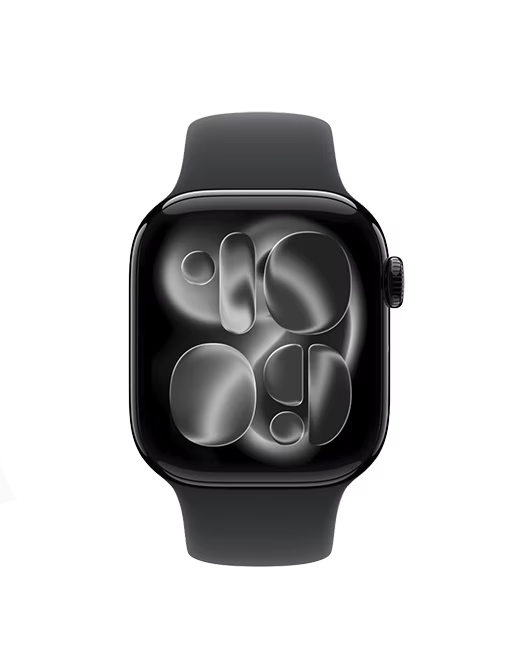
Factor in Vitality's PMI perks (for example, £9 Apple Watch Series 11 plus 50% off gyms) and it may pay for itself...
Vitality Healthcare* is a PMI policy that encourages you to stay fit and active, and if you do, provides serious rewards, such as a near-free Apple Watch, and 50% off gyms. For some younger people, if you'd have spent money on those anyway, the perks may come close to covering the PMI fees. The key perks are...
Latest Apple Watch Series 11. It's just upgraded its Apple Watch offer to the latest Series 11 model (which launched in Sept). Take out a new PMI policy with Vitality and you can get the £369 Series 11 watch for an upfront payment of just £9 (or the SE watch for £1).
What you pay for it after that depends on how many 'Activity Points' you earn - at the top level, which is 12,500 steps for five days a week you DON'T PAY A PENNY MORE. Even at lesser activity, there's decent savings.Up to 50% off many Virgin, Nuffield and PureGym monthly fees. These are straight discounts, not linked to activity. While they're off the full price, and many may be able to bring that down by negotiating (see cheap gyms), this is still likely to be a big discount, and works even if you're already a member, eg, the Virgin gym in Sheffield's listed price is £100/mth, but you could get it for £50'ish/mth.
There are also discounts for Caffè Nero, Odeon, Vue, Waitrose, and others.
How to get Vitality. You've got a choice. Go direct to Vitality* or go via the comparison links above, which all include it, to get the extra cashback/voucher instead (and a comparison is always worth doing).
The Policy Cost... The quote was £44/mth, so that's £530/yr |
The Possible Savings... |
The Overall effect... While Vitality isn't the cheapest policy, if you were planning to buy an Apple Watch anyway, and are at the top activity level it can can equal that out. And if you are paying for a gym, then the total savings can outweigh the whole PMI cost. Clearly, though, you need to do your own numbers, and to get max benefits you'll have to stick with the policy for a few years. Like all firms, the policy cost will likely rise annually. |
Based on a healthy 25-year-old living in London
Check other insurer perks too
Vitality is not the only provider offering perks such as discounted gym membership, so we've listed some examples below, but never choose an insurance product based solely on freebies and sweeteners – make sure it also has the coverage you need for a price you can afford.
-
Aviva's 'Healthier Solutions' insurance includes a scheme called 'My Health Counts'. This lets you save up to 10% on your renewal costs in the second year if you sign up, complete a health questionnaire, and follow its recommended actions to improve your lifestyle. You'll also need to log back in to retake the questionnaire between six and nine months into your policy.
-
Bupa also offers discounts on gym membership and health assessments.
While we've included links here for you to find out more, it's always better for you to go via the comparison sites above, rather than applying direct, so you get the cashback or voucher too.

Step 2. For specialist advice and more options, contact a broker
If you're not sure which policy to get, or have conditions making it difficult to find the right one, do contact a broker for a more thorough search. It usually takes a bit longer, but you should receive a much more bespoke quotation, with any exclusions clearly explained. Brokers often have connections with various insurers, so may also be able to offer you a special deal.
To find a broker, use the Association of Medical Insurers and Intermediaries, a trade association for independent medical insurance advisers. It has a list of members to choose from. Alternatively, you can still try the comparison sites via a phone call.
Good brokers can answer questions about cover, particular insurers' records, rules and more. Most are free to you, because they take commission from insurers if you get a policy. Though, of course, check how and if they'll charge before you get the advice.
Comparing PMI and healthcare cash plans
PMI and healthcare cash plans are often confused, but they work very differently. PMI covers the big, expensive stuff – planned operations, specialist consultations, scans and treatments you might otherwise wait for on the NHS.
Healthcare cash plans, on the other hand, don’t cover major treatment or let you skip NHS waiting lists. Instead, they reimburse small, fixed amounts for everyday costs such as dental check-ups, eye tests, glasses, physio and complementary therapies. You pay first, then claim back up to a limit.
They’re far cheaper, but won’t cover operations, cancer care, private hospital stays or anything serious – think of them as help with routine bills, not a cheap replacement for PMI.
How the PMI claims process works
If you need to seek medical help and want to start the process of submitting a health insurance claim, here is a breakdown of each step to help you avoid delays.
-
Get a GP referral. Start by seeing a GP – either your own or the insurer’s virtual GP service. You’ll usually need a referral explaining your symptoms and the type of specialist or investigation required. Some insurers require an open referral, meaning the GP names the specialty rather than a specific consultant.
-
Contact your insurer for pre-authorisation. Before you book anything, contact your insurer’s claims team. You’ll be asked about your symptoms and referral, and they’ll confirm whether the treatment is covered. Some insurers let you do this online; others require a call. How your policy was underwritten when you signed up affects how fast this happens:
- Full medical underwriting: decisions are usually quick because your medical history is already on file.
- Moratorium underwriting: the insurer may need to check GP records to confirm the condition isn’t pre-existing, or you may need the GP to fill out a form to prove it is a new issue, which can slow things down.
Once authorised, the insurer will confirm approved consultants, hospitals, and any limits or excess you must pay. -
Attend treatment. After approval, you can book your appointment with the insurer-approved specialist or hospital. The provider normally bills the insurer directly, so you don’t pay the full cost upfront.
-
Pay your excess (if needed). If your policy has an excess, the insurer will confirm how much you owe and whether it’s charged per claim or per policy year. You’ll either pay the excess directly to the treatment provider or settle it with the insurer after treatment, depending on how your policy works.
Already got PMI? Many can slash costs (but take care switching if you've had past treatment)
PMI prices usually rise each year at renewal. And the 'existing customers can't be charged more than new customers going via the same channel' rule for car and home insurance does not apply to PMI. So, no surprise, that PMI costs can escalate quickly. But there are ways you can slash those costs.
A comparison will often reveal big savings, which is great if you've never claimed. If that's the case, switch away!
Yet if you've had treatments on the policy within the last five years, and the issue reoccurs within two years, a new provider will likely exclude treating it, as it's a pre-existing condition (some even say more than two years, so do check policy details). If that's an issue, you may effectively be locked in to your current provider as long as you want treatment on those issues.

Try haggling with your current insurer
If you have existing conditions that wouldn't be covered by a new insurer, your best route is to haggle with your current insurer (though anyone can do this).
Use the comparison sites above to find your cheapest price elsewhere, then give your existing insurer a call to see if it'll match it. It can really pay off, as Tony, who emailed earlier this year, found:
My PMI price has risen steeply over the past few years. Thanks to a tip in your email, I tried the comparison sites you recommend and got a quote from another company for just over half the cost. I phoned my provider to cancel, but after checking that I had a like-for-like quote, they applied 'loyalty discounts' and cut my renewal price by 43%. Thank you, MSE, for saving me a four-figure sum over the next year!
We've also heard providers may offer to switch you to another of their own brands at a much lower cost (do let us know if that happens).
Get paid £50 just by checking if a switch would save you cash
The Confused.com Switch and Save* service (quotes are provided by Howden Life and Health) does a comparison and asks for your existing policy details. If it can't find you a better deal than your current policy, you'll get £50.
However, as part of this, you are effectively agreeing that Howden will become your broker (even if you don't accept the quote), which means it'll handle any future queries, changes, or renewals. It's not a bad thing, but decide whether you want it before doing anything.
We've also heard providers may offer to switch you to another of their own brands at a much lower cost (do let us know if that happens).
How to complain about your insurance provider
The insurance industry doesn't always have the best reputation for customer service. Plus, while a provider may be good for some, it can be hell for others.
Common problems include claims either not being paid out on time or at all, unfair charges, or exclusions being hidden in small print.
It's always worth trying to call your provider first, but, if not, then you can use free complaints tool Resolver. It helps you manage your complaint, and if the company doesn't play ball, it also helps you escalate your complaint to the free Financial Ombudsman Service.
Private health insurance FAQs
Does private health insurance cover pre-existing conditions?
Usually not. New conditions after your policy starts are covered, but existing issues (even if it just involved speaking to your GP) may be excluded unless you’re switching using Continued Personal Medical Exclusions (CPME). This is where your new insurer transfers your health insurance across with existing exclusions still in place, often at a cheaper price.
Does PMI cover emergency care or A&E?
No. Emergency treatment such as a visit to A&E remains NHS only.
Does PMI cover dental treatment?
Not normally as standard, but may be available as an add-on with some polices. Alternatively, you can opt for separate dental insurance or a healthcare cash plan.
Can I choose my own consultant?
This depends on if you have chosen to be treated by a local network of hospitals (which is usually a cheaper premium), or a wider nationwide choice at the point of purchase.
When you make a claim you will be able to choose a consultant that works out of the insurer's network of hospitals you have selected. Always get this approved before going ahead with treatment to avoid an unexpected bill.
Are private prescriptions covered on a private medical insurance policy?
Some are, but many policies exclude this, so do check. Many cash plan policies will pay towards the cost of a prescription prepayment certificates (PPCs) from the NHS. This can be a huge money saver if you need regular medication. We have more on this in our Cheap & free prescriptions guide.
Is there a waiting period after taking out a new PMI policy?
Most insurers won't let you claim for certain treatments for a set time after taking out a policy, so do check your policy wording.
Anyone looking for private medical treatment at a time and place that suits them. Alternatively, if you just want to claim back optical, dental or physiotherapy costs, see our Healthcare cash plans guide.
Share this guide?