


Learner driver insurance
Who needs it, and the cheapest ways to get it

Car insurance can be expensive, especially if you're new to driving. And unless you're learning with a professional driving instructor, you'll need some sort of cover in place as you practise. This guide runs you through car insurance for learner drivers, and how to get the best deal.

First, a quick overview of learner driver insurance
Learner driver insurance gives short-term cover while you’re practising in your own or someone else’s car. Here’s what you need to know:
It works similarly to standard car insurance. The difference is learner drivers must be supervised at all times.
You don't need it for lessons with a professional instructor. You'll be covered by their insurance.
You can instead be added as a named driver on someone else's policy. This may work out cheaper, so it's worth checking.
Always compare quotes to get the best deal. Our Compare+ tool takes the hard work out of it.
Learner policies often end automatically once you pass your test. So have new cover ready for when you're a newly qualified driver.
Are you in the right place?
Passed your test? Check out our New driver insurance guide.
Aged 17–25? Read our Young driver insurance guide.
What is learner driver insurance?

Every driver must have valid insurance for the car they're driving, and that's also the case if you're still learning and practising.
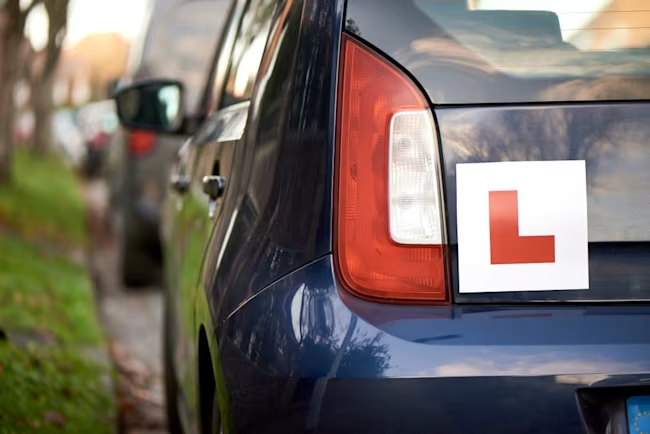
Learner driver insurance – which is also called provisional driver insurance or provisional licence insurance – is therefore designed to provide short-term insurance cover until the day you pass your test, and your green licence turns pink.
How does learner driver insurance work?
Learner driver insurance policies essentially work the same as standard policies. The difference with learner drivers is that they MUST be supervised by somebody else at all times when doing driving practice. However, they can still get their own car insurance policy, OR be added on to another driver's policy. More info on this below.
You can get learner insurance for multiple vehicles, but you'll need a separate policy for each. Like all car insurance, provisional insurance also gives you the choice of three main levels of cover: third party, third party and theft, and comprehensive (aka 'fully comp') – see more detail in types of car insurance explained. There are also various add-ons you can get, from breakdown to windscreen cover.
Quick questions
How do I get a provisional driving licence?
You need to visit the Gov.uk website to get one from the DVLA – you can apply via post only for other types of licence. You must also:
-
Be at least 15 years and 9 months old
-
Be able to read a number plate from 20 metres away
-
Have been given permission to live in Great Britain (England, Scotland and Wales) for at least 185 days
In addition, you'll need to provide your addresses for the last three years, a passport-style photo, and a valid form of ID when applying.
How much is a provisional licence?
It costs £34 the first time you buy one. You'll then have to pay £20 to replace a lost, stolen, damaged or destroyed licence. It also costs £14 to renew it online, £21.50 to do so in person at a post office, or £17 to renew your licence by post.
Learner drivers need to be supervised at all times
To drive on the roads before passing your test (and ensure you're covered by your learner drivers' insurance policy), provisional licence holders need to be at least 17 years old and supervised at all times by a qualified driver, such as a family member. The definition of who this can be varies by insurer, so always check. However, as a general guide it's typically someone who:
-
Has held a full UK or driving licence for at least three years
-
Is over the age of 21
-
Is qualified to drive the car you're learning in. For example, if you're driving a manual car, they need to have a manual licence
If the qualified driver supervising you ever has the need to take over and drive, they'll either need to be the policyholder or named on your own policy.
Are you a learner driver? Get cheap quotes with our Compare+ Car Insurance tool.
Or, if you're no longer a learner driver, try:
New driver insurance: How to get the best deal on your first policy.
Young driver insurance: How to cut car insurance costs if you're under 25.
How to get cheaper car insurance: Our tried-and-tested tips for getting the cheapest car insurance.
Do I need provisional insurance when learning to drive?
This depends. If you're only learning during driving lessons with a professional instructor, you won't need your own learner driver insurance policy, as you'll be covered by their insurance.
However, if you're learning to drive by practising in yours or a family member's/friend's car, you'll need learner insurance cover. Consider these questions before making a decision on which kind to get – either buying your own cover or getting added to the main driver's policy:
Have your own car? You may want to get your own annual policy and add an experienced older second driver to it if you're driving frequently. If not, temporary learner insurance – by the hour, day, week or month depending on your needs – may be your best bet.
Do note that annual cover can work out cheaper than a longer temporary policy – for instance, you may be better off getting a year-long learner insurance policy instead of a five-month one. Always combine comparison sites to compare policies and find the best deal.Using someone else's car? You can either get temporary learner insurance for when you are driving it or get added permanently to the primary driver's policy, depending on how often you plan to use their car.
However, this can have potential drawbacks, such as affecting the car owner's no-claims bonus – more info below.
Should I add myself on to another driver's policy?
If you're able to do this, it's worth checking how the cost compares with getting your own policy. On someone else's insurance, you'll get the same cover as the primary driver (who'll be the policyholder), but the policy won't be in your name.
If the car is already insured, the policyholder can ask their insurer for a quote to add you on, though there may be admin fees to make changes. It's therefore always worth checking whether a new policy with a different insurer would work out cheaper. See changing car insurance and named driver insurance for full help.
WARNING. Never add someone as a named driver if they're actually the main driver. This is called 'fronting' and is illegal. If you need to claim, this is often checked and your insurance will be invalid if you're caught. You could also face conviction. So don't do it.
Is this the cheapest way to insure a learner driver?
It can be. While you won't necessarily need to pay for an entirely new policy, this isn't a given, and getting added on can increase the main driver's policy costs by hundreds of pounds – if not more.
This approach can also be riskier for the policyholder. If they needed to make a claim because of an incident involving you at the wheel, they would not only likely have to pay an excess, but could lose any no-claims discount they've built up.
As such, it makes sense for learner drivers to compare the cost of getting their own policy against the cost of being put on to another driver's policy. When doing this, always check to see whether adding a more experienced second driver to the learner policy reduces the cost. And, of course, whether you go for your own temporary or permanent policy depends on how often you drive as a learner.
You'll need to arrange a new policy after you've passed your driving test

As you'll now have a full licence (congratulations!), you must inform your insurer before driving your car – any existing learner driver insurance cover won't be valid anymore. You'll have the same insurance options as above, so get your own standalone policy if you'll be the main driver.
Unfortunately, however, as you'll no longer need to be supervised by a qualified driver at all times, you're likely to find your policy jumps up in price in the short term. This is because you've little experience and won't have built up a no-claims bonus. For more information, see our New driver insurance and Young driver insurance guides.
Quick questions
Do I need driving test insurance?
You'll only need your own insurance if you use your own car. However, most people take their test in their instructor's car, so if that's the case for you, you can just rely on their policy.
Check out this Gov.uk page for info on the requirements for using your own car for a test should you want to do so.
How much is a driving test?
A practical driving test with the DVSA (Driver and Vehicle Standards Agency) costs £62 on weekdays and £75 otherwise (evenings, weekends and bank holidays). Your driving instructor may also charge you for using their car.
You might be wondering how much a theory test costs too – this will set you back £23.
How much is learner driver insurance?
Like most insurance, the price of car insurance for learner drivers is calculated based on how much of a risk the insurer thinks you are – so how likely it reckons you'll be to make a claim (or cause another person to claim off of your policy).
As you're brand new to the roads and won't have any track record of how safe a driver you are, insurers have to look at claims data. And those statistics show that young drivers are more likely to be involved in an accident than older, experienced drivers. That said, you'll still likely pay less than a new driver considering you MUST have another driver with you at all times. This makes you less of a risk in the eyes of insurers.
What affects your learner driver insurance costs?
As well as the factors above that can have an impact on how insurers price a policy, here's a quick overview of other variables that can make a difference (see what affects your quote for detailed information).
The type of policy you go for. For example, an annual policy will usually cost more than short-term cover, but not always, so do check.
In addition, comprehensive cover can be cheaper. You'd logically assume third-party insurance would be cheapest, as it offers less cover than comprehensive, but it can be viewed by insurers as a more risky option. So always compare prices for each type of policy.The car you drive. A cheap, less powerful car will generally cost less to insure than a flashy one. See Car insurance groups.
Other drivers on the policy – adding someone can cut insurance costs. You're a high-risk driver as a learner, so adding someone who is a much lower risk as a second (and/or third) driver can bring down the average risk, meaning you may get a cheaper policy.
Though this again comes down to trial and error. Adding your older sister might lower your quote with one provider but not another. It's also worth checking out multicar insurance if there are several vehicles to insure in your family.
Should I get black box insurance as a learner driver?
Black box insurance is a way of potentially getting cheaper car insurance cover, even as a learner driver. It's where your provider tracks your driving habits, to gauge how well you drive – looking at factors including your speed, braking and acceleration, plus when you use your car. If you're shown to be a safe driver, it may offer you a lower premium at renewal.
You can start demonstrating good driving behaviour from the off, even when you're learning, which can then in turn help you to reduce your future insurance costs and also begin to build up a no-claims discount. This is particularly valuable to learner and newer drivers, because of the higher insurance costs they typically face.
So if you're interested in possibly having your good driving rewarded with cheaper cover, read our full Black box insurance guide to find out whether it could work for you.
How to find cheap learner insurance
Whether you're looking for learner driver insurance or you've been driving for years, comparing car insurance quotes to get cheaper cover is the same process. Here's what you need to know about bagging cheap learner insurance.
Combine comparison sites to compare learner car insurance
The first rule is to use multiple comparison sites, so you can quickly and easily compare hundreds of insurers. The deals and prices can vary between the sites, so although they appear to all do the same job, the results you get can be different.
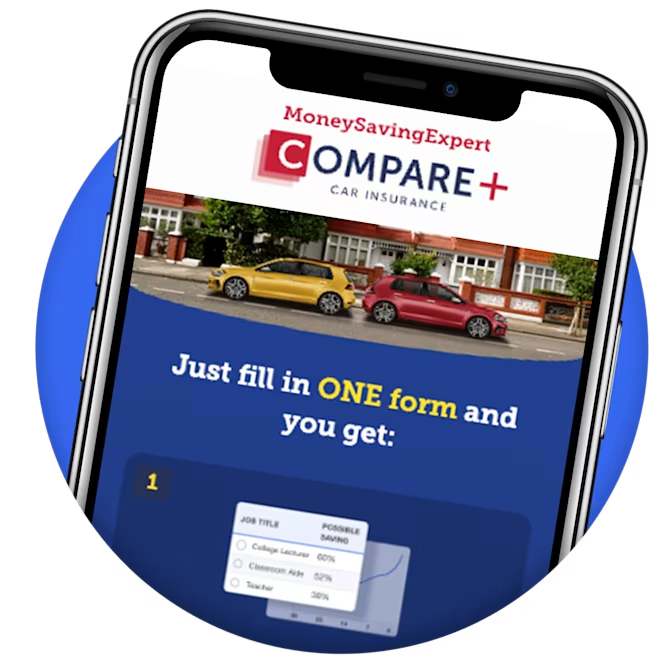
To help, our Compare+ tool is designed to give you top MoneySaving tips as you complete the form, and will then show you results from MoneySupermarket (as we're part of the same group).
It'll then suggest getting quotes from other comparison sites such as Compare The Market* and Confused.com*. You can boost this further by also trying GocompareandQuotezone*.
And you can use our Compare+ Car Insurance tool to get quotes for learner driver insurance – just say you have a provisional licence when asked.
Keep on top of your car insurance
Want to know when the cheapest time to get car insurance is? The MSE App has a new tool called Bill Buster – give us a few details about your insurance policy and we'll track it, alert you when it's ending and when you should start gathering quotes to save.


Check whether you can save using a cashback site
Once you've found your cheapest quote, it's worth trying the comparisons attached to cashback sites. Topcashback* uses a rebranded version of Confused.com and Quidco* is powered by MoneySupermarket, but they'll typically pay you £35 to £40 cashback on top if you buy the policy through them.
However, keep an eye out, as you may not get exactly the same prices as you would from going direct to the comparison sites. Plus, you won't be able to claim any perks or freebies advertised by Confused.com or MoneySupermarket, such as a voucher.
Always check your policy carefully before buying
Don't be blinded by a cheap price in isolation – always check that the policy is suitable for your needs. This can also include whether you need, or would make use of, any optional extras. You also need to make sure you have been 100% honest – for example, letting them know whether you have any penalty points.
Comparison sites usually make assumptions to help speed up searches, so always study the insurance quote carefully on the provider's own website.
It's also worth checking that the insurance company is registered with the Financial Conduct Authority (FCA). This means it has to meet certain standards and has the FCA's permission to sell insurance, which is a regulated activity. The insurer will usually say whether it's registered, but always check on the FCA register.
We hope you never need to, but here's the process to follow if you do need to make a claim.
Need more insurance info? This guide's for anyone needing learner car insurance, but if you're looking for more specific motor insurance guides...
Cheap van insurance | Cheap motorbike insurance | Caravan insurance | Gap insurance | Car warranties
Share this guide?