Search bar closed.
Our innovative car insurance tool is designed to take the hard work out of finding a cheap price
Fill in one questionnaire and get our unique cost-cutting tips as you answer
See your cheapest insurers from the comparison as a benchmark
Follow our personalised tips to try for a bigger saving
Want to know more about insurance and find the best priced policies? We've got guides on...
Car insurance for the tips and tricks drivers need to know
Home insurance if you're a homeowner
Travel insurance for cover if you're going away
Mobile phone insurance to cover your phone for less
Pet insurance for your fur babies
NEVER auto-renew – check if you can get a cheaper policy elsewhere
Use our Compare+ Car Insurance tool to see if you can save
Want to stay with your existing insurer? Haggling can save you £100s
Use our top tips to cut the cost of your car insurance
Always check the policy thoroughly before you apply
Watch Martin's video for more details, or read a transcript.


Car insurance prices have continued to fall however, the rate of decline has decreased in recent months with smaller drops each month, according to pricing consultancy Pearson Ham.
Year-on-year, prices are now almost 15% lower year-on-year, but they’re still higher than in 2020 due to past increases driven by inflation, rising car repair costs, and higher payouts for written-off vehicles.
So don’t assume your renewal price is a good deal. It’s still crucial to compare quotes and find the best possible price for your car insurance.
Read our guide on how to get cheap car insurance.

Everyone should consider contents cover, but buildings insurance is typically only for freehold homeowners (though do check your lease/contract). To work out what's covered by each, imagine turning your home upside down. If it falls, it's contents. If it stays, it's usually buildings.
Contents insurance: beware underinsuring. If you're thinking: "I'd never claim for everything", and only insure half your contents' worth, you may only get half the payout. Use a contents calculator.
Buildings insurance: beware overinsuring. What counts is how much it would cost to rebuild your home if it were knocked down or gutted by fire – usually less than its market value. Use a rebuild cost calculator.

There are three main types of car insurance cover:
Third party – this is the minimum level of cover needed to drive legally, and only covers damage to someone else or their property.
Third party, fire and theft – as above, but with additional cover in case the car gets stolen or catches ablaze.
Fully comprehensive – the widest level of cover available. You get third-party, fire and theft cover, plus if you have an accident and it was your fault you can claim the cost of repairing your car (as well as any damage you cause to someone else or their property).
Find out more about the types of car insurance.
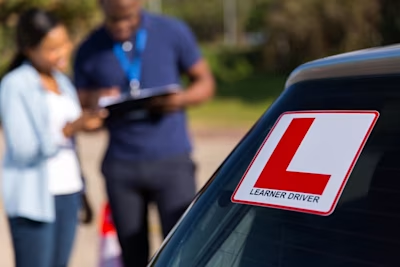
Below we've featured some fantastic success from MSE users who've used these guides to save money on their car insurance. If you've found success using our tools or guides, let us know via email.
"Spent days searching for car insurance for my 17-year-old son who just passed his driving test. Prices were between £3,000 and £20,000. Then went to Martin's page and used the tool. Got insurance for £1,300 for him and me. So much better. Thank you."
"A huge thank you for your Compare+ Car Insurance tool. I used it, following your tip to get quotes 25 days ahead. Direct price £1,046 vs £605 for like-for like cover via MSE. Saved £441. RESULT!"
"My wife and I each have our car insured on a combined policy. This year's policy renewal came in at £974. Using your price comparison, we have renewed our policies separately for a total of £419, less than half this year's renewal. Thank you!"
Hello, I’m Martin Lewis and this is your mini briefing on getting car insurance. First thing to understand is if you own a car or you’re the registered keeper, you need insurance even if you don’t drive it. Those are the rules. They changed ooh five, six, seven, eight years ago. I should have double checked that before I started. But that’s how it works now anyway. And so you’ve got to get yourself insurance. If not, your would need to get yourself a SORN, a Statutory Off Road Notification.
First big rule when it comes to getting car insurance is never auto-renew. Each year your firm will send you through a renewal. They use the fact that you must have car insurance in place if you own a car to say, you know, this is the day it runs out and you legally have to have it in place the next day. Well, stop that. As soon as you get that renewal, or even better, put a note in your diary beforehand. You should be checking if it’s possible to get cheaper car insurance elsewhere. If it is, you might want to switch or you might want to go back to your original insurer and say: Hey, my renewal quote with you is 600 quid. I can get an identical policy for 400 quid elsewhere. I’d like to stay with you, please will you cut your price? And that haggling does work.
When it comes to finding the cheapest price. Well, we’ve got a MoneySavingExpert tool that helps you do it. It’s called our Car Insurance Compare+ tool. And all of the tips I’m going to give you are automated and made much easier to do inside of that tool. But let me give you a briefing of the type of things you need to be thinking about when it comes to getting car insurance.
The first one, for most people, the best thing to do is combine comparison sites. Now they’re called comparison sites, but in truth, they are actually car insurance marketplaces because they’re allowed to give you their own prices for different insurers, as long as that’s not more expensive than going direct. So the same insurance company could have a different price on two different comparison sites, plus the fact they don’t all search the same car insurers. So we always suggest trying two or three if you’re really trying to nail the price down and then add in those firms that aren’t on comparison sites, the specific one being Direct Line, there might also be some deals out there too, that could benefit you when it comes to the timing of getting your comparison done. Our research shows that 21 to 28 days beforehand is usually the uber spot. Prices get cheaper as you get down to 28 to 21 days and then afterwards they go up because insurance is all about risk pricing. And the actuarial risk charts say those who leave it later are a higher risk. So insurance price them higher. You could pay getting on for 50% or more, more if you renew on the day your insurance lapses rather than doing it 21 to 28 days beforehand.
Next quick tip is not all car insurance savings are common sense. Some of them are counter logical. I’ve got three for you. The first is that adding a second driver could reduce rather than increase the price. This is because insurance is all about risk. And so if you add a second driver who is a lower risk, that can bring down your average risk and therefore cut the cost. The classic time this will work is if you’ve got a younger driver, say, a 23 year old who adds a second driver, likely their parent, who’s got a long-term good, clean, sensible driving record. And it can bring down the average risk and bring down the price. It doesn’t always work. It’s a matter of trial and error.
So is changing your job title. Now never lie. You can only call yourself something that a reasonable person would say is reasonable for your job.
But it may be that a secretary and PA, one may be cheaper than the other. A bar staff or bar worker. One may be cheaper than the other. Small nuances can make a difference. And we’ve got a tool that helps you through that.
And finally, don’t assume that fully comprehensive insurance will be more expensive. You get more cover with it. But again, we go back to those risk charts. That fact that you select fully comprehensive actually for some insurers show that you may well be a lower risk. And the amount it brings the risk down can more than compensate for the fact that they’re giving you bigger cover. So if you’re looking to get the very cheapest insurance, don’t just look at third party. Also get some quotes for fully comp too, just in case you’re the one of the people for whom that’s cheaper.
My final thoughts. Once you’ve found your cheapest insurer, you can always go and check whether you can get cashback for it on a cashback website. But do make sure you’re not going to pay more for the policy if you do that. And always check through every element of the policy to be sure you’re happy with it before you sign up. There are lots of different bits to car insurance policies and you need to check it’s right for you. Remember, car insurance is regulated. If you have a problem, even if they’re rejecting your claim and you think that’s unfair, make a formal complaint. And if they still turn you down, you have a right to go to the free Independent Financial Ombudsman Service, where it will adjudicate whether you’re being treated fairly or not. Hope that helps loads more info on the car insurance guide. And in the Car Insurance Compare+ tool.