





How a divorce can affect your finances

If you're married or in a civil partnership, getting a divorce can have a far-reaching impact on your finances. You'll need to work through how to best support any dependant children you have, as well considering how any assets will be split – including what happens to your your home, savings, pensions, inheritances, businesses and more.
Important. This guide is in progress
We're in the process of writing this guide. In the meantime, you can listen to Martin and a number of experts talk about marriage and divorce in an episode of Martin's BBC Not The Martin Lewis Podcast (links below).
Listen to Martin discuss marriage and divorce
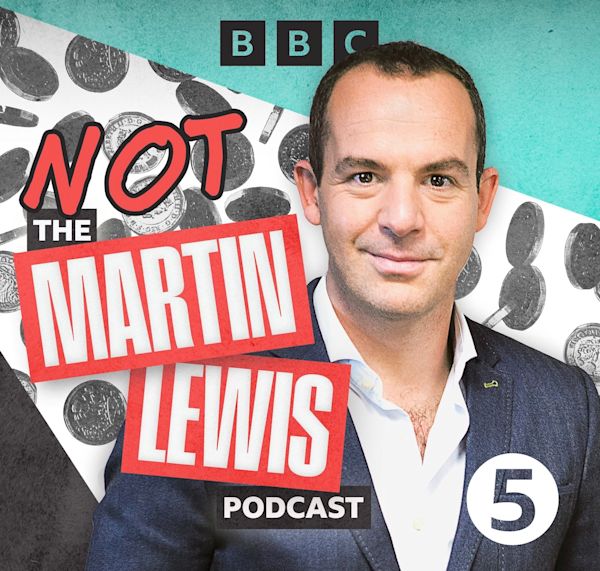
On his spin-off BBC Not The Martin Lewis Podcast, Martin Lewis takes on subjects he doesn't cover, by putting your questions to a team of specialists. Here, he looks at key questions around marriage and divorce, including…
- The financial benefits of marriage
- Are pre-nups worth it?
- How to divorce cheaply
- Splitting pensions, mortgages & more
Listen to 'Marriage and divorce October 2024' for free via
BBC Sounds | Apple | Spotify
(transcript available below)
Read a transcript of of Martin's marriage and divorce podcast
Martin Lewis: Hello and welcome to the "Not the Martin Lewis Podcast," which, rather confusingly, is an offshoot of my normal "The Martin Lewis Podcast." The difference? Well, there are some subjects that are outside of my wheelhouse, or I can't answer questions on due to regulations. So in this podcast, I'm joined by specialists, and I’m asking, not answering, the questions. Well, it's me, I might just chip in with the odd note or two. And today, it's all about marriage and divorce.
So in this pod, what actually are the financial benefits of marriage? Do prenuptial agreements hold weight in England, Scotland, Wales, and Northern Ireland? How to divorce cheaply? How do you split assets? How do you split pensions? And what are the divorce settlements when it comes to children? Now, we’re going to be focusing mainly on the law in England and Wales, which are the same. But we’ve also got experts from Northern Ireland and Scotland, who’ll be able to feed in when it’s different in those two UK nations. Let’s play the theme tune...
I’m delighted to be joined by divorce lawyer Matthew Taylor, who’s a partner at Stowe Family Law, and independent financial advisor Tamsin Caine from Smart Financial Planning, who’s an accredited specialist on divorce finance. So we’ve got the lawyer and we’ve got the finance person. You’re both into marriage and divorce. I’m not sure what that means, but we’ll just take that phrase and carry on.
So, I’m going to start with marriage because I didn’t just want to do divorce.
We’ll start with a question from Helen Smith: “I got married two weeks ago, got my name changed on the accounts, and had a 75-minute review with the NatWest senior bank official. Any advantages of being married, as he’s the breadwinner and I can’t work as I have a disability following a stroke six years ago?”
Now, I cheated here and made a little list because I knew the question beforehand. But I think we’ll try going around in order, and we’ll each try and pick off a financial benefit of marriage. And if we run out, we run out. So I’m going to start with the big one and take the easy one, which is inheritance tax.
When you get married, you can pass on anything you like, when you die, to your spouse, and there is no inheritance tax on it. But arguably, even more importantly than that, you can pass on your unused allowance. So, you get £325,000 that’s exempt from inheritance tax and a possible £175,000 on top if you’re passing your main home onto your descendants. But if you’ve left everything to your spouse and they pass it on, then they get your allowances too, which means, add them all together, and that’s £1 million of property and estate that can be passed on to direct descendants without any inheritance tax. If you weren’t married, and when I say married, we also mean civil partnerships here, you’d only be able to pass on a maximum of £500,000. So that’s my starter, and that gives you a little bit of thinking time for yours. Tamsin, have you got one?
Tamsin: I’m going to go with the next easiest one. Being as you’ve started with the tax one, I’m going to go with the other tax one, which is capital gains tax. If you are married, you can pass on any of your assets, capital gains tax-free, to your spouse. This might mean if you’re a higher-rate taxpayer and your spouse is not — or in this lady’s case, her husband is a higher-rate taxpayer, presumably, and she is not — she can have his assets and cash them in, subject to capital gains tax at her rate, which could mean using her personal allowance or at a basic rate.
Martin: Matthew, you’ve got one?
Matthew: So I’m going to jump straight to the cynical divorce lawyer perspective. You are better off if the relationship ends. There’s a great deal of difference in the law that protects married couples and cohabitants on separation. For cohabitants, the claims at the end of a relationship are largely limited to property and any benefits for children. There is no claim for spousal maintenance, no pension sharing orders – and a whole category of other things which we’ll come onto later. But as a married person, particularly in this lady’s situation, where she’s not working and is likely financially vulnerable in the partnership, she would be in a far better position if the marriage were to end than if a cohabiting relationship were to end. So, it’s horribly cynical from a divorce lawyer, but that’s where my mind goes straight away.
Martin: Well, that wasn’t on my list, so I like that one. That’s why you’re here. I’ll add a slight difference to Tamsin’s point: we’ve talked about capital gains tax, but you can do the same on income tax on savings. Because you can pass any assets to your spouse free of income tax and inheritance tax considerations. Therefore, if one of you is over the personal savings allowance — that £1,000 a year a basic-rate taxpayer can earn each year without paying tax on savings interest — they could give some of the money (provided you’ve got a trusted relationship - which we’ll come onto later - financial coercion is an issue) onto your spouse so that the interest they earn is tax-free. Do you want me to continue with my couple more, or do either of you have any more?
Tamsin: I guess the other thing in my head is that you can structure your savings and investments more carefully if you’re married. You can make use of personal allowances of basic-rate tax brackets if you’re married, provided there’s trust in the relationship. Because that’s something I’m quite hot on, ensuring that finances, when you get married, are shared. That needs to be made very, very clear to people, I think.
Martin: So, I’ll do my last two. You can inherit the ISA allowance of your spouse, which you can’t do in the same way if you’re not married. My other thought was on intestacy laws. If you die without a will, you are governed by the intestacy laws, which provide for your married or civil partner spouse but don’t account for cohabiting partners — what people often call a common-law spouse. So you really need a will if you’re not married because otherwise the money won’t transfer. That’s quite a nice, positive view of marriage. Oh, and, of course, the marriage tax allowance! If you’re a non-taxpayer married to a basic-rate taxpayer, you can transfer some of your personal allowance to them, enabling them to earn more money tax-free. We’ve covered that extensively in the normal podcast, so we won’t go into too much detail here, but that’s an important one too.
So, how did we do on with our warm-up question?
Matthew: All right, nice and positive to start. I’m sure we can take the positivity down a little bit from here!
Martin: I think this is probably one for you, Matthew, since it’s a legal question. I’m not sure there is any difference, but it’s from Rhee, who asks: “What are the benefits of a civil partnership versus marriage for a heterosexual couple who currently live together with no dependents? One side owns a property?”
My assumption is they’re the same, aren’t they?
Matthew: Yes, to all intents and purposes. Legally, they carry the same status. It really comes down to how you feel about marriage. Many people feel that the baggage of the patriarchal system and marriage, as it was, doesn’t fit with their values. In that case, a civil partnership might be preferable. But legally, the dissolution of a civil partnership follows the same process as a divorce for a marriage, and the finances will be handled in the same way.
Martin: I’ve had people contact me over the years saying they got married after hearing me talk about it. One said recently, “I’d been engaged for 17 years, and she never agreed to get married. She heard you talk once, and now we’re getting married to protect the property and deal with inheritance tax.” For those philosophically opposed to marriage, you need a contract. A marriage is a contract, and a civil partnership is a contract that serves the same function but without the baggage. So, yes, they’re the same?
Matthew: Yes, to all intents and purposes, it’s the same. When it comes to the end of a relationship, whether it’s the end of a marriage or a civil partnership, they’re treated in the same way.
Martin:
Right, let’s move on. The next section is prenuptial agreements, which is again moving towards the impact of divorce, but before you get there. Arguably, the advantage of a prenuptial agreement—an agreement made before you get married about what will happen if the marriage ends—is that you can have the agreement when you both love each other, rather than when you're angry and frustrated at the end of a failed marriage. Ideally, you'll never need it, but if you do, it has benefits. So, let's go with Santi, who asks. “How effective are prenuptial agreements in England, particularly regarding income and wealth acquired after marriage?”
Matthew: They’re pretty good. So there are prenups and postnups, which are the same thing but postnuptial agreements are entered into after marriage. Provided you comply with certain formalities for each —such as independent legal advice and full disclosure—they can be very effective.
Martin: That independent legal advice is really important, right? You need separate lawyers; one lawyer can't just draft an agreement for both of you, or it will likely be invalid in court?
Matthew: Yes, it's much more open to challenge without independent legal advice. There is a bit of case law where sometimes it wriggles through, but it’s really unadvisable. Every one that I do, and I do quite a few, always involves independent legal advice. If I'm drafting for the party seeking to protect their assets, the other party must get independent legal advice.
Prenups and postnups are not fully binding. You can’t put whatever you want in a prenup. For example, you can’t say ‘I keep everything and my spouse gets nothing’. Because the court – and we’ll come back to this – has to make sure that people’s needs are met, which includes reasonable need for housing, for pension, for income. And in particular, the needs of any minor children – that's a number one thing that the court has to keep an eye on. So you can’t say whatever you like. But if you follow all the formalities and it’s broadly fair (and it might be stingy, and generally it would be less than you would receive as the weaker party in divorce), they’re really useful.
Prenups and postnups are becoming more common. Especially in second marriages where people have pre-acquired assets and are seeking to leave them to their children, so they don’t lose them in a later divorce – a bit of once bitten, twice shy.
They're also useful for gifts from parents, inheritances, and involving the "Bank of Mum and Dad." That’s where they’re really common and can be really useful.
But in relation to Santi’s question – about assets acquired after the marriage – it depends when it comes in. Generally, prenups used to protect assets acquired before the marriage, that’s the most common set-up. But I was drafting one recently – sort of a normal case, where there’s a house worth £200,000 and a couple of pensions - where my client was fine with his wife keeping her pensions (including any pension accrued in the future) because she had worked hard for it and he had his own assets. So you can put that in a prenup or a postnup. You can be fairly flexible in what you agree. Generally, they’re to protect pre-acquired assets normally, but if you want to agree something and provided it's broadly fair, people's needs are met, everyone has had legal advice and everyone knows what they're giving up, the agreement will likely stand up in court.
Martin: Just a follow-up from David, who asks, "What circumstances can render a prenup null and void?"
Matthew: If there hasn’t been independent legal advice, if there's been a lack of disclosure, or if someone has been dishonest about their assets—say, they "forgot" to mention a Swiss bank account—that can invalidate the agreement. Fairness is key, and timing is also a factor.
Martin: So, as a lawyer who drafts these agreements, are you looking at what the court would typically award in a divorce case and then trying to make it more favorable for your client without completely disregarding what the court would do?
Matthew: Yes, exactly. I will often say ‘that’s not giving enough’. You try crystal ball gazing a lot, because a marriage that lasts five years with no children is entirely different to one that lasts 30 years with children, or where both parties are working or one stops working.
Martin: Is there a codified system of percentages based on the length of the marriage and the number of children?
Matthew: Not really. There have been attempts to create formulas, but the only consistent formula is for child maintenance. Broadly speaking, in a long marriage without disputes over the source of assets, it’s often add up and divide by two in a lot of cases, but there are always exceptions. You don't want a prenup that's too ambitious or stingy because that just leads to litigation later. So you need to be reasonable. You don’t want to start over by screwing your spouse to bits.
Martin: It’s not the most romantic thing in the world, is it?
Matthew: It’s not. You need to be delicate, you need to be sensible, there needs to pragmatism and co-operation.
Martin: How would you suggest someone bringing up the subject of a prenup? Maybe Tamsin has experience with this too. If someone listening wants to propose but is worried about protecting their inheritance or other money, what advice would you give?
Matthew: I think being straightforward is best. I always say it’s not an easy conversation. If it’s inheritance, money from the parents, you can say that "my parents have insisted on this". That actually happens quite a lot.
Most people are reasonable. Most people realise that their partner has worked hard, that they’ve had this house – for example in a second marriage, people who’ve got divorced in later life and got remarrried, there's often an understanding that comes with that, a wisdom of having things and thinking why should I get that over your children in the future. And quite often that replicates for both parties.
Martin: There's a stigma around asking for a prenup, but there's also a stigma if you don't agree to one, as it could suggest you're more interested in the money than the relationship?
Matthew: There is. It's definitely a difficult conversation. I’ve only seen one relationship break down over a prenup, and that was when the wealthier party made a reasonable proposal, but his wife-to-be wasn’t keen. He started questioning her motives. But that’s rare.
I think one of the common causes of divorce is a lack of openness about finances. I think go into the marriage with the spirit of ‘OK, we’ve got this certainty’, and frankly saying that if things come to the worst and we get divorced, I don’t want to spend all this money on lawyers, I’d rather have an agreement and we can all walk on with our heads held high and with dignity and civility and know that we’ve done the right thing.
Martin: I do see it all the time. It’s generally the second biggest cause of divorce after infidelity. We’re not talking about it, but financial compatibility is really important. The idea that everything needs to be shared. There are methods of sharing, especially in this modern world where people get married later and they’re used to financial independence.
I tend to find that for much older people that joint bank accounts work. As in, you have one bank account between the two of you and that’s it. Whereas for younger people, I tend to say you have your individual accounts and a joint bills account that you both agree to put money in to. And if there’s a financial imbalance between you – one of you is a high earner, or one of you has decided to not work for five years and look after the kids – then you have a payment that goes each month from the higher earner to the lower earner. But you don’t just do it all in one account.
That’s because, psychologically, we have different money personalities. If you have a spender married to a saver and the saver is saving and the spender is their savings, that is a cause of arguments. So I do think that money is not something that is ancillary to relationships.
And don’t just have one party who does all the finances. You both need to understand it. You can have a lead party, but then you have a financial factsheet with everything written down, so that the other person could take it up if one of you got hit by the 3DS – death, divorce or dementia. And you have kitchen table meetings and you discuss things. I don’t mind a lead financial party in a household. I am the lead financial party in my household, but I talk to my wife about it and we make decisions about it together, so that if she had to take over, she could take over.
I think the old way of doing it, where man worked and woman stayed at home and looked after the kids, we live in a different world now.
Now, we've been discussing prenups in England and Wales, but the law is different in other parts of the UK. I'm delighted to welcome Rachael Kelsey, president of the International Academy of Family Lawyers, who's based in Scotland. Rachael, is the prenup situation in Scotland different to that in England in Wales?
Rachael: Yes, it's very different. In Scotland, we've had prenups for hundreds of years. If you walk up the Royal Mile in Edinburgh, you can see Flora MacDonald's prenup from centuries ago. We're very comfortable with party autonomy when it comes to prenups. If two people agree on a contract, before or after marriage, the courts will uphold that agreement and not then look behind what you have agreed as a couple.
Martin: We also have Kieran Quinn, co-director of PA Duffy & Co Solicitors, joining us from Northern Ireland. Kieran, what's the situation with prenups in Nothern Ireland?
Kieran: Prenups are a fairly recent concept in Northern Ireland. When I started practicing, prenups were considered ineffective. It’s only in the last five to seven years that we've begun using and testing prenups and postnups. Thankfully, the ones I’ve worked on have been upheld, but it's still a relatively new area here, unlike in Scotland or England and Wales.
Martin: So, rounding it all up from all four of you, it seems like pre- and post-nups, while not 100% guaranteed outside of Scotland, are pretty strongly indicative these days that that’s what will happen if they’re done right?
Matthew: Yes, I’d say they’re heavily persuasive. They’re more likely to be followed than not, and the direction of travel is to make them more, not less, binding. In England and Wales, there are several consultations on potential changes to give them more of a statutory footing. Right now, it’s a case law basis, but the direction is certainly towards more of the autonomy that you see in Scotland.
Martin: And Matthew, very quickly, I’ve been asked about pet nups. Who keeps the pet?
Matthew: Pets are chattels, which means they’re treated like property, akin to a sofa. It’s a bit brutal, but you can get a pet nup, or a "pre-pup-tial" agreement, if you really want. You can even enter into some form of co-parenting after separation, but I’d encourage people to try and be sensible and pragmatic. There aren’t any specific provisions in the law for pets.
Martin: The whole thing sounds barking.
Let’s move on to divorce in general. We have a question from Sacha Pots: "Is there an easy way to get divorced if you've been separated for five years, have no assets to split, no issues with custody, finances, and both are happy to get divorced? What’s the cheapest and easiest way?"
Matthew: So, the actual divorce part, the legal process of ending the marriage, is pretty straightforward. It’s largely administrative, all done online, and you never have to go near a court. You can do it yourself, but if you’re less tech-savvy or unsure, you might want to get a lawyer involved, who will generally do it for a fixed fee. The second part, which is where my work and what Tamsin advises on comes in, is a financial agreement. That financial agreement results in a court order, typically a consent order, which you both agree to. You don’t need to go to court for this either—most of it’s done online. Even if you have no assets or property, it’s important to get a "clean break" consent order – a legal document that the court approves - which says you don’t have any future claims against each other as a result of your marriage, or against the estate on death. Without it, there’s no long stop date for claims after divorce, even 30 years later. I’ve done cases 20, 30 years later.
Martin: So if one of you wins the lottery?
Matthew: Exactly. There was a famous case, Wyatt v. Vince. The couple separated in the early ’90s with nothing to split, but years later the husband founded a hugely successful company, made millions, and the wife came back with a claim. The court ruled that there’s no time limit—she had claims, though it wasn’t going to be 50% or anything like that. Still, without a clean break order, those claims last indefinitely.
Martin: Clean break order. Could you do that yourself or do you need a lawyer?
Matthew: It’s probably not going to surprise you that I say get a lawyer for this bit. I think it’s really important to ensure you get it right.
Martin: Could you get one lawyer to do that for both of you?
Matthew: Some firms offer what’s called a “one lawyer for two clients” service, where one lawyer can represent both of you if it’s a straightforward agreement with no disputes. This is becoming more popular. But generally, it’s still one lawyer for each party.
Martin: A question from Parag: "I understand getting lawyers involved can be costly and combative. Are there frameworks or tools to help reach an amicable financial settlement in divorce?" Tamsin, you’ll have experience with this. There are alternative dispute resolution processes, how do they tend to work?
Tamsin: Yes, absolutely. There are several online services available that help both parties, though they aren’t necessarily legal advice. These services provide a structure for conversations between the couple, sometimes with a third party involved. Another option is mediation, where a mediator helps facilitate discussions if things aren’t amicable and the couple can’t resolve matters themselves. It’s particularly useful when there’s a sticking point, like pensions, but you don’t need mediation for the entire process—just the parts you need help with.
Martin: Even in an amicable divorce, money can still create friction. Little things can rankle. Having a mediator—or even just a trusted friend—to referee can prevent an amicable split from turning into a full-blown fight, which is the last thing you want, especially if children are involved.
Tamsin: Yes, definitely. Professional mediation is very flexible. You don’t need to use a mediator for everything. Sometimes it’s just for one specific issue, like sharing pensions. There are also other types of mediation other than just one person sitting in a room, such as "shuttle mediation," where the mediator moves between both parties if they don’t want to be in the same room, and "hybrid mediation," where the mediator can keep certain things confidential between the parties. There are many options, including mediation where lawyers or even children can be involved. There’s also arbitration as another alternative.
Martin: Matthew, where do you start if you don’t know what to do but want to get divorced in an amicable way? What resources are available?
Matthew: There’s plenty of free online information. My firm, Stowe Family Law, has many resources. There are also some great books, like (Almost) Anything But the Family Court, by a lawyer, who works exclusively on non-court dispute resolution. I think people have this perception that lawyers always inflame situations. I can't say that that never happens, but the vast majority of lawyers work to keep things out of court and encourage direct communication between spouses where possible.
Martin: Let’s address a question from Josephine, who’s in a tough situation. Separated but she’s waiting for a divorce due to domestic violence. Been granted the right to divorce through the court but waiting for the partner to continue the application. She’s tried contacting the court but can’t get through – long wait times. Not allowed contact with her ex, how does she make sure he does this? Can she push things along herself?
Matthew: Yes, she can. If the applicant isn’t progressing the divorce, the respondent can step in, depending on what stage they’re at. The court system is slow and overburdened, but there are timeframes where the respondent can push things forward. The system relies in general on a willing applicant, or you can make a joint application for divorce and you can drive it forward collectively and civilly, known as no-fault divorce.
But there are always going to be people who are difficult and it will depend on what stage you are at. But yes, you can drive it forward.
Martin: A question from Louisa: "What if my ex refuses to sign the paperwork?"
Matthew: It depends on what paperwork it is. You can make certain applications to court for an order that someone signs a specific document, and there is there is a provision, under statute, that allows an order enabling a nominated person to sign that paperwork on their behalf, like a judge, or a lawyer, if the paperwork isn’t signed within a certain timeframe, typically 14 to 28 days.
Martin: One last question on divorce from Anne, who asks, "What can you do when you're desperate to divorce, but living with your ex, who won’t move out, and you can’t afford solicitors? My ex won’t sell the house until the child is 18, which is five years away. Can’t get a mortgage on my own due to a shared debt.”
This type of situation is hard, isn’t it?
Tamsin: That’s really hard. I’ve worked with clients in similar situations where they’re living in the same house but essentially separated. Some are even sleeping on the sofa. It’s a really difficult situation. Is there any possibility of borrowing from friends or family or staying with them temporarily? Also, many family solicitors offer a free half-hour consultation, which might give you some useful legal advice.
Matthew: Citizens Advice Bureau might also be able to help, and if court proceedings are necessary but you can’t afford a lawyer, there’s a organisation called Support Through Court that offers assistance.
Martin: Yes, I’m a patron of Support Through Court, and they do fantastic work.
Now, let’s move on to splitting assets—this is where things can get tricky. Flossy asks, "Why is someone who came into the relationship with massive debt entitled to half of your savings after ten years of marriage?"
Matthew: That’s a good question. Fundamentally, the system aims for fairness, but fairness looks different to different people. Broadly when dividing finances, there are two concepts: the sharing principle and the needs principle. The starting point is that assets, not income, accumulated from or during the marriage are split equally. But you might depart from that equality for various criteria, but the most common one is for needs—particularly housing, capital, pensions, and importantly the needs of minor children. So, if one party is the primary carer, for instance, they need a house for the children. But equally, if the children are spending time with both parties, then both parties should have a similar sort of house.
Martin: That sort of housing situation is bigger than it sounds, isn't it? Let's look at an extreme example for clarity: if you've come from a large, expensive family home, should the partner moving out—especially if they have the children—have a comparable home? Is that how it works?
Matthew: The way I explain it to clients is that the court, if it came to that, wouldn’t want to see Mum in a castle and Dad in a shoebox. That’s not fair to the kids; they need to have a decent home with both parents, even if they’re only staying with one of them once a week. Is the need for a house that replicates the standard of house during the marriage? For most people, this isn’t fully achievable; that’s something only the wealthiest 1% can do. So you’re looking at how can we slice the pie, taking into account the assets and considering both parties' mortgage capacity, to then allow both parties to rehouse in a way that reasonably meets everyone's needs—like ensuring a three-bedroom house for each parent in a family with two kids. How do we do that, can we do that, and if not, what’s the best we can do with those resources.
In Flossy’s case, it will depend when the savings come up. If this pot of savings existed before the marriage, you may be able to argue that that this is a non-matrimonial asset. I've seen similar cases before, pre-marriage savings not mixed in with post-marriage finances, so therefore the importance of that is that the sharing principle doesn’t apply. It can be inveighded to meet needs – so somebody can have a part of it if they need it – but they don’t get a share of it automatically.
Martin: You'd need a lawyer to help argue this case, right?
Matthew: It’s so fact-specific. But yes, these are the kinds of cases where you’d need a lawyer’s advice.
Martin: Moving on, we have a question from Twitter. I am going to keep them anonymous. “If I inherit, say, £200,000 from my parents, is my spouse entitled to 50%? If so, is there a legal way around this, as my father scrimped and saved his whole life, and doesn’t like my partner so doesn’t want them to have a penny?” Additionally, there is domestic abuse in this relationship, which may influence the matter.
On principle, can an inheritance be kept separate from marital assets if it comes after marriage?
Matthew: This is precisely where a postnuptial agreement, or "postnup," could be useful. The challenge with a postnup is that it requires mutual agreement—if one partner refuses to sign, it’s difficult to enforce. With a prenuptial agreement, you could say, "Sign it, or we don’t marry," but that’s not an option here.
Martin: So, if the other person refuses, what can be done?
Matthew: While there’s no absolute protection, inheritances are generally considered non-matrimonial because they aren’t generated by the marriage. Therefore, the starting principle is that the sharing principle doesn’t apply. However, if you mix the inheritance with marital assets—say, using it to pay off the family home’s mortgage—it becomes "mingled," and separating and ringfencing it later becomes difficult. If you keep it in a separate investment and don’t use it for joint expenses, and there’s a clear paper trail, you may be able to argue it should remain outside of the marital assets. However, if resources are tight, the court may still allocate some of it to meet the other party’s needs, or your partner might be awarded more of the matrimonial resources.
Martin: Would an expression of wishes form in a will have any bearing?
Matthew: Not really. Family courts have extensive jurisdiction to override such intentions. While it could support an argument for non-mingling intentions, it wouldn’t be decisive.
Martin: This sounds like a challenging legal issue. It seems you'd need significant legal support to protect those assets?
Matthew: Yes, I think so. This is a fairly common issue that comes up and I’ll usually discuss it in an initial meeting with you, before having to wade into huge instructions and people getting terrified about spending huge amounts of money on lawyers. You should get an early guide from your lawyer about whether it’s worth spending the money to fight this, because this is something we’d be able to advise on.
Martin: Could a trust be set up to protect the inheritance in cases like this?
Tamsin: Absolutely. The parents would need to set this up in their wills. They could establish a discretionary trust, for example. In the past, financial advisors believed that discretionary trusts would be able to keep assets out of marital property and protect them in the event of divorce. More recently, however, having worked in this area, I’ve found that it’s not always that simple. This may be a good point to bring Matthew in to clarify.
Matthew: As always, the answer is, it depends. And all the usual caveats apply. When it comes to trusts, if it's a nuptial trust—something set up for the marriage—it’s likely considered a shareable resource. If it’s not a nuptial trust and it’s something created separately, you’re less likely to be able to invade it and attack it, subject to certain principles applying. However, this area is niche, so it’s important to engage a skilled lawyer to draft the trust and consult a family lawyer to ensure everything is in order. We sometimes use trusts alongside postnups and prenups for added protection.
Martin: Rachael, are there any differences in how Scotland handles trusts, inheritance, and separating matrimonial assets?
Rachael: Yes, there are some differences. Scottish law is more structured in this area. If you inherit something during your marriage and still have it when you separate, that is not matrimonial property, so the other party doesn’t have a claim on the value. There is an extent to which if you mix that inheritance into marital finances, like paying off a mortgage, the situation might resemble the process in England. But if the inheritance remains separate, it is protected in Scotland and isn’t considered matrimonial property.
Martin: Kieran, how does it work in Northern Ireland? Is it similar to England and Wales?
Kieran: Northern Ireland’s approach is broadly similar to England and Wales, though there may be slight differences compared to Scotland. For instance, pension handling in Northern Ireland might diverge from the rest of the UK.
Martin: So, it appears Scotland operates somewhat differently from the rest of the UK regarding matrimonial property. Let’s move on.
Another question from Twitter here: “When it comes to splitting the business, how do you ensure that it is based on potential earnings?”
Matthew: There are two main ways to value a business for divorce. One is net asset value or an earnings basis. Net asset value is effectively what would be left over if you sold everything and settled any tdebts. This approach suits property-holding companies, where you’re generating income from the assets. The second method, for trading companies, is typically based on earnings. Here, a forensic accountant typically calculates EBITDA—earnings before interest, tax, depreciation, and amortization—and applies a sector-specific multiple to work out the value by projecting income over the next few years. This gives a current snapshot while considering potential future income.
Martin: Are these earnings multiples primarily about future valuations?
Matthew: Yes, so you’re looking at the snapshot value now, and the multiple based on the likelihood, which is based on a history of deals in that sector. Adjustments may be necessary for factors like tax or liquidity or minority shareholder discounts. But generally, the court always prefers earnings-based valuations for trading companies unless it’s something like a property-holding business, in which case asset value is absolutely fine.
Martin: Here’s a question from Michelle: “What are the capital gains tax implications after a divorce years ago but no financial settlement was reached? Is it on the 50% of the increase or can there be a lower percentage split once one party has a new home as the second person hasn’t contributed anything in the meantime? In effect, paying on 50% would lead the first person with not enough for a new home as the second person’s share would have to increase to cover CGT.”
What I’m gathering is: they’ve split up, one of them has a new home, but they’re both still liable for the original home, but only the one living in the old home has been contributing in the meantime. Is that taken into effect for the purpose of capital gains tax?
Tamsin: It depends on which property the person who‘s got a new home has designated as their primary residence. That’s the really important bit. Have they designated their new property as their principle residence, has it remained with the original home? That’s how we determine whether there is capital gains tax or not. In terms of the 50% or split of the family home, again that is dependent on what the agreement is going to be between the two of them. So they probably need legal advice, or mediation, or some sort of discussion between the two of them as to how the original property is going to be split.
If one of them has remained in the home, paid all the bills and all of the mortgage since divorce, I would suspect there is an argument to send more of the equity from the original family home to the person who remained in that property.
Martin: And I presume that since divorce is a crucial factor, does the post-divorce factor change whether it's a matrimonial asset?
Matthew: Possibly, probably, maybe. It depends on the ongoing contributions. I’ve had cases where a departing party has continued to contribute towards the mortgage post-divorce and there’s been no departure from equality. If somebody is making sole, or much bigger contributions, it seems right that that would be factored in in terms of the CGT. That’ll depend on the circumstances at the time.
Martin: And of course, HMRC’s decision might be totally different to a family court’s decision?
Matthew: Yes, although there was a change in the CGT regulations on divorce in April 2023 which means that, as of that date, any transfers between couples within three years of separation - that’s not divorce, but separation – like leaving the family home, are on a nil-gain, nil-loss basis for CGT purposes. On top of that, any consent order that includes a transfer of a property is at a nil-gain, nil-loss basis, no matter when it’s done.
Martin: Nil-loss, nil gain, you don’t pay capital gains tax?
Matthew: You don’t pay capital gains tax at the time, but someone on a transfer would then inherit the other person’s CGT share, and at a later point of liquidation would have to pay that. So that’s why it’s important that you do the sums, that you get accountancy advice on what the CGT is, and you factor that in, even if it’s not immediately payable. Which obviously helps people on the transfer, because there is no cash being realised to pay the CGT bill, but it kicks the can down the road.
Martin: Final question on this topic from Sharon: “My husband and I separated 18 months ago and he moved out, but we still pay bills from a joint account, and our family home, which I and my adult sons still live in, is in both names. Will I need to sell the home if we divorce?”
Matthew: No, you don’t have to sell it. You might decide that that’s the best course of action. But a lot of cases are settled by one person retaining the family home and giving up other matrimonial assets, such as cash, investments or pensions. Selling is often a necessity but not always, especially if an alternative settlement can be reached.
Martin: A quick question on mortgages before we move to pensions. Tamsin, how does someone remove an ex from a mortgage?
Tamsin: You’d need to apply to your mortgage lender for a transfer of equity. That is essentially saying there were two of us on this mortgage, now there’s only going to be one. The mortgage company will fully underwrite that mortgage to ensure you can afford it on their affordability criteria. It won’t necessarily mean a change of product, so you can probably keep the product that you’re on, but you will need to be able to afford that mortgage on your own in order to remove the other person. A conveyancing solicitor is also necessary to adjust the property deed, because if they’re on the mortgage they’ll be a part-owner as well. You’ll also need the other person’s consent; it can’t be done without them knowing.
Martin: Okay, let’s move on to pensions.
I think it’s worth getting Matthew for England and Wales, Rachael for Scotland, and Kieran for Northern Ireland to answer in turn. I’m assuming the term "pension sharing order" is common to all, but let's talk about splitting pensions and pension sharing orders. We’ll start with Matthew.
Matthew: Pensions are an asset of the marriage like any other. If they’ve been accrued during the marriage, they’re matrimonial and available for sharing. Psychologically, pensions are quite difficult for people to handle. It’s pretty clear that the family home is a family asset because you live in it. Your pension is often attached to your payslip and you don’t necessarily think about it, or you ignore it, and it’s in the future, and you think well why should that be shareable if I’ve been working. Obviously in most cases there’s some type of salary sacrifice which would otherwise be coming into the marriage, so that’s the genesis behind it.
Pensions are commonly dealt with through pension sharing orders, which mean one party receives a percentage of the other’s pension to provide them with a pension. For example, if one person has £200,000 in pension value and the other has none, it might be split 50/50, so both end up with £100,000. While that's a simple example, pensions can be traded against other assets, and pension valuations are a big point where people often need legal advice.
Martin: It’s a lot easier if you’ve got a money purchase pension, where there’s a pot of cash saved up in your pension - valuing that is relatively straightforward.
Tamsin: Yes, but I’ll add a caveat: some money purchase pensions have guaranteed annuity rates or protected tax-free cash over the standard 25%.
Martin: So some pensions have extra benefits on top of just the cash, making them valued higher?
Tamsin: Absolutely.
Martin: Then there are defined benefit pensions, also known as final salary pensions, which are very complex to value. I presume that’s where it gets really complicated?
Matthew: Yes, that’s where it gets really complicated. The valuations we rely on in divorce are called CETVs (cash equivalent transfer values). For example, a money purchase scheme with £100,000 and you’ve got an NHS scheme with £100,000, you can be sure that you’ll receive a greater income from the NHS scheme than you would from your money purchase scheme. It’s like comparing apples with oranges. This is where actuarial advice is needed to advise on how they can be split, how they can be separated to arrive at a percentage where the person with the lesser pension provision can receive a percentage from the greater party. And what that means is that at the point of divorce - say Tamsin were to take 25% of my pension - she’d get that 25% into a scheme under her own name and that then operates according to the rules of that scheme. It can be an internal transfer within the same scheme, it might be able to be an external transfer to another scheme elsewhere. She can pay into it, she can take it at 55, 67, and I can keep paying into mine, without inflating Tamsin’s in the future.
Martin: And how would that work with a final salary pension? Could Tamsin, who wasn’t an employee, be part of that scheme?
Matthew: It depends. But most final salary schemes, particularly in the public sector, will force internal sharing, meaning Tamsin is effectively working for the NHS or Armed Forces.
Martin: So if you were a doctor, Tamsin could have an NHS scheme despite never working there?
Tamsin: Yes, though a caveat again. In non-public sector, ie private sector defined benefit schemes, which are less common, shadow membership is very rare. Usually, an external transfer into a personal pension of your own would be necessary. So one party would have a defined benefit scheme and the other person would have a money purchase (defined contribution) scheme.
Martin: Let’s go to Scotland. Rachael, does pension splitting work differently there?
Rachael: In Scotland we don’t like to overcomplicate things. We give priority to certainty, which sometimes yields outcomes that English lawyers might not see as “fair.” Pensions are a good example of this.
For instance, we have differences in valuations. We also use the CETVs. We calculate this at what’s known as the relevant date – the date that the couple the separate. The critical difference here is that we very rarely use actuaries. We don’t go behind the CETV figures that are given, rather we have a statutory basis for those. We get that figure and that’s what we use.
Martin: So in Scotland, it’s a formula, whereas in England, it’s open to actuarial interpretation?
Rachael: Exactly.
Another difference is that in Scotland, pension sharing can be done via a percentage, but much more commonly we use a fixed share, so a specific amount. We can do that contractually, so you don’t need a court order – you don’t get a court order – you have a contract that is effectively a post-nup, and where you agree that a particular amount of money will come from someone’s pension fund and go to a fund for the other person. The reason we do that is we have a much more formulaic approach to things and we are simply offsetting the value of one asset against another. That does bring real challenges because the real value to somebody of a pension may feel very different if you’ve got a defined benefit scheme pension, but we simplify things and take that figure. So where we’re doing that offsetting with a fixed amount, you really want to get good advice as to what that is going to look like in the long run for you.
Martin: Does that not cause issues where if you split the pension then both parties can decide when they take that money, when they take that pension. But in the system where you’re just getting a set amount of money from the pension, how does it work if they have different timing priorities as to when they want the pension money?
Rachael: The Scottish system is very much about a clean break. You are separated, you then go on to divorce and you do what you want to do and that’s where you need to be taking advice about whether you stay in the pension scheme, is it an internal or external transfer, and what does that look like for you, depending on your financial profile and other sources of income.
The basic position in Scotland is much less paternalistic. It’s much more party autonomy, you have freedom to contract as you want, it’s on you to check you’re not getting a bad bargain.
Martin: And Kieran, what about Northern Ireland?
Kieran: Pension splitting is more common here than in England and Wales, partly because a large portion of our population works in the public sector in Northern Ireland (something like 27-28%). So on divorce, one of the big questions is often about the pension. We often aim to equalize pensions accrued during the marriage. We look to the figures accrued during the marriage period, so if we had someone who’s worked in the public sector for 20 years, and they were married for 10, we’d assess the value accumulated during those 10 years and see if there’s the potential for equalization between the spouses.
It does quite complicated. We quite often use actuarial advice, particularly as these pensions can be quite valuable, and we frequently use pension sharing orders or pension offsetting.
Martin: Sounds like Northern Ireland’s system is closer to England’s, while Scotland has a more distinct approach.
I want to move on to children’s issues and then circle back for any final questions from Scotland and Northern Ireland. Here’s a question from Twitter: “What if you make a settlement based on a child custody agreement, ie 50% split time, but the custody ratio changes. What happens there?"
Matthew: Capital agreements are not capable of variation other than in extreme circumstances. So if you decided on a 60/40 house equity split, that remains fixed even if things change. In terms of possible ongoing payments, spousal and child maintenance, these are variable and can adapt to meet the situation, either through the formula of child maintenance or through the court process of spousal maintenance.
Martin: Next question from Jo: “What financial obligation, if any, can be sought on a parent for university-aged children if student loans aren’t enough to cover their living costs? Eg, I have two kids at university that I’m trying to support but dad won’t help?”
Martin: Under the law, the maintenance loan that is assessed when you go to university, or maintenance loan and grant if you’re outside of England in other parts of the country, is effectively an assessment that is based on a parental contribution because it’s on household income. But the Government says it can be funded in any other way, including the child working, so the student can’t force you to make up the gap in the amount the Government has lowered on the loan. So the concept that you’re asking there, that the dad won’t help, well you don’t have to help legally either, it is a hidden parental contribution, it’s only in the last two years that the Government has said there is a parental contribution. So as it’s not legal, you can’t force a contribution.
Matthew: There is one possible claim. Not by the parent against the non-resident parent. But by the child themselves. Under Schedule 1 to the Children’s Act, a child over 18 could make a potential claim for a provision of university fees, provided no child maintenance order was in place before they turned 16. It’s pretty niche.
Martin: University fees or university maintenance?
Matthew: The court could construe that relatively widely. I think it can be constructed as a capital payment or as ongoing maintenance, so you could construct it on the basis of support at university in addition to fees.
Martin: So under the university element that I’m looking at, there is no way that a child can mandate a parent to contribute even though it’s based on a household assessment of income and the means-testing, but you may be able to do it in divorce?
Matthew: That wouldn’t be divorce, your parents wouldn’t even need to be married, it’s part of Schedule 1 of the Children’s Act, so it can apply to anyone who is a parent, it’s for the child to make the claim against their parent when they are over 18.
Martin: Have there been any test cases about that?
Matthew: There is some case law but it doesn’t come up very often.
Martin: Rachael, does that happen in Scotland or is it different in Scotland? The maintenance situation in Scotland is a smaller parental contribution because you get a mix of a loan and grant so the total amount you receive, compared to the full loan, the difference is smaller than it is in England. Are there any differences in the law in Scotland on maintenance support?
Rachael: In Scotland, the main difference is that individuals can make a claim after they’re 16 since we’re considered adults at 16 here. Between 16 and 25, a young person can make a claim not only against a parent but also against anyone who accepted you as a child of their family, like a step-parent. This is not uncommon in Scotland, and we’ve done it for quite some time.
Martin: So you could do it for university-aged children, 18 and up?
Rachael: Yes, from 18 to 25, and it’s not uncommon.
Martin: I’d love to see those cases; very interesting.
Moving on to James, which is a changed name: “How is it allowed for a mother to turn the children against the father and the mother to refuse to allow contact or even pass photos of them to the father? How can a court rule this as acceptable simply because the children are in their teens and too scared to go against their mother?”
I’ve chosen this question as we’ve quite a few of a similar vein, generally from angry fathers who have been denied access to their children. We know that this is a societal issue, the way people feel about it. Matthew, what’s the court’s general view?
Matthew: It’s an incredibly difficult issue. What we’re talking about here is parental alienation, which is where one party ends up alienating the children from another party. They’re incredibly difficult. It’s an argument that’s run fairly frequently, but it’s actually found fairly rarely, and there are some differences of opinion as to whether the court is dealing with it properly or whether it’s a slightly exaggerated issue and that actually it’s a real rarity that alienation exists. What I would say is that the court doesn’t endorse alienation, so I’m not sure if the framing of that question is quite right – the court is never going to say that alienation is OK. What the court has said in a couple of extreme cases is that, yes, there has been alienation, but when the court is looking at children the paramount concern is the welfare of the children. It doesn’t care about mum, or dad, it cares about the children. And if the impact of breaking that alienation - if a child believes a parent has been abusive towards them - forcing contact with that parent could be perceived as a continuation of that perceived abuse, which wouldn’t be in the child’s best interest. So that’s a really rare case. The flipside to the alienation argument is that while quite a lot of parents will argue alienation, sometimes children just are resistant to contact for very good reasons – often when there’s abuse in the background. It’s an incredibly thorny and knotty area and I think it’s one where the courts are still developing. It’s very fact-specific, but it’s very difficult for the court to really get behind it and to find out the genuine truth of these allegations.
Martin: Yes, it’s indeed complex.
And to our listeners, I know we received questions about the Child Support Agency, I know we’ve got some questions, but since we’re focused on divorce, a different issue that topic would require a different panel. So I haven’t done it in this programme. However, I have noted it as something we may cover in the future.
Before we wrap up, I’d like each of you to share your one, 30-second top tip on marriage or divorce—anything we might have missed. Let’s start with Rachael in Scotland.
Rachael: Just be nice!
My top tip would be to talk about money before you move in together and/or get married. In Scotland, we have rights for cohabitants that don’t exist elsewhere in the UK, but what we see over and over as lawyers is people often don’t discuss money or attitudes toward it. A bit of that before getting swept away with everything else is not a bad thing.
Martin: And Tamsin?
Tamsin: Being the money person, my top tip is related to pensions. There is a fabulous guide available at advicenow.org.uk/pensions, called "The Survival Guide to Pensions on Divorce". It is essential reading for anyone going through a divorce. It will explain pensions to you, explain what your options are relating to your pensions and hopefully help you understand a little bit about pensions when you’re getting divorced.
Matthew: If you’re divorcing or separating, be aware that it’s a zero-sum game. The money is not going to inflate. The more you spend on lawyers, the more you instruct your lawyer to write correspondence on issues that you are unhappy about with your spouse, the less there is in the pot to split. the less there is to divide. So much of it comes down to attitude; the final answer in most cases is something both parties don’t love but can live with. It’s an element of pragmatism, being sensible and trying to retain your dignity. It‘s the best way to deal with it on a human level, but also the best way of ensuring you retain as much of the finances as possible without putting them in the pocket of lawyers.
Martin: And finally, Kieran, what’s your advice?
Kieran: My advice is straightforward: the process itself is simple, but made difficult by the personalities involved. If you agree to go your separate ways, the process of discovery, discovering all of your assets, agree what there is, agree on the split, and move forward. That advice is to the financial detriment of the lawyers, but the process is simple and if you can take the nastiness out of it then it’ll lead to a much smoother process for everyone.
Martin: I was going to give a “Jerry Springer” style closing on marriage and being nice, but our contributors have beautifully covered it.
So my tip is, after you’ve got divorced, check your expression of wishes or nomination form on your pensions. Remember, pensions don’t go in your will, so if you have nominated your ex to be the recipient of your pension, unless that’s changed that will be what the pension company is looking at when you pass away. It’s not binding, but it’s what they’ll look at. It’s a lot easier if you on to your pension provider’s website or contact them to update this expression of wishes (also known as a nomination form) and change it that way.
Thank you to our guests: divorce lawyer Matthew Taylor from Stowe Family Law, independent financial advisor Tamsin Caine from Smart Financial Planning, Rachael Kelsey, president of the International Academy of Family Lawyers, and Kieran Quinn, co-director at P.A. Duffy & Co Solicitors. I hope this has been informative.
I hope you enjoyed this special edition of the Not the Martin Lewis Podcast. If you did, please tell your friends and subscribe to the regular Martin Lewis Podcast released every Wednesday. If you’d like more episodes of Not the Martin Lewis Podcast, we’ve covered topics like renters' rights, inheritance tax, and pension basics. You may find them useful!
Share this guide?