Rent out your home on Airbnb
22 tips for temporarily renting a home or room to holidaymakers

Sites like Airbnb could help make you £10,000s from letting your home or spare room. This is a crash course in safely renting out your spare room or entire property for short periods, from getting the best price to wrangling the right insurance.
-
Rent a room, make some money
Short-term room renting sites are industrial-scale matchmakers: linking up owners who have spare rooms with travellers hunting for a short-term place to stay.
Hosts can seriously boost their income, and guests often pay much lower rates than at hotels. The sites profit by charging fees to hosts and guests.
You'll usually need to own your home and live in an area that gets visitors. You're effectively running a small-scale hotel, so it's not without faff and hassle. You must be happy to wash sheets, arrange key handover, and deal with the occasional drama.
If you've a room going spare, it's worth weighing up whether taking in a lodger long-term would be an easier way to bring in some cash.
The top short-term 'rent your spare room' sites
There's a growing army of sites to help you turn your spare room into hard cash by renting out to travellers for short periods.
Airbnb

A massive name in the world of spare-room renting, Airbnb has more than five million listings in over 190 countries.
Learn more about listing on the platform below.Read more
Who's it for? It's a slick, usable site which means it's a good place for newbies to start. Given its popularity, hosts are likely to receive more bookings from their Airbnb listing than from other sites.
How big is it? Over five million listings worldwide.
Fees? It charges most hosts 3%. The fee for guests varies depending on the room's price and other factors such as stay length - Airbnb says it's typically 14% to 16.5% of the booking subtotal. See full details on fees.
Any protection offered? Airbnb's AirCover for Hosts covers you up to $3 million ($2.2m) in property damage and $1m liability insurance, though there are exclusions. See more on ensuring you're protected. Airbnb also stresses that this isn't an insurance policy, so don't expect it to cover you as robustly as insurance would. See our section on insurance.
How does payment work? Airbnb charges guests when the reservation is confirmed, then releases the amount for the whole stay to you 24 hours after they've checked in. (If a guest stays for 28 nights or more, you're paid monthly.) You can get payment by PayPal or wire transfer (directly from Airbnb) – see more on how payouts work.
What if I need to cancel? If you cancel on a guest 48 hours or less before check-in, you'll have to pay for 50% of the reservation cost (the guest will receive a full refund). If you cancel between 48 hours and 30 days before check-in, it will be 25% of the reservation cost. If it's more than 30 days before check-in, this will be 10% of the reservation cost (rounded up to a minimum of $50 equivalent).
Can you let your whole home? Yes.
Booking.com

You may associate Booking.com with hotel deals and holiday rentals, but there's a dedicated Homestays section where you can put a room (or entire home) up for rent.
Read more
Who's it for? More seasoned hosts. It's a little less user-friendly and more hands-on than Airbnb.
How big is it? Huge. Around 28 million listings, 7 million of which are private rentals.
Fees? Commissions vary between 15-25%, depending on property type and location.
Any protection offered? Protection against liability claims from guests and neighbours up to €/$/£1,000,000 for every reservation. You can also ask for a damage deposit that you manage yourself, or opt into Booking.com's damage programme, where the site will pursue any payment for damage (though they "can't guarantee and you'll only receive it if the guest agrees to pay").
How does payment work?
You can choose your own payment method: Booking.com can handle payment, or you can get guests to pay you directly (such as on arrival or online).What if I need to cancel? Booking.com lets you cancel bookings free of charge and consequence. Great for hosts, we suppose, but could be stressful for guests!
Can you let your whole home? Yes.
Theatre Digs Booker

Fancy putting up Sir Ian McKellen in your spare room?
Well, OK, he can probably afford a hotel, but Theatre Digs Booker (TDB) helps cast and crew find places to stay while on tour.
Read more
Who's it for? People who'd enjoy having actors to stay – they always have a story to tell. If you work in theatre, TV or films, even better.
How big is it? This is a niche UK site with just 3,400 hosts currently advertising rooms.
Fees? It charges hosts 10% of the booking price.
Any protection offered? No, you'll need to sort your own insurance.
How does payment work? Guests pay a 10% deposit on booking, which Theatre Digs Booker keeps as its fee. Guests pay the remainder directly to hosts on arrival.
What if I need to cancel? There is no penalty for host cancellation, and the guest's 10% deposit gets returned to them.
Can you let your whole home? No.
-
'I make £400 a month from Airbnb renting'
Depending on your commitment, there's plenty of money to be made from renting a room out. The amount you can get, of course, depends on your pad and location, but here's some inspiration...
James tweeted us:
@MoneySavingExp We're on Airbnb and make about £400 a month from our spare bedroom. It's great fun too.
Forumite mas2000 says:
I've been renting out my spare room in Aberdeen for the last couple of years – just passed the £6k in revenue mark. This last year has been a little quieter. I have had only a positive experience thus far, hosting some interesting people.
We'd love to hear your experiences – please add your stories to the Rent your spare room thread.
-
Rent out your entire pad and you could make even moreMany people let their whole place out while they're on their hols, effectively paying for their trip. You could let your home out during a big local event such as Wimbledon, or while you stay with friends or family.
As with renting out a spare room, short-term letting sites make advertising your home a cinch. As you won't be in the property while guests are staying though, it's more important than ever to get the right insurance.
The amount you can get varies according to your property and location, but, for example, a two-bed flat in Leeds could bring in around £120/night or a three-bed house in Edinburgh £300/night. Both Airbnb and Booking.com, listed above, let you rent out a whole home. In addition, Vrbo* (formerly HomeAway) is a site for renting out an entire property so is worth adding into the mix.Anything you earn on these platforms needs to be declared to HRMC in your self-assessment under 'income from property'. See our self-assessment guide for more info.
As of 1 January 2024 (with the first reports being submitted by 31 January 2025), all online rental platforms operating in the UK are required to submit your earning data to HMRC.
Vrbo

Vrbo* features more than 2m properties worldwide. While not as big as Airbnb, it's owned by the Expedia Group, which means your listing also shows up on various affiliate sites that include Expedia, Hotels.com, Kayak, and country-specific rental sites such as Abritel.fr in France and FeWo-direkt.de in Germany.
Your listing will also appear on TripAdvisor, which in 2024 abandoned individual home hosting and now advertises properties listed on Vrbo instead.
Read more
Who's it for? Vrbo's fees are higher than other sites', as are their cancellation penalties for hosts, so this is only worth adding for belt 'n' braces if you've tried the other sites first.
How big is it? More than two million properties worldwide.
Fees? Hosts pay an 8% booking fee on each booking. Guests also pay a service fee of 6-12%.
Any protection offered? Vrbo listings come with $1m Liability Insurance, which covers you against claims for bodily injury to your guests and third-party property damage (meaning damage to a property other than your own during their stay). It doesn't cover damage or theft to your own property, so it's important to get the right insurance. You can also set a damage protection deposit of up to $5000.
How does payment work? Similar to TripAdvisor, Vrbo takes guests' payments, then releases the amount for the whole stay to your bank account 24 hours after they've checked in.
What if I have to cancel? If the reservation is cancelled within 48 hours of check-in or after check-in, you'll have to pay for all the nights that the guest hasn't used in their reservation (so if they stay one of seven nights, you'll have to pay for the remaining six). If the reservation is cancelled between 48 hours and 30 days before check-in, the fee is 25% of the reservation cost. If you cancel more than 30 days before check-in, it's 10% of the reservation cost (rounded up to a minimum of $50).
Your listing will also be suspended for 7 days, and your search ranking in Vrbo may be negatively affected. Your cancellation penalty will be waived if your reason for cancelling falls under Vrbo's Extenuating Circumstances Policy.
-
Renting out on more than one site at once
There's nothing stopping you advertising your home on more than one of the above sites, but something you need to be wary of is overlapping bookings.
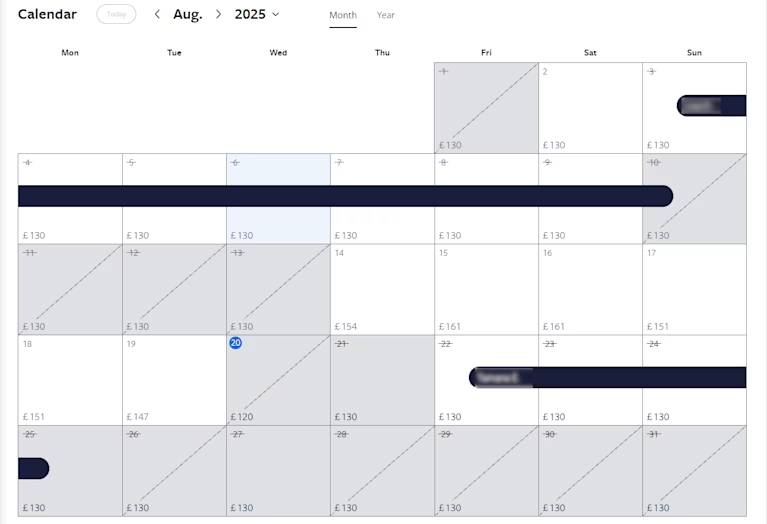
This is not only very inconvenient for the booking you need to cancel (especially if you only realise the error close to their arrival date), but some sites also impose fairly severe penalties such as fines and listing suspensions.
To avoid double-booking between multiple platforms, there are a couple of things you can do:
-
Synchronise your calendars. All the major platforms - Airbnb, Vrbo, Booking.com - make it relatively easy to import and export calendars, so that when a booking gets made on one platform, those dates automatically get blocked off on the others.
-
Turn off instant booking. Giving you the chance to confirm before guests make a reservation gives you the chance to double-check that those dates aren't already booked on another platform. Bear in mind that Vrbo gives priority to listings with instant booking turned on, so you might want to prioritise turning instant bookings off on the other platforms first. Turning off instant bookings might also appeal to people who want to vet their guests a bit more before letting randos into their home!
-
-
If you're renting out a spare room or your whole home, you can earn £7,500 tax-free
This is the doozy. You can earn £7,500 tax-free each year from letting a spare room or your whole home (if it’s your main residence), under the Government's Rent a Room scheme.
The scheme applies when short-term guests stay in a furnished room or rent your whole property – as long as it is your main home. It also applies if you take a lodger or run a B&B/guest house. It works whether you live in England, Wales, Scotland or Northern Ireland.
You currently have two options to reduce tax, though you can only use one of them, not both. So do your homework first. (Tax is paid via your tax return, after you've taken the money from Airbnb.)-
The Rent a Room scheme. This is a huge tax break for most people and really ups the gain. You don't pay tax on the first £7,500 you make each year from renting out furnished accommodation in your home or your whole home (halved if you share the income with a partner or someone else). If your rental income's below the threshold, you don't need to do anything, as the tax exemption is automatic.
If it's higher, you must complete a tax return – you can still opt in to the scheme, but then pay tax on the remaining amount. For more information, see the Government's Rent a Room scheme. -
Deducting expenses. Alternatively, HM Revenue & Customs (HMRC) allows landlords to knock certain costs off, such as letting agents' fees, before working out how much tax to pay.
You can choose not to opt in to the Rent a Room scheme and instead record your income and expenses on the property pages of your tax return. This can be a bigger saving in a few cases.
Quick questions
Which option is best?
It depends – there are a number of variables and it can be complicated, so you're best off crunching the numbers or even getting advice. The main factor tends to be your expenses though.
If they're less than the tax-free threshold of £7,500, it's likely you may be better off with the Rent a Room scheme.
What counts as an 'expense'?
The most common types of expenses you can deduct if you choose NOT to take part in the Rent a Room scheme are:
-
Utility bills, such as gas, water and electricity (but only the guests' share of the bills, if they haven't already contributed)
-
Rent and service charges
-
Maintenance and repairs to the property (but not improvements)
-
Building and contents insurance
-
Council tax
-
Mortgage interest
-
Costs of services, including gardeners' and cleaners' wages
-
Letting agents' fees
-
Accountants' fees
-
Direct costs of letting the property, incl phone calls, stationery and advertising
See more information on what counts as expenses on the Gov.uk website.
-
-
Warning – does your home insurance allow it?
Before you list your pad on Airbnb or other sites, ask yourself – what happens if all your treasured possessions are stolen? Or there's a wild party and your home's trashed? For example, see this £8,000 Banksy print stolen after home was rented out on Airbnb.
Most insurers don't cover those renting out rooms or their home as standard. What's more, even if your guests are impeccably behaved, if you haven't told your insurer you could be in trouble.
Renting out all or part of your property without telling your insurer could invalidate your home cover permanently – even when you don't have guests staying. So before you even think about doing this, get the right protection in place.
Buying cover from mainstream insurers can be tricky. This is because insurers class you as a higher risk as they feel the chances of damage, theft or items going missing increase.
Though we normally say to use comparison sites for your home insurance, on this occasion contacting a specialist or local broker can be the best option. Here's how to find a policy (see Cheap Home Insurance and Cheap Contents Insurance for Tenants for more general tips).Step 1. Check if your home insurer will cover you
Call your home insurer and tell it what you're planning to do. It may extend your existing policy for a fee or a change to your premium – get a quote and compare it with the specialist options below.
The price you pay, and whether your insurer decides to cover you at all, will depend on whether it's a spare room you're letting out or the whole property, how often you're planning on doing so, how many people are staying and your previous claims history.
If it agrees, your premiums are likely to increase. You can do this for standalone home or contents insurance, or for a combined policy.
Yet even with an extension to your home insurance, many policies don't cover theft or accidental damage by paying guests, which means a whole host of things won't be covered – such as if your guests damage your newly tiled kitchen floor or steal your TV. So always check the small print.Step 2. Also contact a specialist broker or insurer
The alternative option to get cover is to contact a broker that will specialise in tailoring a quote for you. You can do this if your home insurer won't extend your cover, but it's worth doing even if it will, so you can be sure you're getting the best price and cover.
The following brokers told us they would be able to give quotes for people renting out homes or rooms: Home Protect*, Intelligent Insurance* and Everywhen (formerly Towergate). Another route is finding a broker via the British Insurance Brokers' Association's website.You can also go to insurers directly. The following major providers told us they can offer appropriate cover: Admiral, Aviva, Churchill, Direct Line*, and Privilege. (All provide policies for renting out a room, but not all cover renting out a whole home, so check.)
Also worth a try is Intasure, an insurance provider that specialises in lettings.If you get cover for renting out your home/room, please let us know how it went.
-
Airbnb AirCover for Hosts - be aware of the exclusions

If the worst happens, repair or replacement costs could run into thousands and while you might assume Airbnb's 'host guarantee' will pay up, you could be wrong. The guarantee is more comprehensive than it was - it now includes liability insurance of up to $1m, for instance, underwritten by Zurich - but there are still quite a few exclusions and limitations.
Host damage protection: Covers up to $3m worth of damage to your property (home, furnishings, valuables, vehicles, extra cleaning costs, income loss due to cancellations). You'll need to provide evidence of the damage, receipts, and ideally a written inventory that you can check between bookings.Exemptions include: cash and securities, damage from pets, intentional (as opposed to accidental) damage, art/collectibles, damage to shared/communal areas, assault and battery, chinese drywall, communicable diseases.
Host liability insurance: Covers up to $1m if you're found legally responsible for: damage by a guest to shared or common areas, bodily injury to a guest, theft or damage of a guest's property.
Read full details on AirCover for Hosts. -
Check with your mortgage provider, freeholder and landlord before renting out
If you have a mortgage, check the terms and make your lender aware you're renting out all or part of your home. Breaking the rules could mean a worse rate, an additional fee or, ultimately, even repossession (though this is unlikely).
We asked five big mortgage providers their policies and most said they decided on a case-by-case basis – rules vary by mortgage product/individual circumstances. Many are likely to grant permission for you to rent out a spare room, though you may need to pay a fee or change rates.Some mortgages allow you to let the entire property for a few weeks, though you'll more likely need to pay a fee. If you're renting out a home for any longer, you may need to switch mortgages – again, check with your lender, as terms vary.
If you rent your property or live in a housing association/council property, it's unlikely you'll be able to rent a room out. Most contracts ban tenants from subletting, which includes renting out a room via Airbnb, so always seek permission first.
Check with your freeholder too
If you're a leaseholder, you also need to check with your freeholder that it is allowed within the terms of your lease. Unfortunately, many leases do ban you from renting out rooms.
Tim Clarke, partner at Clarke Mairs solicitors, says: "In practice, if there is any complaint, then provided the owner agrees not to do it again, no further action will be taken. If, however, they ignore the complaint, this may result in legal action and, in extreme cases, the lease could be forfeited and the flat taken off the owner without any compensation."
-
Write a glowing CV for your home

To get your home or room buzzing with bookings, you'll need to create a brilliant listing. On Airbnb, you first cover basics such as location, property type, number of rooms and amenities.
Next write a clear and concise description, summing up your pad's main selling points. For example, is it near public transport, historical landmarks or a thriving food scene? Check out popular listings to see what other hosts include.
To avoid miffed guests writing scathing reviews, note any access issues, such as if visitors need to cart their cases up five flights of stairs.
Try to answer any questions they may have. Which rooms can they use? Are linen and towels provided? Can friends visit? Are internet and parking facilities on offer? If they're renting a spare room, can they use the kitchen?
Also consider specifying if you don't want certain groups, such as stag and hen parties, or folk arriving in the wee hours. Spell out if there's an extra charge for extra guests – as you'd be surprised how many rock up with an extra person in tow.
A final point to consider is setting a two- or three-night minimum stay to cut down on cleaning and admin – though this will also mean a drop in bookings.
-
Price it right
If you don't set a realistic price for your room or property, you'll be waiting a while for any bookings. So do a recce of your area on Airbnb to check other hosts' prices and make sure you're competitive.
Remember, guests looking for somewhere to stay will also compare your rates with hotels', so check the local Radisson is not undercutting you.
Be flexible around pricing, to respond to supply and demand. If your home's within spitting distance of a major event such as the Edinburgh Festival, for example, tweak prices around that date.
Equally if you're not getting bookings, consider lowering the price to reel in guests. A half-price opening offer may help you drum up trade until you build up some sparkling reviews.Most booking sites let you set discounts for week-long and month-long stays, as well as applying 'smart pricing,' which dynamically adapts and updates depending on your property features, demand on those dates, and how far in the future that date is.
-
Capture your home in its best light
With so many people offering up their gaffs, the first few seconds viewing your pics can be make or break.
Put some effort into your shoot: clear clutter, do the washing up, leave out fresh towels and put the loo seat down. Capture items that guests can make use of, such as a coffee machine, bath products or a TV in the spare room.
-
Vet your guests
When someone requests to stay at your home, vet their profile. Look up their reviews from previous bookings and do a quick spot of googling for anything dodgy on their Facebook page, etc.
It's worth asking a few questions to get the lay of the land. For example, what time will they arrive and check out? And do they have any specific plans for their stay?

Consider only accepting guests who've uploaded proper Airbnb profile photos, not a dog or a duck. Also be wary of those who joined recently or ask to pay in cash.
Airbnb has a 'Verified ID' process, where guests send a copy of their ID, upload a photo and connect their profile to their Facebook, Google or LinkedIn account. As of June 2023, this has been a mandatory requirement for both guests and hosts on Airbnb.
Vrbo has an optional ID verification system, so guests get a 'Verified Identity' badge if they provided identification, though this is entirely optional. Booking.com, meanwhile, does only basic screenings.
Should you accept instant bookings?
Airbnb, Vrbo, and Booking.com let you choose between allowing guests to reserve available dates instantly, or getting you to confirm you're happy for them to stay first. Both Airbnb and Vrbo say listings are more popular when people can reserve right away, and Vrbo actually advertises your listing across more of its affiliate sites if you turn instant booking on.
The snag with instant booking is you can't check people's profiles first to filter out potential hucksters. There's also an increased chance you might double-book across multiple platforms), and finally people might not read your listing properly before booking – and assume they can bring kids or check out late when you don't allow this, for example.
That said, some hosts favour instant booking as they bag last-minute bookings they mightn't have got otherwise.
-
In Northern Ireland? Check if you need a permit
Under the Tourism (Northern Ireland) Order 1992, anyone in Northern Ireland providing 'tourist accommodation' needs a certificate from Tourism NI.
Whether you need a certificate depends on if the room or property you're renting out is deemed to fit into one of Tourism NI's tourist accommodation categories. If you provide breakfast or have en-suite bedrooms, you'll likely need one.
Call Tourism NI to check on 028 9044 1545. If you do need a certificate, you can apply online. Tourism NI will inspect your property and you'll be charged a fee (starting at £40).
-
Security deposits
Some sites let you charge a security deposit in the event of something going wrong. Hosts set the amount and must add it to listings before bookings.
The security deposit covers accidents such as spilled wine on the rug, a broken window or an unreturned key.Here's how it works across the platforms:
-
Airbnb. No longer offers damage deposit option (unless you've connected it to a property management software that offers the option). Instead, you're covered by AirCover, and Airbnb asks that you 'start a reimbursement request' through that.
-
Booking.com. Go to Property > Property policies > Damage policy options > Edit. There, follow the instructions under 'Do your guests pay a damage deposit?'
-
Vrbo. Offers a few deposit options - a payment card on file or an upfront refundable deposit up to $3000. To file a claim, find the reservation in your inbox, then go to Damage protection > Report damage.
Remember, guests staying just a few days may be put off by having to pay a large deposit. It's not something most short-stay properties do, so you may be putting yourself at a competitive disadvantage.
-
-
How to be a host(ess) with the most(ess)

Think it's just a case of handing over the keys and showing them where the loo is? Think again. Here's how to be a fab host and hopefully get tiptop reviews:
Adopt a friendly approach. When possible, it pays to be flexible on check-in and check-out times – and do it with a smile. Help them lug their cases up the stairs, and maybe offer a glass of wine or beer when they arrive. If you really want to go the extra mile, you could give them a special local gift such as lemon curd or a stick of rock.
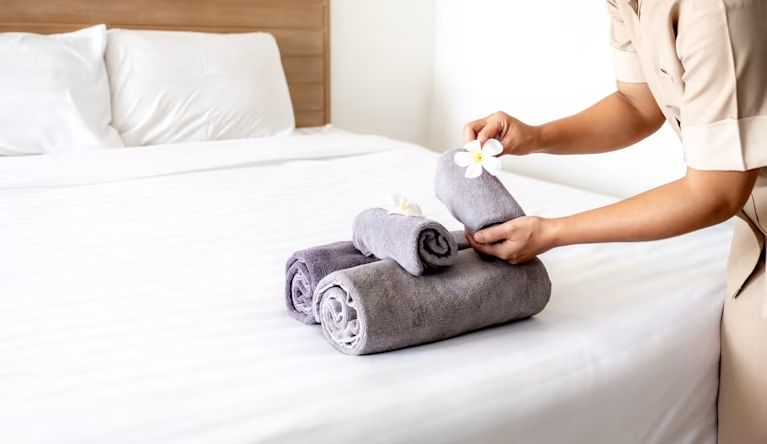
Equip rooms with extras. The essentials are soap, toilet roll (make sure you don't run out) and bed linen, but you could also provide shower gel, towels and shampoo. Also consider supplying an iron and hairdryer.
Leaving a selection of travel books costs nothing, if you have them. You could even provide a free bicycle for guests to pootle around on.
Respond promptly. Response time appears in your listing, so replying swiftly to all enquiries is crucial.
Keep rooms spick-and-span. This is where you really work for your cash. Clean areas they'll be using before each guest's arrival, changing linen and towels.
Write your own guidebook. When a guest books, score brownie points by emailing a list of transport tips, simple directions, tips on your favourite restaurants and your mobile number for emergencies. Don't forget to leave the Wi-Fi password out for them when they arrive.
Think about how you'll do the key handover. Right now, lockboxes are all the rage for hosts. Attach it somewhere discreet, and add the code as part of your check-in instructions.

If you're more techy, you can get smart lockboxes and even smart front door locks. All of these mean you don't need to be there around check-in time (though still keep your phone handy in case of issues). Remember to change the code once in a while for extra security.
If you want to keep things old-school however (and maybe for extra peace of mind), you can always do the key handover yourself or via a reliable friend.
Prep the entertainment. In this age of streaming, a library of VHS tapes or DVDs is more a quirky retro novelty than a practical amenity for guests. Access to streaming platforms such as Netflix, Apple TV and Prime Video is far more practical, and being able to access their streaming services can help a guest feel right at home.
If you have a Smart TV and are feeling charitable, you may be happy for guests to just use your own Netflix (or other) account, but that might mean your curated homepage filled with true crime documentaries gets infected by Peppa Pig, Jimmy Carr or whatever it is your guests watch.
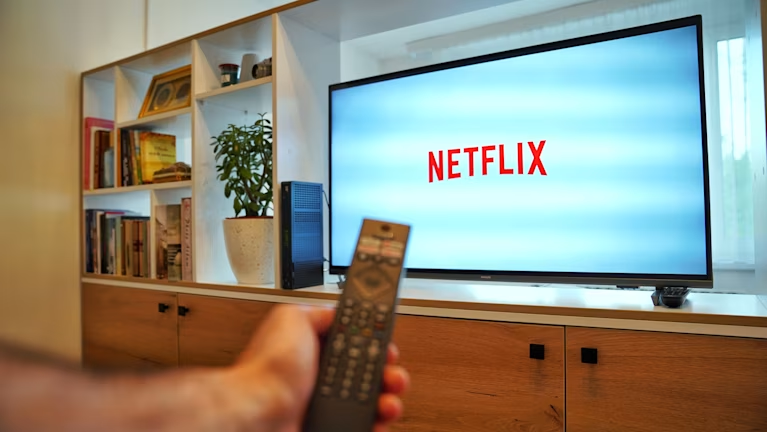
There's also the risk that guests might (even accidentally) buy or rent movies on platforms like Prime and Play Movies on your account, so bear that in mind. To avoid these issues, either create guest profiles on your streaming platforms (label them something like 'Airbnb Guest' to be super-clear), or just sign out of all your platforms when you go away and let guests sign into their own.
If you don't own a Smart TV, then you can 'smarten' your regular TV by buying an HDMI dongle for fairly cheap. On Argos, you can find a Roku Stick for as little as £30*, while on Amazon you can nab a higher-end 4K Amazon Fire TV Stick* for around £30 when on sale.
Make like a concierge. Without being intrusive, ask visitors what their plans are for their stay. Help book taxis, source theatre tickets and plan days out. Guests often relish unconventional travel opportunities, so point them in the direction of that annual worm-charming festival.
Cut some spare keys. You'll obviously need one to give to guests and maybe the housekeeping, and it's worth having a few spares.
-
Your house, your rules!
Obviously, you don't want to sound like a grump, but you'd be surprised what needs spelling out. So it's worth writing a friendly list of expectations for guests.

For example, say how often you'll change the towels and bedding, what the rules are around recycling and throwing things away, whether it's a 'shoes off' kind of home, and if there are any quiet hours that they should be aware of.
If you're just renting out a room, let them know if they can make use of your sitting room anytime. When using the kitchen, are they limited to just the kettle, 'heat and eat' only or are they free to cook a four-course meal? Also add a line on whether they can bring visitors round and between what times.
-
Pick your cancellation policy
Whether you're renting out a whole property or just a room, Airbnb normally allows hosts to pick from three cancellation policies – flexible, moderate and strict.
Airbnb
As of 1 October 2025, all the below cancellation policies include a 24-hour period after booking that the guest can cancel within for a full refund.
-
Flexible. Guests can cancel up to 24 hours before check-in for a full refund (including taxes).
-
Moderate. Guests can cancel up to 5 days before check-in for a full refund. If they cancel within 5 days of check-in, guests get pro-rated taxes back; you're paid for nights stayed plus one extra night, plus 50% of all unused nights.
-
Limited (new policy for bookings as of 1 October, 2025). Guests can cancel up to 14 days before check-in for a full refund. If they cancel 7–14 days before check-in (after the 24-hour free-cancellation window), they get 50% back, and you get paid 50% for all nights. If they cancel under seven days before check-in, you get paid the full booking amount.
-
Firm. Guests can cancel up to 30 days before check-in for a full refund. If they cancel 7–30 days before check-in (after the 24-hour free-cancellation window), they get 50% back, and you get paid 50% for all nights. If they cancel under seven days before check-in, you get paid the full booking amount.
Vrbo
-
Relaxed. Guests can cancel up to 14 days before check-in for a full refund. If they cancel 7–14 days before check-in, they get 50% back. If they cancel under seven days, you get paid the full booking amount.
-
Moderate. Guests can cancel up to 30 days before check-in for a full refund. If they cancel 14–30 days before check-in, they get 50% back. If they cancel under 14 days before check-in, you get paid the full booking amount.
-
Firm. Guests can cancel up to 60 days before check-in for a full refund. If they cancel 30–60 days before check-in, they get 50% back. If they cancel under 30 days before check-in, you get paid the full booking amount.
-
Strict. Guests can cancel up to 60 days before check-in for a full refund. If they cancel any time less than 60 days before check-in, you get paid the full booking amount.
-
No refund policy. No refunds once booking is made.
Booking.com
-
Gives you flexibility on cancellation policies and cancellation windows. Your cancellation policies can span the spectrum, from completely flexible policies that let guests cancel for free up to the day of check-in, to rigid ones that are non-refundable once the guest makes the booking.
Picking your policy means striking a balance. A strict one may discourage bookings, but with a flexible policy you lose out if someone cancels last minute. As a rule of thumb, if you're jammed with bookings, consider a stricter policy. If not, go flexible.
-
-
Learn the review system

Airbnb, Vrbo, and Booking.com guests review your home after their stay's complete. You can voice your feelings about them too, which encourages guests to leave the place as they found it.
Airbnb used to publish reviews as soon as they were submitted. Yet this discouraged people from leaving complaints, in case the other person retaliated with a negative review. So now you each have 14 days to post a review, and your reviews go live on Airbnb at the same time. You both get a star rating, and there's also an option to respond to the review.
-
Better gas-and-fire safe than sorry

Fire safety law applies if anyone pays to stay in your property on a short-term basis. The exception's if you have someone staying in it as their permanent home, such as a lodger.
Ensure you have a clearly marked fire escape route, and post a map of it in your home.
By law in England and Wales, you're responsible for taking steps to protect the people using your home from the risk of fire. You need to carry out a fire risk assessment, improve your fire safety measures (if necessary), and keep the risks under review.
You can do the fire safety check yourself or arrange a free one by your local fire and rescue service. This Government booklet explains more, including how to carry out a check. Depending on the risk your property poses – and if any guests report you – you could be inspected by your local fire service.
There are separate rules and regulations for Scotland and Northern Ireland.
By law, you also need to make sure your heating is in good working order, via an essential gas-safety check. See full information on this. -
In London? You can rent your home out for a max of 90 nights a year
In London, hosts are banned from renting out their homes via Airbnb and other short-term rental sites for more than 90 nights a year.
Airbnb’s system automatically limits entire home listings in London to 90 nights per calendar year. If you want to rent out your property for more days that this, you need to apply for planning permission to change your property’s use.
See Airbnb’s full guide to the 90-day rule. -
Smarten up on security and MoneySaving with Smart devices

While some may balk at the idea of imbuing everything with technology (because really, what's the point of a smart toothbrush?), there are a couple of smart purchases you could make to shore up your property (and your MoneySaving).
Smart heating. A smart heating system lets you control the heating in your home remotely, so you can use your phone to switch the heating off when guests leave, and switch it on a few hours before they check in, no matter where you are in the world.
If you also buy smart radiator thermostats to go with your central thermostat, you can set heating schedules for individual rooms, which will cut down energy costs in the long run.
This requires a little bit of upfront investment. As a starting point, you'll need the core thermostat unit and the device that links it to the boiler (around £100-£200 depending on brand, and may require professional installation). You'll then need to buy individual radiator thermostats (around £50 each, but can be cheaper when bought in bundles) if you want to control heating for each individual room.
The big brands are Google Nest, Hive, and Honeywell, though MSE Rob has been using Drayton Wiser smart heating for years - it's a bit more budget-friendly, and has worked with few issues for him (though make sure the batteries on the radiator thermostats are well charged before you go away!).
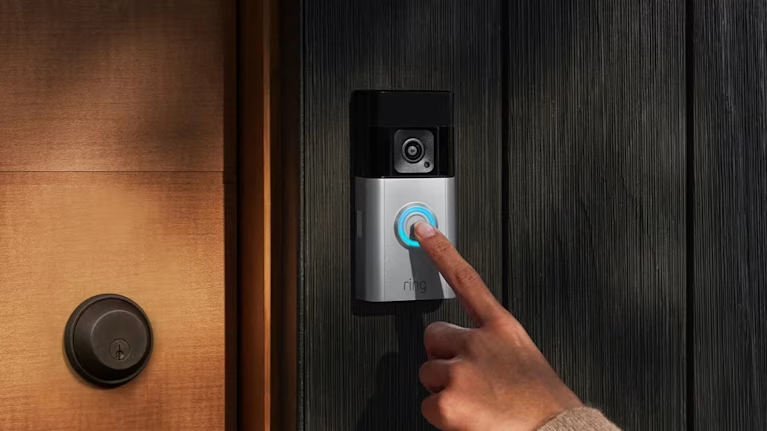
Smart video doorbell. You can set this to send you motion detect notifications when guests are at your front door, so you're aware of when they check in and check out (or if they're throwing a party without your permission!). If guests are having issues getting in, they can also ring you via the doorbell, giving you an extra means of communication. Ring and Eufy are a couple of the best regarded brands on this front.
Smart door lock. If you're not around to let guests in, then you may prefer the added security of a smart door lock over a lockbox (where you might not be around to change the code between guests). You can generate unique codes for each booking, and it negates the possibility of lost keys. Shop around, and you could find a decent Yale smart door lock for under £100.
-
Get freebies on Freecycle
We're not saying turn your home into the Savoy, but guests will expect a comfortable bed, a mirror and a wardrobe with hangers.
It's worth getting an extra telly for the guest room if you're renting out rooms, as this can help discourage them from monopolising the lounge.
To help, top-quality goodies are available daily for free on Freecycle and Freegle.
What's the catch? There isn't one. Instead of dumping goods or eBaying them, people harness the web's power to offer them to their local communities. So as well as kitting up for nowt, the environment benefits too, as unwanted items aren't flung into landfills.
Bagging the best is all about the etiquette – so try to also give away as well as take. For a full step-by-step guide, see Freecycle & Freegle Tips.If you're looking for ways to rake in a little more, our 60+ Tricks To Boost Your Income guide can help you add to your coffers. Upload homemade YouTube clips and get a cut of ad revenues, earn £100s filling out online survey sites, sell stuff on Facebook for free, and more!


Share this guide?