



The best way to buy a car (new or used)
Bag the best price & swerve any rip-offs

Buying a car can be a MoneySaving minefield, particularly if you're no petrolhead. There are lots of moving parts to think about – sometimes quite literally – so in this guide we'll steer you through the whole car-buying journey. Whether you're just starting out or you're further along that process, we've key help on:
- Choosing the car that's right for YOU
- Typical costs involved and finance options
- Whether to go for a new or used vehicle
- Cutting the cost of both new cars AND used ones
- What to check when viewing a used vehicle, plus a lot more
Selling new petrol and diesel cars is banned from 2035. New cars sold after this point must be zero-emission (this generally means having an electric motor), in an effort to protect the environment. We've help below on whether to go electric, and the cost considerations.
Note that this ISN'T a complete ban on all petrol and diesel vehicles – you'll still be able to buy a used petrol or diesel car or van after 2035.
What do you need from a car?

Before you start browsing for a car, have a think about what you really NEED from one. The best car for you depends on your unique circumstances.
For instance, there's no point buying a two-seater convertible if you're about to start a family, or purchasing a people carrier if you're the only one who'll use it. So work out what's realistic for you. Ask yourself:
What are my priorities? Enough room for the family? A cheap car to run? A quick, sporty number? Think about what YOU need...
Do I need the car to do anything specific? This could include towing a trailer or fitting into a small space.
Is it for short city drives or longer motorway exploits? Does it need to be able to cruise at motorway speeds with little effort? Or do you live in a city where you have to pay a charge if your car is older and more polluting?
Should I go petrol, diesel, electric or hybrid? Which would you prefer? We've help below to guide you when deciding whether to go petrol, diesel, electric or hybrid.
Will I need to put loads of loot in the boot? Consider whether you need room for items such as golf clubs or a pushchair.
What costs are involved in buying and running a car?
Keeping a motor on the road can be an expensive business. There are various costs involved, in first purchasing and then maintaining a car.
Check that you've thought about all of the following and, crucially, budgeted for them:
Type of cost | Description | Typical amount |
|---|---|---|
Upfront payment | Whether you're buying the vehicle outright or using finance, you'll often have to make a deposit before driving away from a dealership. This is also sometimes the case when buying privately. | Depends on the car – a deposit on a car finance deal is generally 10% to 20% of its value. When buying a car outright, you may pay a small holding deposit of a few hundred quid. |
Finance repayment | If you're using a personal loan, dealer finance or other borrowing, you'll need to factor in repayments. Read more on your finance options below. | Depends on the car and agreement. It's usually paid monthly. |
Fuel | Factor in fuel costs if you're opting for a petrol or diesel car. The fuel consumption tool on Gov.uk can help you estimate costs. Also check the 'real miles per gallon' section on motoring website Honest John. (Then, cut costs with our Cheap petrol & diesel guide.) | Depends on the car and usage. Expect to spend at least £1,000 a year if driving regularly. |
Tax | Most motorists have to pay road tax, with the amount depending on the vehicle itself. | There's lot of variation in the cost here, with a vehicle's age, fuel type and emission levels all factors. See the Gov.uk website to find out how much it may cost you. |
Car insurance | You need a minimum of third party, fire and theft car insurance in place to be able to drive legally. What you pay for cover will depend on how much of a risk insurers perceive you to be. For example, younger drivers tend to pay more – see our new driver and young driver insurance guides for help here. When you buy also has a significant effect on the cost. | The average cost of motor cover in 2024 was £622, according to the Association of British Insurers. For help keeping cover costs to a minimum, see our main Cheap car insurance guide. |
MOTs | Once a car is three years old, you'll have to pay for an MOT every year. This is a check that it's roadworthy. For MoneySaving tips, including using 'hidden' council test centres to save £100s, see our Cheap MOTs guide. | Up to £54.85 (for the test). |
Servicing & repairs | Servicing ensures your car continues to run properly and keeps any manufacturer's warranty valid. How often you get your car serviced is up to you, but once a year is recommended. | About £617 a year, according to the RAC. |
Parking permits & tolls | Depending on where you live, you may have to pay for a resident's permit. Check your council website to see how much this could cost. Consider any charges to park at work if you drive there too, as well as toll charges you may face along the way. | Varies by location. |
Other costs | Allow for the cost of 'consumable' parts, such as tyres and windscreen wipers. See how to keep your costs down, including haggling on the price of tyres, in our guide to Motoring MoneySaving. You may also want breakdown cover in place. For help here, see our Cheap breakdown cover guide. | Depends on how much you drive. For example, you may only need to change your tyres every two years, with a set of four new budget tyres costing around £200 (though you could spend double that on more premium tyres). You can find cheap breakdown cover for about £60 a year. |
Which types of cars are the cheapest to run?
Running costs can vary wildly between the many different types of car out there, so in this section we've key info to consider when narrowing down your options for a vehicle.
If you already have a particular make and model in mind, sites such as Parkers and What Car? can give you an idea of the running costs of specific cars. But if you still need help to decide on the right car for you, do think about these general rules:
Smaller engines can be cheaper
Engine size isn't just all about horsepower, as a large petrol or diesel engine will usually burn more fuel than a smaller one. So it's crucial to think about, if fuel economy is important to you.
Of course, this all depends on how you use the car. A small engine is most efficient when it's used as intended, such as to pootle around town. But when at high speed, a small engine must work harder to keep the car moving – burning more fuel. This means cars with large engines usually make more sense for those who drive long distances regularly.
Petrol cars tend to be cheaper than diesel
Diesel engines are often more fuel-efficient than their petrol counterparts, while also typically being more robust and leading to higher resale figures. So is it worth just buying a diesel car? Not necessarily. These cars are more expensive and usually cost more at the pump than petrol.
If you're not regularly doing long journeys, then it's unlikely you'll actually make any savings from going for a diesel model. If you just want a car for pootling around in, it's likely a small petrol or electric car will be your best bet. These cars often have more responsive engines too.
Both diesel and petrol cars have their own advantages – and remember that fuel prices fluctuate. So, before you choose one over the other, check the real miles per gallon (MPG) values using sites such as What Car? and Honest John. This will give you a much more accurate picture than manufacturers' official MPG stats.
Manual cars are cheaper than automatic
Switching between gears is extra work, and while automatics take some of this hassle away, they come with a higher price tag and typically cost more to fix.
When it comes to fuel-efficiency, one doesn't beat the other, so it's best to compare vehicles' miles per gallon figures (see previous dropdown) before buying.
Electric and hybrid cars can be cheaper to run, but cost more to buy
Both fully electric and hybrid vehicles (those with a petrol or diesel engine AND an electric motor) come in all shapes and sizes, from superminis to luxury SUVs.
Lower (or zero) fuel costs are an obvious benefit of these models, as were discounted tax rates. However, from April 2025, drivers of both fully electric and hybrid vehicles will have to pay more-expensive-than-before, standard rates of road tax. So factor this into your decision-making.
Other points to consider are that electric and hybrid vehicles tend to hold their value for resale, but usually cost more to buy.
Learn more about electric and hybrid cars in our guide.
Check CO2 emissions, as it affects the tax you pay
Buyers of the most polluting vehicles pay the most in road tax, so factor this in when you're deciding what car to buy.
Bear in mind too that even though electric and hybrid vehicles are low or no emission, drivers of these do now have to pay some road tax, which – depending on the age of the car – can be at the same rate as petrol and diesel vehicles. (Before April 2025, drivers of electric vehicles paid no road tax, while motorists with hybrid cars were charged cheaper rates.) You can read more about taxing electric and hybrid vehicles in our guide to these cars.
You can also learn more about vehicle tax rates on the Gov.uk website.
Smaller cars are cheaper to insure
If you're looking to save money, you'll want a car that's cheap to insure. The most affordable cars to cover tend to have lots in common, including size. Put simply, it'll generally cost you more to insure a 4x4 than a small city runaround.
Before buying, check the insurance group rating of the exact model you have in mind. The automotive firm Thatcham Research places cars into groups ranked between one and 50, basing this on a range of info, including performance, safety features, price and cost of spare parts. The Hyundai i10, for example, is one of a handful of cars in group one and therefore is cheap to insure. The higher the number, the bigger your premium is likely to be.
For much more info on this, and to see the insurance groups of some common models of car, see our guide to car insurance groups. And for lots of help on finding yourself cheap cover, see our guide to cheap car insurance.
Quick questions
When's the best time to buy a car?
Time it right and you can make significant savings on your car purchase. So when is the best time to buy a car exactly?
-
Near the end of each quarter. Dealers have targets to meet, with bonuses up for grabs. Typically, these are based on quarterly sales, making the end of March, June, September and December a good time to buy. They need to shift cars, so will be more willing to negotiate – we discuss how to haggle later on.
If you're buying a car privately, there's unlikely to be a good or bad time, as private sellers don't have targets to meet. That said, keep an eye on prices a few months beforehand – if they're heading down, you may want to wait. Heading up, and it's prudent to buy sooner. -
During quieter periods. Try to avoid weekends, or the start of the month, just after payday. A dealership crammed with wannabe buyers isn't a good place to bargain hard. If you're buying a car privately, it's also worth picking your time when other potential buyers might be away. This could be over Christmas, or deep into the summer holidays.
Think about the style of car too. Summer is when drivers dream of buying convertibles, making winter a good time to haggle for a deal on one. -
When a new model launches. 'Run-out' models are those about to be replaced by a new model. They are often heavily discounted (typically by up to 30%) as dealers make way for shiny new stock on the forecourt.
However, check the resale price as these cars will slump in value when their replacements arrive. You can do this by putting the registration into a free online car valuation tool offered by the likes of Auto Trader and Parkers. These 'run-out' models can be bought from main dealers, though you may also find them listed by brokers online or at car supermarkets.
To find run-out models, keep your eye out for reviews of the latest models – you can then look out for deals on the models they replace.
Which cars are the safest to drive?
Before new models can be sold they must pass certain safety tests, with minimum requirements.
The European New Car Assessment Programme (Euro NCAP) provides information for consumers on car safety, awarding star ratings to vehicles after testing how much protection they provide passengers in a crash.
You can search for a review by make and model on the Euro NCAP website.
I need to SELL a car – what are my options?
If you need to flog your current wheels, you've three main options: part-exchange, selling privately or using an online car marketplace...
-
Part exchange. This is where the dealer gives you a price for your current car and knocks it off the total cost of the vehicle you're buying. It can save a lot of hassle, but it's highly unlikely to be MoneySaving – you can often get 20% more by selling privately. The dealer will pay less than your car's value so it can move the vehicle along at a profit. So weigh up offers carefully.
-
Selling privately. Here, you list the car for sale yourself and get cash from the person who buys it. It's more time-consuming but usually more lucrative. You can advertise on one of the following sites:
-
Auto Trader – a two-week ad is £9.95 for cars under £1,000, while cars over £1,000 can be listed from £18.95
-
eBay – a classified ad costs £19.99, while for auction or fixed-price sales, it's £14.99, plus 1% of the final transaction (min £25, max £45)
-
Facebook Marketplace – free to list
-
Gumtree – free to list
-
-
Use an online car marketplace. These have networks of buyers they can connect you with. It's a middle ground between part-exchanging and selling privately, with the amount you can be paid somewhere between the two. Options here include:
-
Carwow – free to list
-
Motorway – free to list, but the site takes commission from a sale
-
PistonHeads –free to list
-
WeBuyAnyCar – free to list, but its transaction fees range from £50 to £125
-
How can I finance a car?
Of course, the cheapest way to buy a car is upfront with cash savings, as there'll be no interest to pay. However, a lot of people don't have that level of savings and so have to choose between the following options:
-
A 0% credit card. This allows you to borrow money for a purchase and pay no interest for a set period – but after this, interest kicks in. You can only borrow up to your credit limit, though, which may not be enough to finance a car. However, paying on a credit card, even just a part-payment, can give you extra protection.
-
A personal loan. Here, you borrow money at a fixed interest rate, to be paid back in fixed monthly instalments, over a fixed term. See Car finance vs bank loan for a detailed comparison of personal loans and car finance.
-
Hire Purchase. You essentially hire a car and then buy it once you've paid off the loan – hence the name.
-
Personal Contract Purchase. This is similar to Hire Purchase, but with Personal Contract Purchase you can choose whether or not to buy the car at the end of the contract.
-
Car leasing. Also known as Personal Contract Hire or PCH, it allows you to lease a car for a set period and pay back an agreed amount each month.
The best way to buy a car on finance depends on your unique financial situation. To help you better understand the different options and how they compare against each other, see this at-a-glance table.
Finance type | Typical length of agreement? | Initial deposit required? | Who owns the car? | Mileage restrictions? |
|---|---|---|---|---|
Up to 25 months | No | You (though you'll still need to pay back what you borrowed) | No | |
Usually 1 to 7 years | No | You (though you'll still need to pay back what you borrowed) | No | |
Usually 1 to 5 years | Yes (i) | The finance company, except if you make an optional final balloon payment | Yes (ii) | |
Usually 1 to 5 years | Yes (i) | The finance company, until the final repayment is made, then you | No | |
Usually 1 to 4 years | Yes (i) | The finance company, at all times | Yes (ii) |
(i) Generally speaking, though it's possible to get a deposit contribution from the dealer or structure a lease deal to pay nothing upfront. (ii) You'll typically agree an annual mileage limit with the lender at the start of the deal and will pay additional fees if you exceed this by the end.
Protect yourself by paying something on a credit card

To gain additional and powerful protection, pay something towards the car on a credit card – even a penny. Then, if something goes wrong down the line, you're then covered by Section 75 laws. This means that, provided the car's total cost is between £100 and £30,000, paying anything towards it by credit card means the card company (or finance company, in some cases) is equally liable along with the dealer if things go wrong.
However, some dealers don't accept credit cards, so you'll need to decide how important this protection is to you when you're considering where to purchase. (You probably won't pay by card if you're buying a car privately, so you won't get this protection.)
Regardless of how you pay, always ask for a signed and dated receipt. This should include your name and the seller's name, along with details of the vehicle, the price, and the address where you bought the car. If you opt for finance from a dealer, Section 75 will usually apply – Hire Purchase deals being the exception.
Do you want a new or a used car?
Generally speaking, used cars are the more MoneySaving option. A car's value starts to depreciate as soon as it leaves the showroom, so even picking a year-old model will dramatically slash the upfront cost.
Auto Trader says a new car loses up to 50% of its value in the first three years, so a sweet spot can be around the four-year mark, when a car's price has most likely halved since brand new, with just 20,000 to 30,000 miles on the clock. So it can be worth narrowing your search to these cars, as, otherwise, depreciation can mean a massive whack lost on what is an expensive purchase.
To see how much a car loses in value each year, you can use the calculator at WeBuyAnyCar. The older the car gets, the less important this is. But whatever its age, remember you're NOT buying an asset that may increase in value, such as a house.
However, there are reasons you may want to buy a new car, so here we highlight the pros and cons of both new and second-hand cars.
Buying a new car – pros & cons
Pros
Reliability. New cars are less likely to suffer mechanical issues, considering they're fresh off the production line.
Warranty protection. All new cars come with a manufacturer's warranty that covers the vehicle from the time it's purchased. See more info on warranties below.
Latest features. New cars often boast the latest in technology and safety and the most fuel-efficient engines.
Cons
More expensive. These features make new cars more expensive.
Faster depreciation. New cars quickly lose value within the first couple of years, meaning you'll get a lot less back should you decide to sell.
Higher insurance premiums. Insuring a new car is more expensive thanks to its higher value.
We go into detail on how to buy a new car for less later on.
Buying a used car – pros & cons
Pros
Lower upfront cost. Used cars are generally cheaper, with past owners paying the initial premium when the vehicle was new.
Slower depreciation. The car's value will drop slower because it's already taken its biggest depreciation hit.
Lower insurance costs. Insurance for used cars tends to cost less.
Cons
Greater chance of mechanical issues. With potentially a higher mileage, a used car is more likely to encounter mechanical issues than a new car.
Limited to no warranty. The initial warranty may have expired, meaning you might need to fork out for an extended one. You're unlikely to get a warranty buying a used car from a private seller. See more info on warranties below.
Outdated features. Older cars may lack modern safety, efficiency, and tech features.
We go into detail on how to buy a used car for less later on.
What you need to know before buying a car
Whether you've decided to go new or used, here are the crucial points that you need to be aware of before buying a car. Get ready for the green light...
Test-drive the right way
Any seller should expect that you'll want to take the car for a spin before making a decision, so use this time wisely. Testing a car isn't just about seeing if it feels right, so make sure you follow our list of things to check...
-
Is the driving position comfortable? Is the seat and steering wheel adjustable, and do you 'fit' the car?
-
Is it smooth? Does the car pull away seamlessly?
-
Does everything sound as it should? Listen out for rattles, knocks and buzzes.
-
Do the brakes and clutch function smoothly and effectively? Try ordinary braking and doing an emergency stop on an empty road. Also try the handbrake on a hill, and do a three-point turn to check for play in the steering.
-
Does it veer? Is the car veering to one side, or does it feel balanced?
-
How does it cope with different types of road? Try the motorway if you'll be driving on it regularly.
-
What's the power like? Will it climb hills without endless gear changes?
-
How good is the suspension? Check how well it soaks up bumps and takes corners.
-
What's the passenger space like? Will people be comfortable on a long journey?
-
Are the bonnet, doors and boot easy to open? Check this and ask any necessary questions, such as where the bonnet release is.
-
Will it fit into your space? Have you got a dedicated parking space or is it off-street parking? Is there going to be a problem fitting the car there?
Important. Check you're insured before doing a test drive. If you have full, comprehensive car insurance already, you may have third-party cover that allows you to drive another car. But always check.
If you're buying from a private seller, ask them to take you for a drive if you're not covered.
Always haggle
When it's time to bargain you should always bargain hard. Many private sellers will expect to negotiate on price, and if you're buying from a dealer, NEVER pay the list price of the car. Arm yourself with the cheapest web prices and make dealers compete for your custom – handily you can find a 'target price' for all brand new cars using the What Car? new-car deals finder. Use this to haggle.
Haggling can be daunting, even for hardened MoneySavers, but there's nothing to be scared of.
How to haggle for a car
Here are some car haggling tips to bear in mind (we've more general tips in Haggle on the high street):
-
Get them to chuck something in for free. Dealers often say they're not allowed to give discounts, but if you're new to haggling, an easy start point is asking them to throw something in on top. Whether it's a free sat-nav or floor mats, if you need an add-on, try not to pay extra for it.
-
Look for already discounted cars. If the price is already reduced, there's often more flexibility. The boundaries have already been flexed and the psychological loss for the salesperson is reduced as they've already given up on the idea of getting full price.
-
Don't fill the silence. As negotiations come to a close, a classic sales technique is staying silent. They want you to accept the price just to fill the awkward silence. Make them fill it with a cheaper offer.
-
Get them to call you back. Psychologically, if they have to chase you, rather than you being super keen, you're more likely to get a better deal.
-
Flaws mean discounts. Look for the tiniest of dents or scratches. This makes a car more difficult to flog, but still perfectly fine to drive.
-
Play them off against each other. To really up the haggling, don't target dealers in isolation. Try to play off a number against each other.
This has two advantages: it gives you a solid foundation and it prods their competitive instincts in your favour, as they want to prove they're better than the opposition. -
Be friendly, but firm. You're more likely to get a result if the staff member empathises with you. If you're polite, charming and treat the process with humour, you'll get further.
-
Ask for the sun and you may just get the moon. Remember, do it with charm, humour and style and there's no price or suggestion too outrageous. You can haggle virtually anywhere for anything.
If you're buying a car privately, it never hurts to make an offer. The worst they can do is say no. And even if you walk away there and then, the seller could call you back if there's been little further interest.
Be sure any extras are needed – and worth it
The dealer will probably try to sell you the premium version of whatever model you've selected. This may include models with parking cameras, smartphone connectivity, radar cruise control and so on. All these will bump up the cost, but do you NEED them? And if so, can you get any options cheaper elsewhere?
Then check what the dealer's 'throwing in'. This is usually anything from service plans to extended warranties and sometimes even insurance. But always make sure these are actually free. Benchmark a price for the make and model you're after at several used car dealerships – if the price is substantially above this, then it's likely you're paying for the extras in the price of the car itself. Speaking of warranties...
Closely consider the warranty
You'd hope that nothing goes wrong after buying a car – but what if it does? Many dealers offer warranties on used cars, while all new cars come with a warranty from the manufacturer – with most offering three years of cover. However, the best car warranties are up to seven years or dependent on the number of miles driven.
Some dealers offer longer warranties (five years or more), and if this is important to you, you could stick to these particular car manufacturers.
How do I extend the warranty?
If yours runs out after three years, it can be an expensive business to extend. Standalone warranty providers will charge upwards of £300 a year to extend the warranty of a three-year-old car.
Some dealers will try to flog you an extended warranty as part of their sales patter, but these can be pricey. You can always buy one when the manufacturer's warranty expires on a price comparison site.
Be aware that there are endless choices and not all are good, so check the clauses for any exclusions. A good policy will cover parts, labour AND consequential loss.
What should the warranty cover?
Warranties should cover most mechanical and electrical faults, but typically won't cover wear and tear, to tyres and brake pads for example. Most problems that might occur with a new car should be covered, which is why it can be valuable to have a decent warranty attached to the sale.
Are service packages ever worth it?
A lot of new cars come with a fixed service plan, so you pay an upfront fee that covers the first three to five years of services. These can be a brilliant way to fix your costs, but check this against what it would cost outside of a package before paying up. Call a few garages as well as the franchised dealership to give you an idea.
Get car insurance straightaway
Make sure you sort out your car insurance before you take ownership of the car. Just like when you buy a property, you must have insurance in place as soon as you've become the legal owner – even if you're not driving the vehicle just yet.
This is because if anything happens to it, it's your responsibility.
If buying from a dealer, ask if the car comes with any insurance. You may be covered for a week (dealers often include this), but if not you'll need to arrange insurance BEFORE picking the car up and driving away. So always check before you pick up your car.
To find the best deals, see our Cheap car insurance guide and use our Compare+ Car Insurance tool.
Also make sure your policy is valid on your new vehicle if you're transferring car insurance.
What about gap insurance?
Guaranteed asset protection insurance – more commonly known as gap insurance – can cover the difference between the amount you paid for your car (or the amount you owe on the car if you have finance), and the amount an insurance company would give you if it was written off or stolen.
It's a product to think carefully about, as it's useful only in limited circumstances. There have been question marks about the value for money it provides, too. So do weigh up whether you need this product. To help you in that decision, read our full Gap insurance guide.
What about tax?
Road tax isn't transferable between owners, so you'll need to get your vehicle taxed as soon as you take ownership, which you can do on the Gov.uk website.
However, try to buy at the start of the month – if you buy on, say, 25 May, you'll need to pay the full tax premium for May, even though you haven't owned the car for most of the month.
How to cut the cost of buying a NEW CAR
While second-hand cars tend to provide better value for money, if you're set on buying a NEW car, there are ways of doing so for less.
'Pre-reg' cars can be cheaper
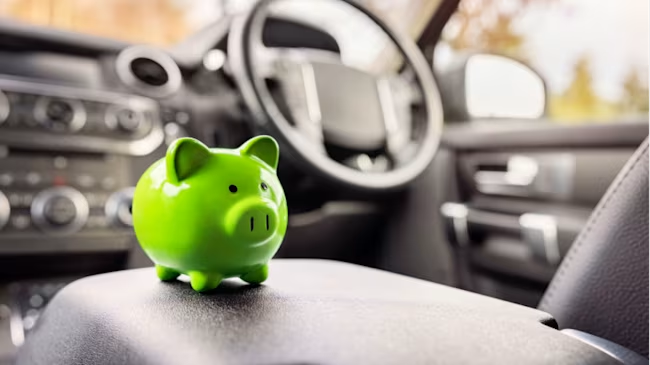
Pre-registered cars – aka pre-reg cars – come with chunky discounts because they've theoretically already had one owner. Here, the dealer 'buys' the car and registers it to the dealership – typically to artificially meet sales targets for the month or quarter. They do this as they often make more from bonuses for hitting targets than from selling cars.
This means you can buy a new car for a hefty discount because it'll be recorded as already having an owner – it's all the benefits of a new car at a nearly new price. A pre-reg car shouldn't be more than six months old, and you should get at least 20% off the ticket price. That may hit as much as 70% off if it's an unpopular model and the dealer is desperate to shift it.
You can buy a pre-registered car just as you would any new car. And if there's one you're interested in, haggle hard. Remember these cars have already served their purpose for the dealer by boosting sales targets. It's also worth asking about test-drive cars or showroom models – the savings can be massive.
What to bear in mind when buying a pre-registered car
However, there are some potential downsides:
No customisation. You won't be able to order any specific bells and whistles on a pre-reg – you'll have to take the car as it is or pay the extra for any changes.
Reduced warranty. The warranty will have started from when the car was first registered, so you'll have lost a bit of cover from this. See warranties above.
Limited finance options. You may not be able to get the same finance packages on a pre-reg that you get on unregistered new cars.
Less resale value. Resale values won't be as high as an unregistered set of wheels, as the car will have two previous owners, not one.
Beware depreciation – and know which models best hold their value
As mentioned earlier, perhaps the biggest problem when you buy a new car is how quickly it'll lose its value, or 'depreciate'. Not surprisingly, then, the amount your car slumps by over time is typically the single biggest cost, and so a key consideration. This also applies if buying a used car, albeit the car will depreciate at a slower rate.
Some models also shed cash quicker than others. This table shows the top 10 slowest depreciating cars in 2024, so the vehicles that best hold their value. While it does include some expensive high-end models – certainly not MoneySaving! – it highlights that even in the best case scenario, a new vehicle's likely to depreciate by at least 30% in three years.
Rank | Car model | Average retained value after three years |
|---|---|---|
1 | Porsche Cayman GT4 RS | 69.64% |
2 | Land Rover Defender | 68.79% |
3 | Mercedes-Benz G-Class | 67.95% |
4 | Porsche 911 GT3 | 67.79% |
5 | Bentley Flying Spur | 65.61% |
6 | Toyota Land Cruiser | 63.94% |
7 | Land Rover Discovery Sport | 63.81% |
8 | Dacia Duster | 63.35% |
9 | Mercedes-Benz V-Class | 63.16% |
10 | Porsche Macan | 63.04% |
Source: Auto Express | January 2025.
Online broker prices could be up to 20% cheaper
Big savings can be made if you buy a new car from an online broker, which typically bulk-buy popular models and pass on part of the saving to the customer. They can often undercut even the most generous dealers. Bear in mind that online brokers are less likely to take your existing car in part exchange, but that's not MoneySaving anyway.
Examples of popular brokers that work with a large network of franchised dealers include Broadspeed, CarFile, DriveTheDeal and UK Car Discount. Simply input the model you want and the site will match you to a dealer looking to do a deal. You typically pay a deposit of around £500 to £1,000, with the balance on the day you get the car.
Quick question
Can I drive the car away on the same day?
You're unlikely to be able to drive a new car away on the day, even if you haggled the price down by going for one of the showroom models. The dealer will want time to prepare it for sale, whether that's fitting optional extras or getting paperwork together. But if you need your new wheels immediately, stipulate it as a point of the sale.
If you chose to buy a new car built to spec, a wait of several weeks isn't unusual because it may be built overseas and need to be shipped to the UK. Make sure anything you agree to with the dealer is in writing to avoid any problems later on.
What to do upon delivery
As soon as the car's delivered, check it's what you wanted, including any extras. Found something you're not happy with? Don't take it away.
If you already have, and find something you're not happy with later on, the quicker you raise problems, the more chance there is of the dealer taking it back and giving you a replacement or a full refund.
How to cut the cost of buying a USED CAR
There are two main ways to buy a used car:
Whichever you choose, in this section we'll look at ways of cutting the cost of a USED car. We'll also tell you what you need to look out for when buying a used car.
Buying a used car from a dealer
Going to a dealer for a used car tends to be more expensive than purchasing a vehicle privately, but there are ways to save and benefits to this option, including more protection. This is because if the car turns out to be faulty (and you didn't know about it), you should be able to get a refund, repair or replacement.
In addition, most car firms have an 'approved used' section, meaning they've checked the cars over before selling them. Dealers often give warranties on approved used cars, and will have made the car look and feel new.
Alternatively, if you're willing to pay a little bit more again for peace of mind, you could buy an approved used car from a manufacturer's franchised dealer (such as a used Ford car from a Ford dealership). This is the most expensive option, but the car's history should've already been checked and it will come with a warranty.
Warning. Be wary of any dealer that displays signs such as 'sold as seen' or 'no refund'. It is sneakily trying to limit your rights, so make sure you check the conditions of sale.
Quick questions
I want to buy a used car from a dealer – where's the best place to go?
Ideally, you should only buy from a dealer that's listed as a member of the Retail Motor Industry Federation. It's voluntary to join, but members have to meet minimum standards. Look for an established firm and check for online reviews. Also ask friends and family for recommendations.
Some of the biggest names in the motoring business (such as AA Cars and RAC Cars) offer used cars for sale online. These only allow dealers meeting strict criteria to sell on their sites, and cars come with a history check so you're less likely to get any nasty surprises. The AA also offers free basic breakdown cover for 12 months.
As well as advertising their cars on classified sites, some big dealer chains and car supermarkets have their own used car websites. These allow you to buy a car without visiting a showroom – but be wary of ads shouting about massive discounts. You're likely to get a better deal doing your own groundwork and buying a car privately.
Some of the best used car websites and dealers include:
-
Motorpoint has 21 branches around Britain and no ties to a specific manufacturer. It offers similar services to a franchised dealer, including test drives and part exchanges.
-
Carcraft.co.uk has 10 showrooms in England and Wales. Cars come with a seven-day exchange policy, 12 months' breakdown cover, and free servicing for a year.
-
Cargiant has cheap used car prices and a no-haggle policy. But beware – you can't pay on credit card so cannot use this to protect yourself under Section 75.
If you're happy to buy a car online, ensure the seller will carry out history and physical checks on the vehicle before you pay.
How can I get the best deal on a used car?
Be sure to ask all the dealers in your area for their best deal. If you're prepared to travel far and wide to find a rock-bottom used car price, expand your radius. Make a note of the best deal, and ask others to beat it.
You can always go back to your local dealer to ask whether it'll match the best offer. It might be keen for your cash and happy to do the same deal.
Buying a used car privately

Private sales are a case of 'let the buyer beware' (often referred to by the Latin phrase 'caveat emptor').
This means it's your responsibility to check the car's condition and history, and you have far fewer rights if something goes wrong than you do when buying from a dealer. That said, it's often the cheapest way to buy a second-hand car.
The seller must give an accurate description, but it can be hard to prove if they pulled the wool over your eyes. So, keep copies of the original advert. If the seller describes the car over the phone, ask for confirmation via email.
You can find thousands of private car ads on sites such as eBay* and Gumtree. Even if you reckon the seller is reputable, always check everything yourself. However, do note that car purchases often AREN'T PROTECTED on these sites.
Warning. Always check the car's history.
A vehicle history check, also known as a Hire Purchase Investigation (HPI) check, will tell you whether the car has outstanding finance or has previously been scrapped, stolen or written off by an insurer. It costs £15 to £20 for a full check but could save you from losses much higher than that. Options include the RAC Vehicle History Check (£15), AA Vehicle Check (£15) and HPI Check (£20).
Over half of used cars have hidden histories that could come back to haunt you, according to the RAC.
Quick questions
What could go wrong when buying a used car privately?
Unfortunately, several things could go wrong. Here are the most common:
-
The car has outstanding finance. It could be repossessed without warning.
-
The car has been stolen. The police could ask for the car back.
-
The mileage has been 'clocked'. The car has far higher mileage than stated.
-
The car has major faults. You end up with a dodgy old banger.
-
It's massively overpriced. You're ripped off.
As a result, it's crucial to take certain safety measures and perform certain checks when buying a used car.
What safety measures should I take when buying a used car?
While it's potentially riskier, there are steps you can take to protect yourself when buying a car privately.
-
Go to the seller's home to see the car. If the seller offers viewings anywhere other than their home, think again. This could mean they don't want you to know where they live if there's a problem. Take a friend or family member as another precaution, and for a useful second opinion on the purchase.
-
If the asking price sounds too good to be true, it likely is. So, proceed with caution – if it's below what similar models are generally going for, it could be a sign that it's a scam or the car has an underlying issue. Sites such as Glass's Guide, Parkers and What Car? can tell you whether the price is about right. Read the advert carefully, ask the seller why the price is what it is, do comprehensive checks and do a vehicle history check.
-
Don't pay a penny until you've checked the car out. This includes its documentation – scammers often try to persuade people to transfer money ahead of the 'viewing'. If you're asked for a deposit, don't pay more than you can afford to lose, and have the seller confirm in writing that they'll refund it if you decide against buying.
-
DON'T carry large wads of cash. This is to ensure your personal safety.
Is buying a car on eBay a good idea?
It might sound risky, but one of the most popular places to buy a second-hand car is on eBay*. But if you pay using PayPal, its purchase protection does NOT apply to cars – and neither does eBay's own buyer protection. So if anything goes wrong, you can't turn to either to sort it out.
If you still want to go ahead, you should visit and test-drive the car and go through the usual procedures of buying privately, rather than just bid in an auction sight unseen. See our general safety measures and points to watch out for when buying privately, go through the same process, and take care.
For eBay specifically:
-
Don't buy a car having never used eBay before. You need to familiarise yourself with how the site works and feel comfortable with it.
-
Don't search too far away from home – you MUST see the car. Most auctions last days, but give yourself plenty of time to view the car.
-
Set your maximum price and stick to it. It's tempting to up this to seal the deal, but don't let the excitement break your resolve.
-
Research the seller. Check the seller's feedback rating to see whether it's positive and ask questions about the car's condition before placing a bid. Do they seem upfront and honest?
-
Sellers must be easily contactable. Ask whether you can call to double-check before meeting them in person.
What to look out for when buying a used car

It's not just about rocking up and liking the look of the car – you need to examine everything, from the paintwork to the tyres, seatbelts and headlights.
Here's what to check for when buying a used car:
The car's mileage. The average covered is around 10,000 miles a year, so if the odometer's figure appears wildly out for its age, ask why. Someone may have 'clocked' the odometer – making it look like the car has a lower mileage than it actually has.
You should be able to check the car's mileage by comparing it against what's on the vehicle's MOT record, and any service history may back it up too.
An HPI check will also confirm the mileage, as well as telling you whether the car's previously been written off, or 'cut-and-shut' (where parts from two cars have been welded together).
Watch out for 'Category N' (previously 'Category D') cars too. These have been in crashes previously, and while they didn't suffer any structural damage, could still have vital parts that need replacing. This is why they often cost £1,000s less than you'd expect. For the lowdown on classifications of written-off cars, see this What Car? guide.The car's MOT status. Detail from 2005 can be seen on the Gov.uk website. Check paper copies of MOTs pre-2005. The MOT history will show the mileage readings at tests, dates of previous MOTs, and any faults found.
The documents. Chiefly the V5C vehicle registration document, which shows who is the registered keeper of the car – NEVER buy without one (and look out for the DVLA watermark that genuine V5Cs have throughout). Check the details match the vehicle's records using the DVLA enquiry service. Other documents to check are the servicing booklet, the owner's manual and the sales contract.
Receipts for the services. You should match these against stamps in the book. It’s vital to check service history or you risk massive repair bills.
Ask as many questions as possible. For example, find out what's included in the price and what the warranty covers, if there is one.
The car's overall condition. Cast a beady eye over the car's condition, crouching down to look for scratches and dents. Checking inside is as important as checking outside – it can indicate how the car has (or hasn't been) cared for, as well as giving you an idea of whether its mileage is accurate.
What should I look for when inspecting the car?

Signs of poor repair. For instance, gaps between body panels after crash damage.
The oil. Do this by lifting out the dipstick to see whether the level's correct.
The engine. If you're not familiar with engines, but know someone who is, ask them to come along. Look out for wear and tear, especially if the car hasn't got a particularly high mileage. Check the engine for signs of oil or water leaks, as well as the surrounding parts – and look under the car for any signs of leaks too.
Features and accessories. Such as the radio and heating system, and check the windows open and close easily.
The lights. Check these work, including the high beam, as well as the indicators.
The tyres. Look at the tread and for any damage.
Is it safe? Vitally, does the car seem in safe condition to drive? Trust your gut – if the seats are sagging and the car looks like it's ready for the scrap heap, continue your search elsewhere.
Quick question
What about common faults with used cars?
It can be frustrating when a used car develops a fault soon after purchase. You can lessen the chance of that happening by doing all the right checks when viewing the car. Read all about what to look for when buying a used car above.
It's also worth knowing what problems a particular model might have. There are tons of online reviews on sites such as Parkers and What Car? and forums that will flag any common problems that could mean costly repairs down the line.
Know your rights if something goes wrong
Second-hand cars are one of the most complained about issues, with Citizens Advice and Trading Standards receiving 10,000s of complaints a year. These are often about a fault, but sometimes the problems are so bad the car needs to be scrapped.
If the car had a blindingly obvious flaw when you bought it, you wouldn't expect it to last the distance. But if you paid a fair price, and the car goes kaput once you get home, you usually have rights – even if it's a new problem...
If you bought from a dealer
If you bought a car from a dealer, you're covered by the Consumer Rights Act – for full help, see our Consumer rights guide. The car must be SAD FART – an acronym for:
-
Satisfactory quality
-
As Described
-
Fit for purpose And
-
lasting a Reasonable length of Time
The dealer has broken its contract with you if the car doesn't meet these criteria.
What are you entitled to?
If the car turns out to be faulty (and the fault wasn't obvious, such as an engine problem or worn-out clutch), you should be able to get a repair, replacement or refund if it doesn't work.
If the dealer says it pointed out the fault, did it tell you the full extent of the problem? If, for example, you were told that the clutch is stiff but it's worn through, then it should sort the problem.
Important. If you return the car within six months, it's up to the dealer to prove it wasn't faulty when you bought it. After this, it's up to you to prove the car was faulty at that time.
You may be entitled to a full refund if the fault is serious, and picked up quickly after the sale and you've stopped using the car. If you've had the car for some time, ask for a partial refund.
What if you bought using finance?
If you bought the car from a dealer on finance or paid the deposit on a credit card, and you fail to get a resolution to your complaint within eight weeks, you can take it to the Financial Ombudsman Service.
Alternatively, if you bought with cash or a loan from the bank, find out if the dealer belongs to a trade association and go through its 'alternative dispute resolution' process. For more info, go to the Citizens Advice website.
If you bought a car privately
If you've bought a second-hand car from a private seller, your rights are nowhere near as strong. Essentially, the car is sold 'as seen'. The car doesn't have to be of satisfactory quality OR fit for purpose, which leaves you on wobbly ground if there's a problem. It's really a case of 'buyer beware'.
Say the seller says nothing about an engine problem and you buy the car, then that's it. Even if the vehicle shudders to a halt a week later, you weren't mis-sold, so have no comeback. Though if they lied to you, you do.
The seller mustn't lie about the car's condition or history, such as failing to mention an outstanding major and expensive service issue or a past accident when asked, or giving a false mileage. This is why it's vital to ask the right questions, check the right things and take steps to protect yourself.
If you discover you've been misled, you should be able to return the car and get a refund. You'll have to prove that the seller did know about the problem though, and that could be difficult.
If you bought a car at auction
Sadly, you likely don't have many rights, as the useful parts of the Consumer Rights Act might not apply. Auction houses can exclude these, and cars are usually labelled clearly 'as seen' with no claims as to the vehicle's condition, so check the T&Cs of sale before buying. Some car auctioneers belong to the National Association of Motor Auctions, which has a code of practice.
If you bought online, you have additional rights under the Consumer Contracts Regulations, which means you have a 14-day cooling-off period to change your mind once you've got the car. For more info, see our Consumer rights guide.
What if you get nowhere?
If your complaint doesn't resolve the issue, there are other steps you can take to fight back. To see how to take legal action for claims of up to £10,000, check out our Small claims court guide.
Share this guide?